Brazil's Stone Launches Vela AI Platform to Address Shadow AI Trend
en.Wedoany.com Reported - Brazilian company Stone has launched an enterprise-level artificial intelligence platform, Vela, which is already operational internally. Integrated with the Karavela engineering platform, Vela allows employees to access it through natural language in Portuguese, always adhering to the permissions, governance, security, and audit requirements applicable to core products. The Karavela platform supports Stone's processing of 560.9 billion Brazilian reais in payment transactions and serving 4.7 million active customers in 2025.
Stone launched Vela in response to the "shadow AI" trend, where employees introduce AI tools into their workflows before the organization formally adopts an AI strategy, potentially leading to sensitive data being transmitted through external tools beyond the company's control.
An internal survey at Stone revealed that over 90% of developers are already using AI tools in their daily work. Faced with this situation, the company decided to manage AI technology as critical infrastructure. Stone's logic is that if AI will be present in all areas of operations, it must exist within the enterprise platform, with robust governance, traceability, and security.
Stone's Chief Technology Officer, Raúl Rentería, stated that the company chose Vela because it treats AI as critical infrastructure and applies the same discipline used in serving millions of Brazilian entrepreneurs to AI applications. Vela serves as a unified interface, connecting people with the company's systems, data, and processes through the language of each business area. Employees can, in a secure environment, convert spreadsheets into internal applications, cross-reference information to investigate incidents, generate execution reports, or query credit, contract, and customer information.
The Vela platform does not use a single model for all tasks but orchestrates multiple specialized agents, directing each request to the agent with the deepest expertise in that area. Currently, agents responsible for products and credit are operational, while new agents are being integrated into areas such as compliance, reliability, and cost.
In this way, each business area can impart its expertise to Vela, making these specialties available across the company under enterprise rules. The goal is to combine business speed, the depth of subject matter experts, and the governance required by operational scale. This model impacts how work is distributed: employees who previously relied on technical queues can now solve problems more autonomously, engineers reclaim time previously spent on repetitive tasks, and security and compliance departments gain centralized visibility into AI usage and operational data flow.
Through Vela, Stone integrates artificial intelligence into the company's core, not as an independent productivity layer, but as part of the infrastructure supporting products, processes, and large-scale decision-making.
Related Products



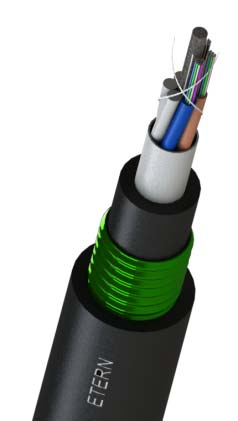



GYTA Type Non-Self-Supporting Aerial/Duct Optical Cable
TONGDING INTERCONNECTION INFORMATION CO., LTD.

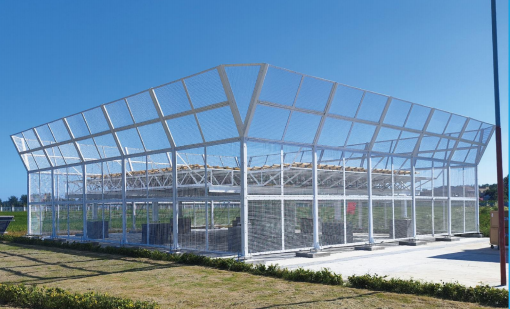
TWP16 P-Band Tropospheric Wind Profile Radar
China Huayun Meteorological Technology Group Co., Ltd.
Conveyor Belt Intelligent Monitoring System
LUO YANG WIRE ROPE INSPECTION TECHNOLOGY CO., LTD.
Mine Explosion-proof and Intrinsically Safe Industrial Ethernet Ring Network (10 Gigabit/Gigabit)
Chongqing Mas Sci&Tech Co., Ltd.