Earth Action Report: Industry Collaboration Could Cut Microfiber Leakage by 95% by 2032
en.Wedoany.com Reported - International environmental consultancy Earth Action released the report "From Shedding to Solutions," stating that industry collaboration could reduce microfiber leakage from textile production by 95% by 2032.
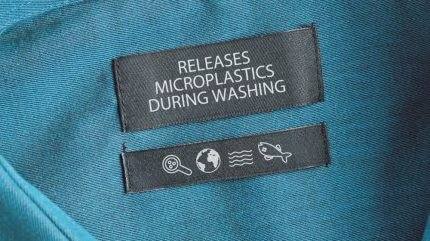
Microfibers, typically made of plastic, are microscopic particles shed during garment manufacturing, wearing, and washing, and are extremely difficult to remove once released into the environment. The report states that this study establishes the first system-level baseline of microfiber loss and leakage in global textile manufacturing, mapping the complete pathway from fiber production to wastewater treatment and sludge disposal.
Sarah Perreard, co-founder of Earth Action, stated that previous discussions on microfiber pollution have largely focused on the stage after consumers purchase clothing, such as regulations on washing machine filters. In reality, approximately half of microfiber pollution occurs during the production process, and targeting concentrated factories and treatment facilities is more achievable than reaching millions of households.
Report data shows that global microfiber losses are concentrated in major textile-producing countries: Bangladesh accounts for 25%, Pakistan 17%, and China 12%. After factoring in wastewater treatment and sludge management, China surpasses Pakistan to become the second-largest polluter. Wastewater treatment can remove 82% of fibers from water at deployment sites, but the company emphasizes that only by combining wastewater treatment with sludge management can microfibers be prevented from transferring from water to land. Perreard noted that capture does not equal sequestration—treatment and sludge disposal are two halves of the same system.
On the manufacturing side, relatively minor adjustments such as yarn structure, fabric density, and finishing processes can significantly alter microfiber shedding levels. By optimizing manufacturing processes, expanding wastewater treatment capacity in underserved regions, and ensuring controlled sludge sequestration, microfiber shedding can be reduced by 60-90%.
Kyle Blakely, Senior Vice President of Innovation, Design Studio, Development, and Testing at Under Armour, commented that the report reaffirms the industry has reached a tipping point—measurement alone is no longer sufficient, no single brand can solve this problem alone, and coordinated action across the value chain is critical. Matt Dwyer, Vice President of Global Product Footprint at Patagonia, stated that microfiber shedding is a pervasive pollution issue spanning industries and the entire product lifecycle, requiring collaborative efforts from all parties.
Related Products