en.Wedoany.com Reported - A research team led by the Madrid Institute of Materials Science (ICMM, part of the Spanish National Research Council, CSIC) has designed and developed a new type of gas separation membrane whose performance is nearly ten times higher than that of existing commercial membranes used for hydrogen purification. Industrial demand for pure hydrogen is growing, as this element plays a key role in both the energy transition and the environmental transition. According to Eva Maya, ICMM-CSIC researcher and project leader, membrane technology, with its low energy requirements, simple operation, and continuous operation capability, is one of the most promising approaches in air purification and gas separation.
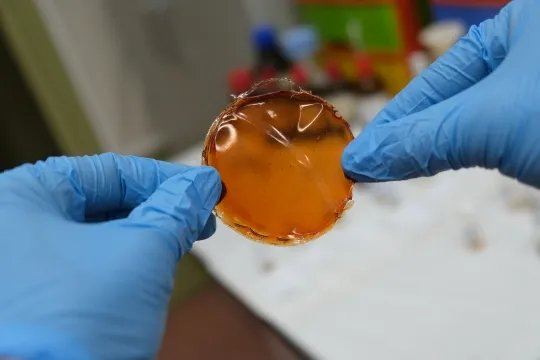
The vast majority of the research team members are women scientists. The team improved a commercial membrane based on polysulfone (a thermoplastic) by adding a porous component to the membrane. Maya explained that the pores of the porous component can be used to distinguish gas molecules, allowing smaller molecules to pass through; the membrane material must also withstand hydrogen pressure, maintain a certain elasticity, and ensure high permeability while separating gases, allowing the target gas (in this case, hydrogen) to pass through in large quantities. In the laboratory, the modified membrane showed an increase in hydrogen permeability of over 800% and an improvement in selectivity of approximately 30%.
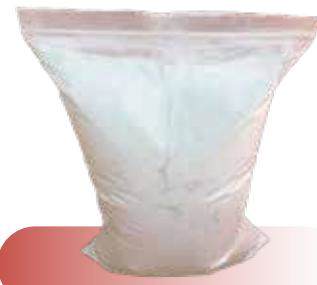
The formulation and preparation process of the porous component are another highlight of this work. The porous component is prepared using mechanochemical synthesis technology, which is more energy-efficient and sustainable compared to traditional methods. The synthesis process, which originally required three days, has now been reduced to three hours. The study also notes that large-scale production of this material has yet to be achieved. The petrochemical industry is seeking more effective methods for hydrogen purification, and since hydrogen is a key gas in the energy transition, this compound holds great application potential for the sector. Maya concluded that this approach can reduce the synthesis time of porous fillers, limit the use of toxic solvents, and help reduce hazardous waste.