German BioRootGuard Project Develops Biodegradable Film to Protect Tree Roots by 2026
en.Wedoany.com Reported - The BioRootGuard research project is developing a biodegradable plastic film to protect root systems during the tree planting phase, reducing losses caused by feeding from cockchafer larvae and the invasive Japanese beetle. These two pests pose a growing threat to large-scale reforestation efforts.
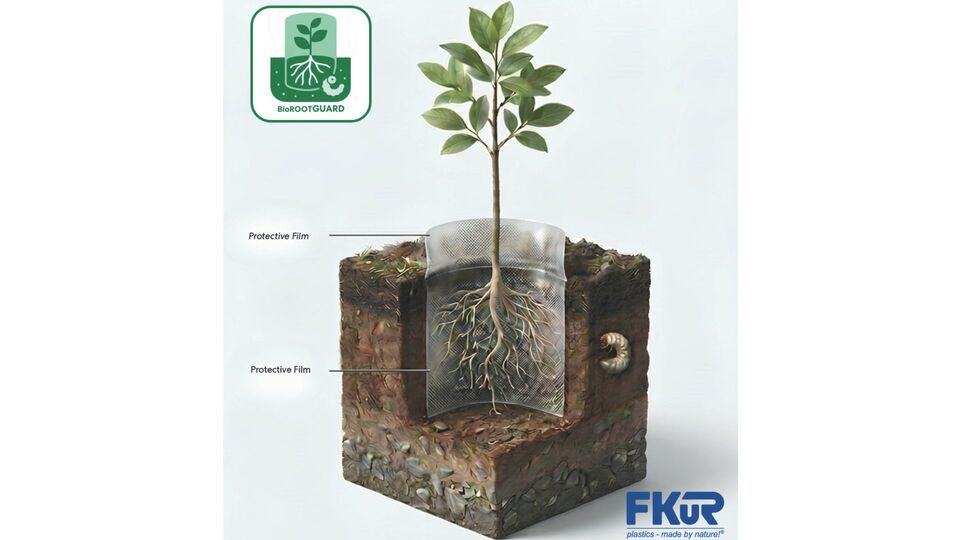
In addition to climate-change-related stressors, root-feeding damage caused by cockchafer larvae and the increasing numbers of invasive Japanese beetles has become a significant factor affecting the success of reforestation. To address this, the BioRootGuard project consortium aims to develop a biodegradable plastic film that protects tree roots during the planting phase, reducing the sometimes substantial losses caused by these pests while avoiding negative environmental impacts.
The project consortium, led by FKuR Kunststoff, brings together specialized institutions and industrial companies from the fields of materials development, forestry science, and environmental research to advance the development work. The project is funded by the German Federal Ministry of Food, Agriculture and Regional Identity (BMLEH) through the Agency for Renewable Resources (Fachagentur Nachwachsende Rohstoffe – FNR) under the "Sustainable Renewable Resources" funding program.
The development process is divided into two phases: first, a plastic composite material is developed that can fully biodegrade in forest soil without leaving residues; subsequently, the process for processing this material into a film is investigated. When planting young trees, the film is placed around the root ball, providing physical protection while allowing healthy root development. After the protection period ends, the film decomposes naturally through biodegradation without requiring manual removal, thereby saving subsequent recovery costs and labor input.
In addition to acting as a mechanical barrier, the new film is also designed to repel cockchafer larvae from the root zone. Researchers are investigating natural repellents with the aim of achieving a repellent effect on the larvae in an environmentally sustainable manner.
Antje Birkholz, Head of R&D at FKuR and Project Manager of BioRootGuard, stated that the project aims to provide plant protection during the most vulnerable stage of the root system and to biodegrade naturally after use, thereby combining material innovation with the needs of modern forestry and woody plant production.
As the consortium coordinator, FKuR is responsible for overall project management and the development of biodegradable and bio-based plastic materials, leveraging its experience in developing bioplastics with specific properties to drive the transfer of results toward industrial application. Antje Birkholz added that developing a material that meets technical requirements while returning to the natural cycle after its service life will demonstrate the potential of modern plastics processing technology in creating new applications.
Within the interdisciplinary team, Kelmaplast G. Kellermann is responsible for transferring the biodegradable composite material developed in the project into manufacturing processes and for producing the protective film; Hydra Marine Sciences assesses the environmental behavior of the material, analyzes its degradation in aquatic systems, and conducts ecotoxicological studies related to safety; Fraunhofer UMSICHT provides scientific support for material development, analyzing its properties and biodegradation behavior in soil; the Forest Research Institute of Baden-Württemberg (Forstliche Versuchs- und Forschungsanstalt Baden-Württemberg – FVA) conducts field trials to evaluate the protective effect under real-world conditions; and the Julius Kühn Institute (Julius Kühn-Institut – JKI) focuses on the control of Japanese beetle larvae and explores the application of this method in areas such as forest nurseries, vineyards, and traditional orchards.
The BioRootGuard project runs from June 2026 to May 2029. The project is funded by the German Federal Ministry of Food, Agriculture and Regional Identity (BMLEH) through the Agency for Renewable Resources (FNR) under the "Sustainable Renewable Resources" funding program. The consortium is coordinated by FKuR Kunststoff, with partners including Kelmaplast G. Kellermann, Hydra Marine Sciences, Fraunhofer UMSICHT, the Forest Research Institute of Baden-Württemberg (FVA), and the Julius Kühn Institute (JKI).
Related Products

4HS-8 High-efficiency Peanut Inverted-laying Harvester
Hebei Yongfa Hongtian Agricultural Machinery Manufacturing Co., Ltd.


Industrial and Commercial Point-Type Gas Detector
Jinan Benan Technology Development Co., Ltd.

714CD Series C-Band Weather Radar
Chengdu Zhongdian Jinjiang Information Industry Co., Ltd.