U.S. DESI Legacy Imaging Surveys Release 5.6-Trillion-Pixel 2D Map of the Universe
en.Wedoany.com Reported - On August 10, 2026, the Dark Energy Spectroscopic Instrument (DESI) Legacy Imaging Surveys team released the largest 2D color map of the universe to date. The map contains 5.6 trillion pixels and covers nearly 4 billion celestial objects, primarily stars and galaxies. The data has been made publicly available and can be viewed through the Legacy Survey Sky Viewer.
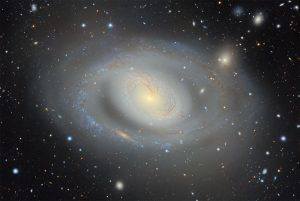
Astronomers and citizen scientists can browse the map or combine it with their own observational data to search for rare phenomena such as gravitational lenses, monitor transient events like supernovae, and explore the two great mysteries of dark matter and dark energy. The new map builds on earlier versions, whose data have already supported more than 1,800 scientific papers.
David Schlegel, co-leader of the Legacy Surveys and a scientist at the U.S. Department of Energy's Lawrence Berkeley National Laboratory (Berkeley Lab), stated that the map has become part of astronomical research—when processing celestial objects today, researchers often first open the Legacy Imaging Viewer to examine their targets. The updated map covers approximately 75% of the sky across visible and near-infrared wavelengths, providing a deep view of the extragalactic universe unobscured by Milky Way dust and stars. Researchers expect it to remain the most comprehensive 2D map of the universe for years to come.
More than 160 scientists participated in the project's data collection, with a team of 20 generating the final dataset. The map integrates 263,407 telescope exposures from three ground-based surveys: the Dark Energy Camera Legacy Survey (DECaLS) at NSF's Cerro Tololo Inter-American Observatory, the Mayall z-band Legacy Survey (MzLS) at NSF's Kitt Peak National Observatory, and the Beijing-Arizona Sky Survey (BASS) at the University of Arizona's Steward Observatory. Multi-year data from NASA's Wide-field Infrared Survey Explorer (WISE) and other public data were also incorporated.
Arjun Dey, an astronomer at NSF's NOIRLab and co-leader of the Legacy Surveys, noted that these data form the foundation for his team's research on the history of cosmic expansion and the formation of galaxies; but the sky belongs to everyone, and this survey allows everyone to explore the sky and marvel at its wonders.
The DESI Legacy Imaging Surveys were originally undertaken in preparation for the Dark Energy Spectroscopic Instrument (DESI) survey. The 2D map is essentially a deep photograph of the sky, recording the positions and brightness of galaxies and stars. This step enabled DESI to select targets and measure light at different wavelengths to determine distances, thereby constructing the largest high-resolution 3D map to date. By studying how galaxies cluster at different cosmic ages, scientists track how dark energy has changed over time. In April 2026, DESI completed its original five-year survey plan ahead of schedule, observing far more targets than expected; early results suggest that the influence of dark energy may be weakening over time, a paradigm shift that could affect the ultimate fate of the universe. DESI plans to release improved results based on the first five years of data in 2027 and will continue observing through 2028.
Because DESI observes galaxies with exceptional efficiency, the Legacy Surveys map needed to expand accordingly. Schlegel said it was clear early on that the project could exhaust observable galaxies and sky, so it was best to start addressing that issue. Since June 2026, the new map has been used to select DESI targets and will guide telescope operations in the coming years. For the processing work, the team combined hundreds of thousands of images taken over 2,285 nights, each captured under different atmospheric and telescope conditions, spent about a year developing computer code, and used eight weeks on the Perlmutter supercomputer at Berkeley Lab's National Energy Research Scientific Computing Center (NERSC) to process all the images.
In addition to supporting DESI, the Legacy Surveys will serve as a foundational reference for next-generation telescopes. As facilities such as the NSF-DOE Vera C. Rubin Observatory (jointly funded by NSF and the DOE Office of Science) and NASA's Nancy Grace Roman Space Telescope come online, researchers can compare their observations with one of the deepest and most comprehensive views of the sky ever produced. The data will also be used to train artificial intelligence tools for analyzing petabyte-scale astronomical data; it will be incorporated into an astrophysics pilot project within the American Science Cloud, as part of the DOE's "Genesis Mission." The DESI Legacy Imaging Surveys are supported by the DOE Office of High Energy Physics, the National Energy Research Scientific Computing Center (a DOE Office of Science user facility), the NSF Astronomy Division, and collaborating institutions. DESI is supported by the DOE Office of Science and NERSC, with additional support from NSF, the UK Science and Technology Facilities Council, the Gordon and Betty Moore Foundation, the Heising-Simons Foundation, the French Alternative Energies and Atomic Energy Commission (CEA), Mexico's Secretariat of Science, Humanities, Technology and Innovation (SECIHTI), Spain's Ministry of Science and Innovation, and DESI member institutions.
Related Products

Automatic Aiming Laser Remote Obstacle Removal Robot
Pinggao Group Weihai High-Voltage Apparatus Co., Ltd.


KJD127(A) Mining Explosion-Proof and Intrinsically Safe Computer
Taiyuan Xiangming Intelligent Control Technology Co., Ltd.

G.652.D Wavelength-extended Non-dispersion Shifted Single-mode Optical Fiber
HONGAN GROUP CO., LTD.


TWP16 P-Band Tropospheric Wind Profile Radar
China Huayun Meteorological Technology Group Co., Ltd.
Comprehensive Mining Automation Control System
Beijing Tianma Intelligent Control Technology Co., Ltd.
MUX Series Communication Interface Device for Security and Stability Control System
Nanjing NR Electric Co., Ltd.