Switzerland's ZuriQ and Germany's Infineon Expand Collaboration to Develop Quantum Chips
en.Wedoany.com Reported - On October 7, Germany's Infineon Technologies and Swiss quantum computing company ZuriQ expanded their existing technology collaboration to jointly develop scalable ion trap quantum computing chips. The two parties had previously completed validation of a 3×3 two-dimensional ion array, achieving independent control of 9 ions. The new phase of collaboration will focus on expanding the number of integrable qubits, combining semiconductor manufacturing, advanced packaging, and integrated photonics technologies to advance quantum processor hardware development.
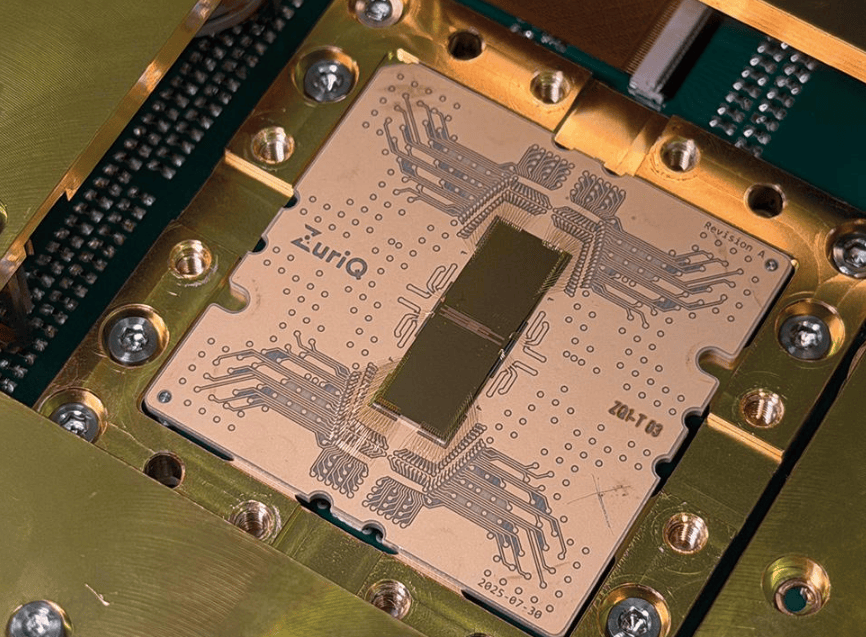
ZuriQ, founded in 2024, is a quantum computing company incubated by ETH Zurich in Switzerland, primarily developing quantum processor architectures based on Penning micro-traps. This technology uses electric and magnetic fields to confine and move ions within the two-dimensional plane of a chip, supporting ion position adjustment and array reconfiguration. The previous joint R&D between Infineon and ZuriQ has validated a two-dimensional arrangement of 9 independently controlled ions, and the two parties will use this as a foundation to develop larger-scale quantum processing units.
The two companies launched their ion trap chip collaboration in 2025, with R&D work involving ion confinement structures, semiconductor manufacturing processes, and chip integration. ZuriQ is responsible for quantum computing architecture, ion control, and chip design, while Infineon provides semiconductor manufacturing, process development, advanced packaging, and integrated photonics technology support. The two parties have also previously conducted research on radio-frequency ion traps and Penning micro-trap chips, accumulating manufacturing and control technologies for subsequently expanding the scale of two-dimensional arrays.
In the chip structure design, ZuriQ uses static electromagnetic fields to construct ion traps, reducing the high-frequency, high-voltage drive structures required by traditional radio-frequency ion traps. This architecture allows ions to move directly within the chip plane, reducing dependence on complex connection channels. The two parties plan to combine the relevant designs with industrial semiconductor manufacturing processes, continue to expand the scale of controllable ion arrays, and advance quantum chip integration and packaging development.
Under the latest collaboration arrangement, the next phase of R&D will revolve around larger-scale qubit arrays and related manufacturing processes, with the goal of developing quantum processors suitable for commercial quantum computing systems.
Related Products



Industrial and Commercial Point-Type Gas Detector
Jinan Benan Technology Development Co., Ltd.


Automatic Aiming Laser Remote Obstacle Removal Robot
Pinggao Group Weihai High-Voltage Apparatus Co., Ltd.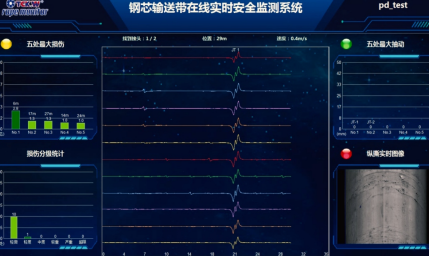
Conveyor Belt Intelligent Monitoring System
LUO YANG WIRE ROPE INSPECTION TECHNOLOGY CO., LTD.


Hot Selling 10 Inch Intel N5100 I5 I7 FHD 8 +128GB 16+256GB Win10 Pro Win11 Pro 4G 5G Rugged Tablet PC Pad with NFC Barcode
Highton Electronics Co., Ltd.