SpaceX Starship Completes 15th Test Flight, Reaches Orbit and Deploys 26 Satellites
en.Wedoany.com Reported - On November 13, SpaceX launched the Starship heavy-lift launch vehicle from Launch Pad 2 at Starbase in Texas for its 15th integrated flight test. The mission carried 26 Starlink V3 satellites and was originally planned to conduct the first-ever dual-vehicle recovery demonstration, with the Super Heavy booster and the ship upper stage separately returning to the launch site and being caught mid-air by the launch tower's mechanical arms; during the actual flight, the booster's return-to-site catch procedure was aborted, and the ship continued its orbital mission.
The mission consisted of V3 Super Heavy booster No. 22 and Starship ship No. 42. The complete launch system stands approximately 124 meters tall, with the booster about 72 meters long and the ship about 52 meters long. The booster is equipped with 33 Raptor 3 engines, generating more than 18 million pounds of liftoff thrust. About 2.5 minutes after liftoff, the rocket completed hot-staging, the ship ignited its engines and continued ascending, while the booster performed its boostback burn and headed back toward the Starbase launch site.
About 6.5 minutes after launch, SpaceX canceled the tower catch procedure for the booster's return and redirected it toward the Gulf of Mexico, where it ultimately exploded near the sea surface. A SpaceX mission commentator said the team will investigate what triggered the catch abort during the booster's return. This was also the first tower catch attempt for a V3 Super Heavy booster; SpaceX had previously completed three V1 Super Heavy booster catches, two of which subsequently flew again.
After stage separation, Ship No. 42 continued its ascent using its six Raptor engines and performed an orbital insertion burn at approximately 26 minutes and 10 seconds after launch, entering a low Earth orbit at an altitude of about 275 kilometers. This marked the second time the Starship system achieved orbital flight; the previous 14th test flight first reached Earth orbit on September 28, 2026.
The 26 Starlink V3 satellites carried by the ship began deployment approximately 35 minutes after launch. The entire release process lasted about 42 minutes and was fully completed about 1 hour and 17 minutes into the mission. This deployment was also the second batch of Starlink V3 satellites to reach orbit. Three of the 26 satellites were equipped with cameras to image the ship's external heat shield tiles and structure after deployment; the imagery will be used to inspect the thermal protection system and external hardware status, providing data for subsequent reentry flights.
As of 9:30 Beijing time on November 14, Ship No. 42 was still coasting in orbit at an altitude of about 260 kilometers, and the flight control team had abandoned the early return option set at approximately the 90-minute mark. According to the mission flight plan, the ship is scheduled to orbit Earth approximately 14 times, spending more than 21 hours in orbit, before performing its deorbit burn, atmospheric reentry, and return flight.
Related Products


JiuTian OneSky Pilot—Intelligent Management And Service Platform
China Times Prospect Science & Technology Co., Ltd.


NTE150 Electric Drive Mining Dump Truck
Inner Mongolia North Heavy Industries Group Co., Ltd.
3m intelligent buoy combining navigation safety and real-time marine monitoring integrated navigation and marine monitoring system for real-time maritime data
Chengdu Dixin Technology Co., Ltd.

Wheel and Track Technology Business
Beijing Research & Design Institute of Rubber Industry Co., Ltd.
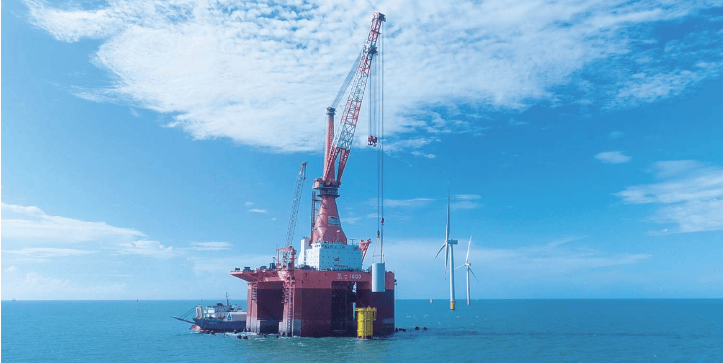
"Shunyi 1600" Deep-submerging Bottom-sitting Multi-functional Wind Power Engineering Vessel
Zhengli Offshore Engineering Co., Ltd.