China's ADASpace Completes In-Orbit Training of 32-Billion-Parameter Large Model
en.Wedoany.com Reported - On November 26, the China Academy of Information and Communications Technology released the first batch of third-party in-orbit test data for the satellites of the second group of ADASpace's "Star Compute" plan. The Libra satellites in this group have completed in-orbit training and inference service verification of the Alibaba Tongyi Qianwen Qwen3-32B large model, achieving a closed loop of full-parameter large model training, with continuous full training duration in a single orbit reaching 45 minutes and 33 seconds, and the training loss value continuing to decline.
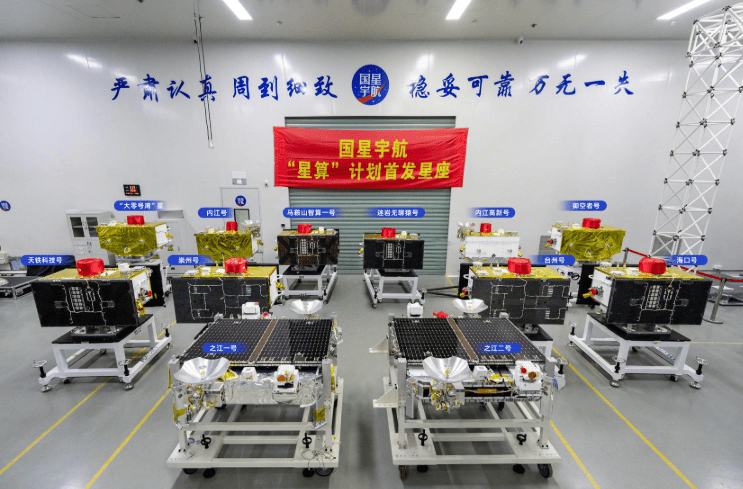
Test data shows that the Libra 32P satellite achieves a nominal computing power of 32 PFLOPS at FP8 precision. The in-orbit training covers data input, forward computation, loss computation, gradient backpropagation, and model parameter updating, realizing a complete in-orbit training process for large models.
This test involved the continuous computing power supply, thermal control management, and long-duration training task execution capability of the onboard computing system, verifying the engineering feasibility of conducting continuous full-parameter large model training in the satellite in-orbit environment.
In terms of thermal control technology, the Libra satellite is equipped with a self-developed 10-kilowatt-class liquid-cooling fluid loop system and an extra-large deployable radiative cooling wing. Both systems operate normally in orbit, capable of meeting the heat dissipation requirements for continuous operation of 10-kilowatt-class high-power computing payloads, providing thermal control assurance for the continuous in-orbit operation of high-power-consumption computing equipment.
The second group of the ADASpace "Star Compute" plan constellation consists of 8 artificial intelligence computing satellites, successfully launched on October 14, 2026, at the Jiuquan Satellite Launch Center, deployed in dawn-dusk orbit, and carrying high-performance computing payloads and high-speed inter-satellite and satellite-to-ground laser communication payloads. After this group of satellites entered orbit, the total computing power scale of the "Star Compute" plan approached 50 POPS.
According to the long-term construction plan published by ADASpace, the "Star Compute" plan intends to deploy 2,800 computing satellites, including 2,400 inference computing satellites and 400 training computing satellites, to build a space computing network covering land, sea, air, and space, providing artificial intelligence model training and inference computing services.
Related Products
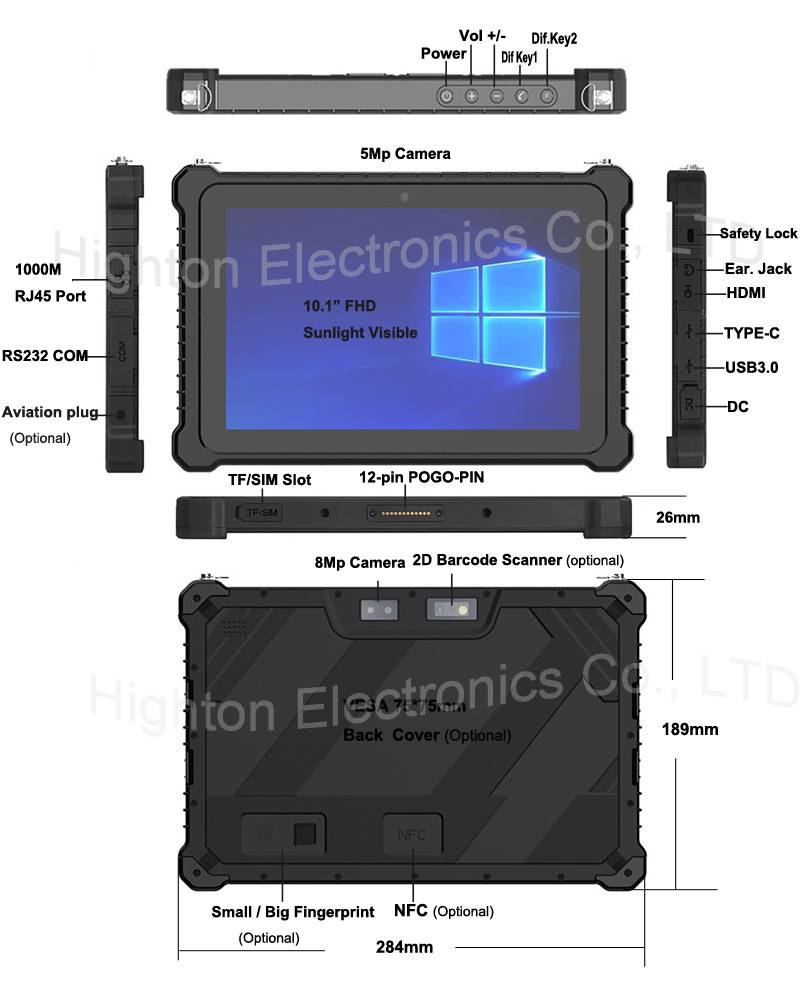

Hot Selling 10 Inch Intel N5100 I5 I7 FHD 8 +128GB 16+256GB Win10 Pro Win11 Pro 4G 5G Rugged Tablet PC Pad with NFC Barcode
Highton Electronics Co., Ltd.


20 Inch 1600*900 Full HD 60Hz TFT LED Monitor with VGA and DP Interfaces for Desktop Computers-Business Use
Guangzhou Zanying Optoelectronics Technology Co., Ltd.

One-Stop Steward Service for the Entire Logistics System Integration Chain
Zhongding Intelligent (Wuxi) Technology Co., Ltd.
G.652.D Wavelength-extended Non-dispersion Shifted Single-mode Optical Fiber
HONGAN GROUP CO., LTD.