US-based Paradromics Partners with NVIDIA to Develop AI Computing System for Brain-Computer Interfaces
en.Wedoany.com Reported - On November 23, US brain-computer interface technology company Paradromics announced a technology partnership with NVIDIA to integrate NVIDIA's Holoscan real-time computing platform and edge computing technologies into its brain-computer interface development system, with a focus on advancing neural signal decoding, real-time speech generation, and adaptive artificial intelligence model development. The two parties have set research and development targets of under 10 milliseconds of computing and data transmission latency for a direct "brain-to-speech" system, and under 100 milliseconds of latency for a multi-stage "brain-to-text-to-speech" system.

The collaboration initially targets applications for restoring speech and communication capabilities, developing two technical approaches. The direct "brain-to-speech" system converts neural signals into speech output, while the multi-stage system combines neural signal decoding, language models, and speech synthesis technologies to sequentially perform neural signal recognition, text generation, and speech output. The two parties will also develop online model fine-tuning capabilities, enabling neural decoding models to continuously recalibrate in the background based on changes in neural signals and application requirements.
Paradromics' existing Connexus brain-computer interface control unit already uses the NVIDIA Jetson Orin Nano computing module and connects to a workstation running local machine learning models to perform neural signal decoding and speech output. This round of collaboration will further introduce the Holoscan real-time computing framework and the Jetson AGX Thor computing platform based on the Blackwell architecture. The latter can deliver up to 2,070 trillion operations per second of AI computing performance, and the related hardware will be used for real-time processing, computing optimization, and device miniaturization research for next-generation brain-computer interface systems.
The two parties also plan to deploy NVIDIA IGX and Holoscan-compatible computing systems to partner research institutions through the Paradromics Application Expansion Program (APEX), establishing a shared high-performance computing environment across research institutions. The related research will expand from speech restoration to application areas including stroke, spinal cord injury, and movement disorders, supporting different research teams in developing neural decoding models and brain-computer interface applications.
According to the implementation schedule announced by both parties, in 2026, Paradromics' existing speech decoder and speech synthesis processing pipeline will first be migrated to the Holoscan platform, followed by power consumption testing, system optimization, and deployment at research institutions. In 2027, the scope of collaboration is planned to expand to high-degree-of-freedom motor control, integrating vision-language-action models to develop interactive control functions between brain-computer interfaces and external physical devices.
Related Products



GYTA Type Non-Self-Supporting Aerial/Duct Optical Cable
TONGDING INTERCONNECTION INFORMATION CO., LTD.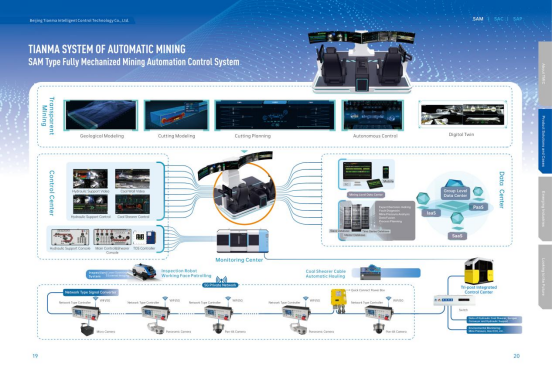
Comprehensive Mining Automation Control System
Beijing Tianma Intelligent Control Technology Co., Ltd.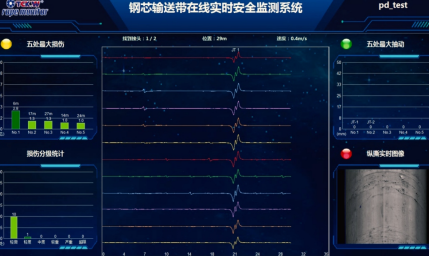
Conveyor Belt Intelligent Monitoring System
LUO YANG WIRE ROPE INSPECTION TECHNOLOGY CO., LTD.
MUX Series Communication Interface Device for Security and Stability Control System
Nanjing NR Electric Co., Ltd.

Hot Selling 10 Inch Intel N5100 I5 I7 FHD 8 +128GB 16+256GB Win10 Pro Win11 Pro 4G 5G Rugged Tablet PC Pad with NFC Barcode
Highton Electronics Co., Ltd.
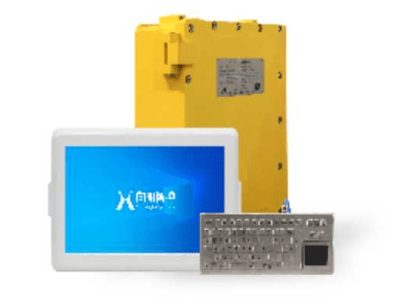
KJD127(A) Mining Explosion-Proof and Intrinsically Safe Computer
Taiyuan Xiangming Intelligent Control Technology Co., Ltd.