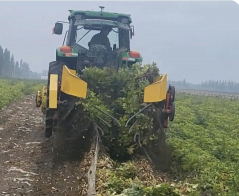
Turkey’s Grain Production Expected to Drop 12% in 2025
Wedoany.com Report-Oct. 25, The Turkish Statistical Institute projects Turkey’s total grain production for 2025 at 34.2 million tonnes, a 12.4% decrease from the previous year and below the earlier estimate of 37.4 million tonnes, according to Reuters. This reduction is attributed to challenging weather conditions and variations in agricultural practices, impacting yields across key crops.
Wheat output is forecasted at 17.9 million tonnes, reflecting a 13.9% decline compared to 2024 and falling short of the initial projection of 19.6 million tonnes. As a staple crop, wheat plays a significant role in Turkey’s food supply and export markets. The lower yield could influence domestic availability and trade dynamics in the region, given Turkey’s prominence in global wheat markets.
Barley production is expected to reach 6 million tonnes, a 25.9% drop from the prior year and below the earlier estimate of 7.5 million tonnes. This reduction may affect the availability of barley for animal feed and food processing, potentially impacting local commodity prices and supply chains. Industry observers note that these shifts highlight the vulnerability of agricultural output to environmental factors.
The decline in grain production could lead to adjustments in Turkey’s trade strategies, particularly for wheat and barley, where the country holds a significant position in international markets. Increased imports may be considered to meet domestic demand, ensuring stability in food and feed supplies. The Turkish Statistical Institute’s updated figures provide a clearer picture of the season’s challenges, guiding stakeholders in planning for market needs.
“This year’s grain output reflects the impact of unpredictable weather patterns,” said an analyst from the Turkish Statistical Institute. “While we anticipate adjustments in trade to balance supply, Turkey’s agricultural sector remains focused on resilience and long-term sustainability.”
Efforts to mitigate these challenges include exploring improved farming techniques and resource management to bolster future yields. Turkey’s agricultural sector continues to adapt, leveraging its established infrastructure to navigate fluctuations in production. The lower output underscores the importance of diversified sourcing strategies to maintain food security and market stability.
Turkey’s role as a key grain supplier ensures that these changes will be closely monitored by regional and global partners. The 2025 projections signal a need for proactive measures, such as optimizing storage and distribution networks, to address potential gaps. By aligning production insights with trade planning, the country aims to maintain its influence in grain markets while supporting domestic consumption needs.
The data highlights the broader implications of environmental variability on agriculture, prompting ongoing collaboration between farmers, researchers, and policymakers. As the season progresses, further assessments will refine strategies to support Turkey’s agricultural output and its contributions to regional trade, ensuring a balanced approach to food supply and economic stability.
Related Products





Industrial and Commercial Point-Type Gas Detector
Jinan Benan Technology Development Co., Ltd.
714CD Series C-Band Weather Radar
Chengdu Zhongdian Jinjiang Information Industry Co., Ltd.