Trump, Nine Pharmaceutical Companies Strike Deal to Cut Prices
Wedoany.com Report-Dec.20, U.S. President Donald Trump, along with executives from nine leading pharmaceutical firms, revealed agreements on December 19, 2025, to reduce medication costs for the Medicaid program and individuals paying directly. This initiative seeks to bring U.S. pricing in line with levels in other developed countries.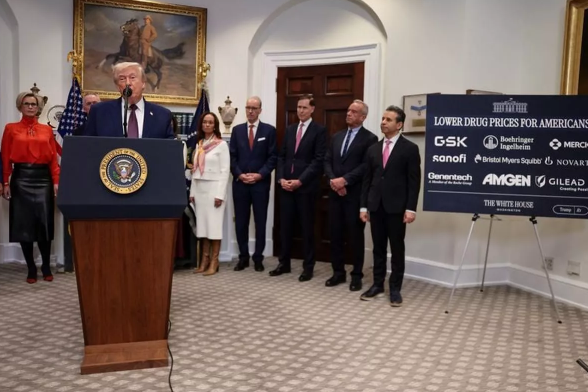
The participating companies include Bristol Myers Squibb (BMY.N), Gilead Sciences (GILD.O), Merck (MRK.N), Roche's Genentech unit (ROG.S), Novartis (NOVN.S), Amgen (AMGN.O), Boehringer Ingelheim, Sanofi (SASY.PA), and GSK (GSK.L).
"We were subsidizing the entire world. We're not doing it anymore," Trump said at a White House press conference, surrounded by representatives from the firms.
U.S. consumers typically face higher prescription costs compared to those in other advanced economies, often up to three times more. These agreements address ongoing efforts to adjust pricing structures accordingly.
Following the announcement, stock prices for most involved companies increased by 1% to 3%. The deals provide a three-year exemption from potential tariffs, while the administration noted price reductions of up to 70% from list prices. However, firms already offer significant post-market rebates on many products.
"These deals re-affirm that the pharma leaders have taken this opportunity to collaborate with this administration to deliver headlines and minimize any step-change in company economics from these deals," Bernstein analyst Courtney Breen said, highlighting Gilead's potential benefits due to its Medicaid involvement.
Mehmet Oz, director of the Centers for Medicare and Medicaid Services, indicated that Regeneron (REGN.O), Johnson & Johnson (JNJ.N), and AbbVie (ABBV.N) plan to meet at the White House after the holiday period to introduce the TrumpRx website. All three firms confirmed ongoing discussions with officials.
The agreements involve lowering prices on a majority of drugs supplied to Medicaid, which serves low-income individuals. Senior officials described these changes as leading to considerable cost reductions on commonly prescribed treatments. Medicaid represents about 10% of overall U.S. pharmaceutical expenditures and already receives notable discounts, sometimes over 80%.
Additional provisions include offering reduced direct-to-consumer prices for certain medications via the TrumpRx.gov platform, introducing new products at rates matching those in other affluent nations, and expanding domestic production. In exchange, companies gain the tariff relief.
Most insured Americans use fixed co-payments or co-insurance tied to list prices, so the TrumpRx site primarily assists those paying out-of-pocket by linking to company sales portals.
Merck announced it will provide its diabetes medications Januvia, Janumet, and Janumet XR—facing generic entry next year—at approximately 70% below list prices directly to consumers. Its investigational cholesterol treatment enlicitide may also be available through similar channels if approved. Enlicitide is among Merck's candidates for accelerated FDA evaluation.
A Bristol Myers executive stated during the event that the firm would supply its blood thinner Eliquis to Medicaid at no cost under the agreement.
Amgen plans to include its migraine therapy Aimovig and arthritis drug Amjevita in a patient-direct program at $299 monthly, representing 60% to 80% savings from list prices.
Sanofi committed to delivering lower-priced options through TrumpRx and other direct platforms, with average reductions of about 70% on drugs for infections, cardiovascular conditions, and diabetes.
In July 2025, Trump contacted heads of 17 major pharmaceutical entities, encouraging them to adopt most-favored-nation pricing for Medicaid and align new launches with international standards.
Five companies had earlier reached similar arrangements: Pfizer, Eli Lilly (LLY.N), AstraZeneca (AZN.L), Novo Nordisk (NOVOb.CO), and EMD Serono.
The recent pacts extend most-favored-nation pricing to new launches across commercial, public, and direct-pay sectors, including Medicare for seniors. A share of international sales revenues will be directed back to the U.S. to cover expenses.
Collectively, the firms pledged over $150 billion for research, development, and manufacturing in the U.S., though some may incorporate prior investments. Merck contributed $70 billion to this total.
Several also agreed to contribute active pharmaceutical ingredients to the national strategic stockpile, with Bristol Myers donating more than six tonnes of Eliquis components.
These steps aim to enhance access to treatments while supporting industry growth and supply chain resilience.