Important Progress Made in Breast Cancer Single-Cell Atlas Research
Wedoany.com Report on Feb 10th, Breast cancer is one of the most common malignant tumors in women and a leading cause of cancer-related deaths among females. As a highly heterogeneous disease, the diversity of breast cancer cells and their surrounding microenvironment is a key factor influencing treatment efficacy and patient prognosis.
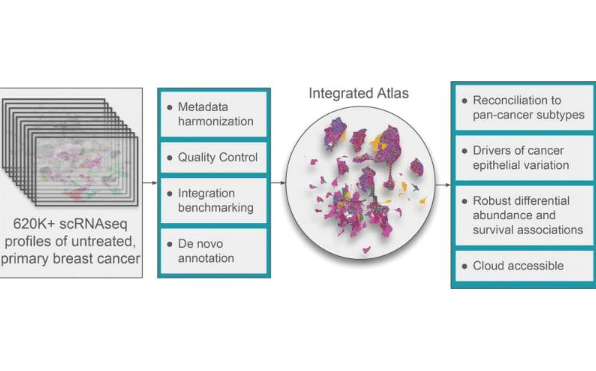
A research team from Boston University's Chobanian & Avedisian School of Medicine recently published a significant research achievement. This study integrated over 600,000 single-cell data points from 138 patients to construct the largest human breast single-cell atlas to date. This breast cancer single-cell atlas reveals the cellular composition characteristics within tumors at high resolution.
Corresponding author Dr. Stefano Monti stated: "This study represents the most comprehensive single-cell analysis of primary breast tumors to date. We were able to characterize in detail the various cancer cell types present in breast tumors, as well as multiple immune cell and stromal cell types. Previous studies, limited by sample size and cell numbers, had certain constraints in terms of reliable discoveries."
The research team collected eight publicly available human breast tumor single-cell RNA sequencing datasets, and through rigorous data cleaning and computational integration, corrected for technical variations. The researchers classified cells into major categories such as epithelial cells, immune cells, and stromal cells, performed clustering and functional annotation on subpopulations, and assessed the functional states of cells. The associations between these cellular features and clinical indicators were also systematically validated.
First author Andrew Chen pointed out: "This breast cancer single-cell atlas can help identify specific cell types associated with patient prognosis, as well as immune cells and stromal cells with distinct distribution characteristics across different breast cancer subtypes. These findings are expected to guide the development of novel prognostic testing methods and provide references for selecting therapeutic targets, thereby facilitating the formulation of personalized treatment strategies."
The research team has publicly shared this breast cancer single-cell atlas and related analysis code, providing resource support for further exploration by the scientific community. This research was published online in the journal NAR Genomics and Bioinformatics, offering an important data foundation and analytical tool for the field of breast cancer research.