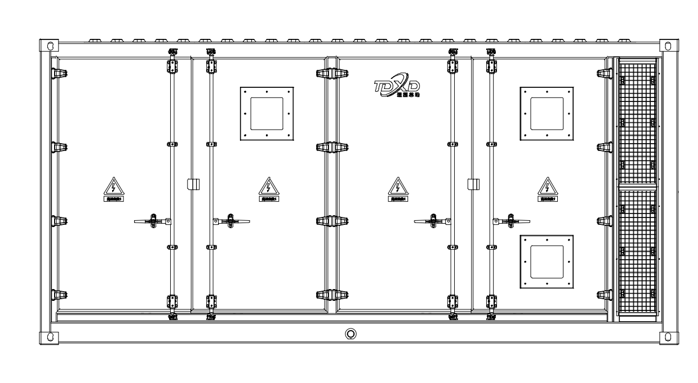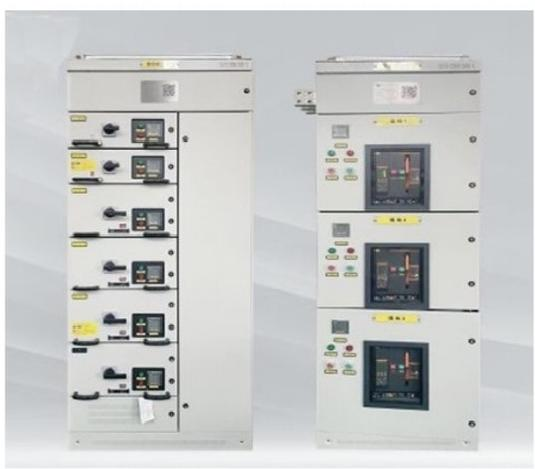


The typical structural schemes of SLVA low-voltage switchgear consist of 4 major categories and 8 subcategories. The 4 major categories are incoming cabinet, bus tie cabinet, feeder cabinet, and reactive power compensation cabinet. The 8 subcategories include 1 type each for incoming and bus tie cabinets; 4 types for feeder cabinets; and 2 types for reactive power compensation cabinets.
Product Features:
- Streamlined Classification and Unified Standards: Breaks away from traditional cabinet type classification, standardizing and unifying the structural schemes, primary interfaces, secondary interfaces, civil engineering interfaces, and main component parameters of low-voltage switchgear;
- Balanced Differentiation: Main components and cabinet layout adopt schemes that have been widely used in recent years and represent future development directions. At the same time, considering de-differentiation configuration, miniaturized cabinet types, SVG compensation, and communication interfaces are provided as optional schemes for users to choose;
- Appropriately Forward-looking, One-step Implementation: Appropriately advanced design for low-voltage switchgear rated current sequence, protection level, reactive power compensation device, emergency power interface, phase verification device, and feeder load monitoring to adapt to future transformation needs of the distribution network, achieving the goal of one-step implementation after equipment commissioning and avoiding frequent upgrades and transformations;
- Simplified Operation and Maintenance, Enhanced Efficiency: Unified and optimized design for the structural layout, dimensional design, insulation protection, and cabinet door hinge installation details of low-voltage switchgear, facilitating inspection and operation by maintenance personnel, reducing periodic maintenance items, and further improving work efficiency.