Application
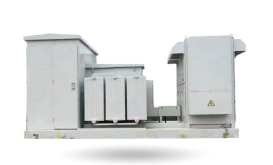
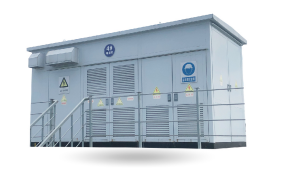
The European-style photovoltaic box-type substation is widely used in urban residential communities, high-rise buildings, power grid upgrades, industrial and mining enterprises, hotels, shopping malls, railways, airports, ports, oil fields, highways, temporary power facilities, and other indoor and outdoor locations.
The European-style photovoltaic box-type transformer must meet the following operating conditions:
1.Altitude not exceeding 1000m;
2.Ambient temperature between -25℃ and +40℃;
3.Relative humidity: daily average not exceeding 95%, monthly average not exceeding 90%;
4.Installation location: away from fire sources, explosions, conductive dust, chemically corrosive gases, and areas with severe vibration. If the above conditions are exceeded, users may consult our company.
Functions and Features
1.Strong integration of high-voltage switchgear, transformer, and low-voltage switchgear in a three-in-one design;
2.Comprehensive high- and low-voltage protection, safe and reliable operation, and simple maintenance;
3.Small footprint, low investment, short production cycle, and easy mobility;
4.Flexible and diverse production line planning;
5.Unique structure: the unique double-layer (composite panel) structure of the honeycomb design is sturdy, heat-insulated, heat-dissipating, ventilated, aesthetically pleasing, and offers high-level protection. Shell materials include stainless steel, aluminum alloy, cold-rolled steel plate, and color steel plate;
6.Multiple types available: general type, villa type, compact type, and various other styles;
7.The high-voltage ring main unit can be equipped with a network automation terminal (FIU), featuring “four remote” functions (remote measurement, remote signaling, remote control, remote adjustment), enabling reliable detection of short-circuit and single-phase grounding faults, facilitating upgrades to automated distribution networks.