
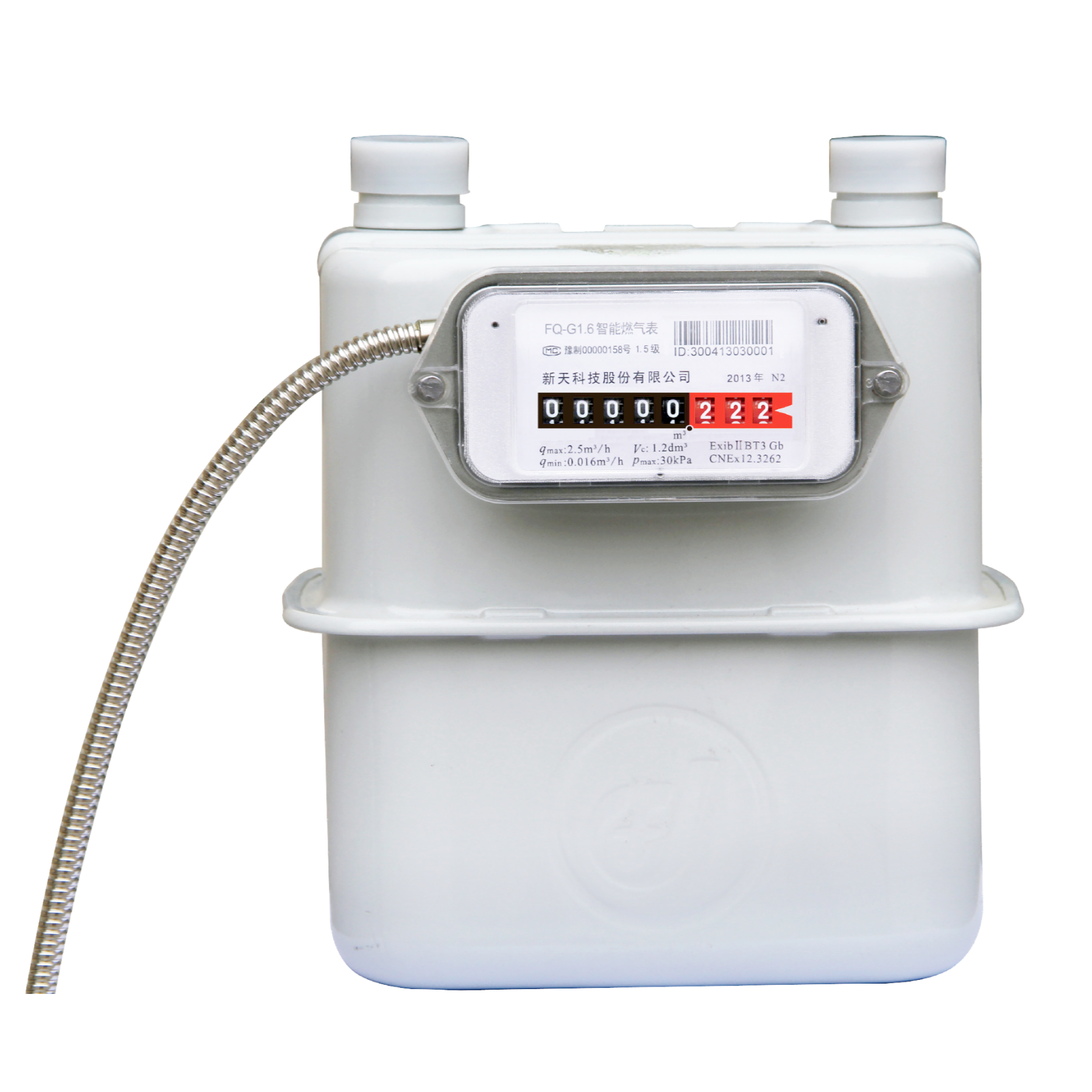


The photoelectric direct-read gas meter utilizes the company's independently developed optical wheel recognition technology to directly interpret the reading of the gas meter's counter wheel. This reading is transmitted to the module processor for data processing and error correction. Then, according to the instructions from the upstream data collection device, it is encapsulated into a protocol and the corresponding data frame is transmitted to the collection device, completing the meter reading process. Combined with our company's high-quality collection equipment, it forms an accurate, reliable, real-time, and low-cost meter reading system, facilitating management departments in statistics, monitoring, and control.
1. Transmission-type photoelectric conversion is direct and reliable, unaffected by time or environmental factors that could cause interpretation difficulties or errors, truly achieving zero-error real-time meter reading;
2. The electronic part of the direct-read gas meter has no mechanical contact with the counter's operating mechanism inside the meter, thus not affecting measurement sensitivity;
3. It directly reads the window value of the gas meter, not a cumulative pulse count, requiring no setup or data storage, truly realizing reliable "meter reading";
4. Normally, no power supply is needed; power is only required during the brief moment of meter reading, resulting in low failure rates, low power consumption, and a long service life;
5. Unaffected by external magnetic fields, the electronic module remains inactive during normal times and is unaffected by power outages, faults, interference, or even lightning strikes in the system;
6. Each gas meter has a unique address code belonging to that specific meter, facilitating management and maintenance;
7. The gas meter meets the electromagnetic compatibility design requirements for electronic products, such as EMC, ESD, and EMI;
8. During installation, only two data lines need to be directly connected to the M-BUS bus, without distinguishing polarity. Wiring can follow any topology structure, and no complex peripheral equipment is required, making installation simple, convenient, and with relatively low construction costs.
