
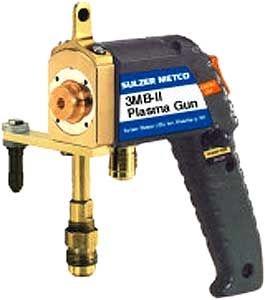
process description plasma spray is perhaps the most flexible of all of the thermal spray processes as it can develop sufficient energy to melt any material. since it uses powder as the coating feedstock, the number of co......process description plasma spray is perhaps the most flexible of all of the thermal spray processes as it can develop sufficient energy to melt any material. since it uses powder as the coating feedstock, the number of coating materials that can be used in the plasma spray process is almost unlimited. a high frequency arc is ignited between an anode (nozzle) and a cathode (electrode). process gases (generally mixtures of argon, nitrogen, hydrogen and helium) flowing between them is ionized to become a plume of hot plasma gas with that exceed the surface of the sun of 6,600 c to 16,600 c (12,000 f to 30,000 f). when the coating material is injected into the gas plume, it is melted and propelled towards the target substrate. features of the atmospheric plasma spray process: - large choice of coating materials, including metals, alloys, ceramics, cermets, carbides and others. - coating systems are possible, using layers of different materials. - produces surfaces for a wide variety of applications, including resistance to many different types or wear and corrosion mechanisms, desirable thermal or electrical characteristics, and surface restoration and dimensional control. - excellent control of coating thickness and surface characteristics, such as porosity and hardness . - no heat affected zone or component distortion. - high deposition rate. - high bond of the coating to the substrate. - coating of complex geometries. - easy masking of areas that should not be coated. - process can be fully automated. - coating of internal geometries possible
1/1


plasma spray gun
Negotiable
Product Introduction
Other products from this supplier

Related Products
V-Regulating Ball Valve
Negotiable
Large-caliber metal compensator
Negotiable
CNG Storage cascade
10000-1000000 /set
Antibacterial Stainless Steel Products
Negotiable
Dfw-12 Receiving and Distributing Electric Energy Cable Distribution Box
3800
Double flow slab caster
Negotiable
Martensitic Stainless Steel Products
Negotiable
TAA steel shot, steel blasting abrasive round steel shot S70 / 110 / 170 / 230 / 280 / 330 / 390 / 460 / 550 / 660 / 780
590-800
Stainless Steel Seamless Pipe
Negotiable
Bridge aluminum profile
Negotiable
Elbow
Negotiable
PVC-U pipe
Negotiable