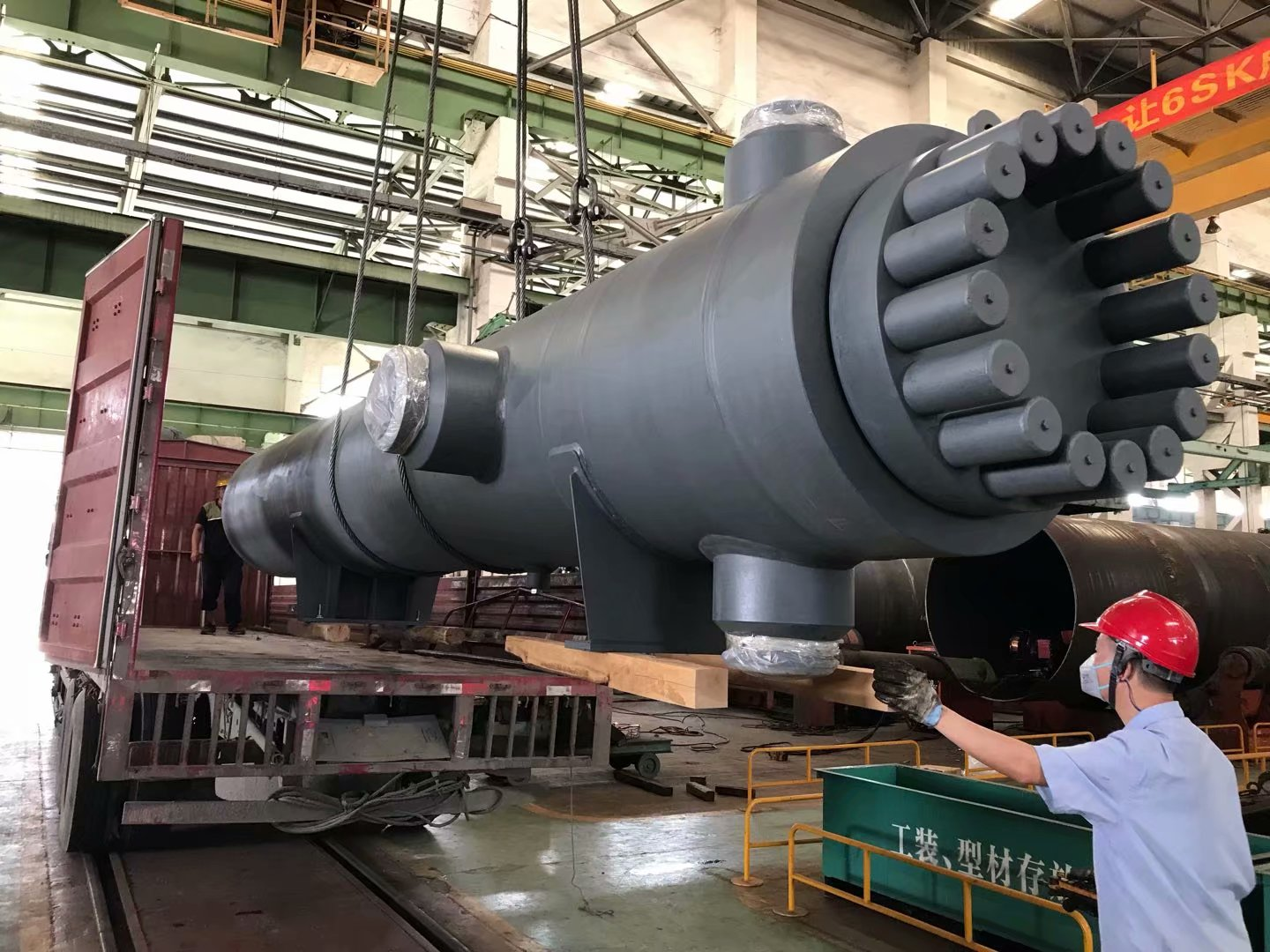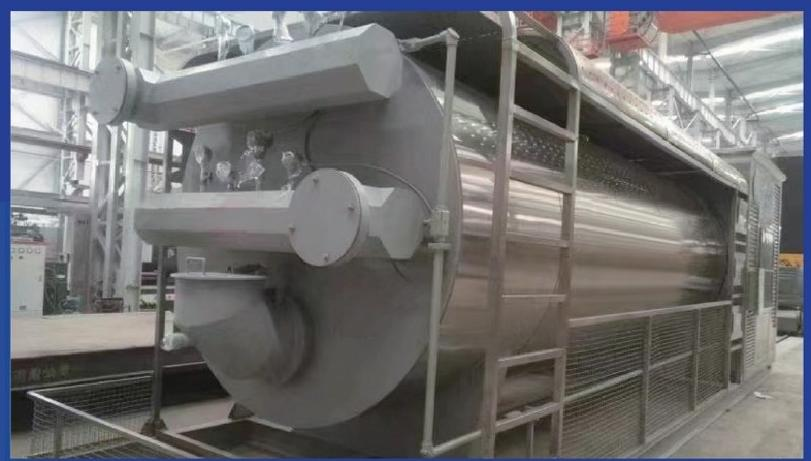


Introduction to Vertical Rotary Pyrolysis Gasification Waste Incineration Boiler Equipment
This series of waste pyrolysis gasification incineration boilers includes models with rated processing capacities of 50t/d, 100t/d, 125t/d, and 150t/d. Depending on the daily waste disposal needs, one or two units can meet the incineration requirements of a typical county-level city. The system can also utilize the flue gas or steam generated during incineration to dry municipal sludge. The dried and dewatered sludge is then fed into the incinerator for combustion, achieving harmless treatment, energy utilization of municipal sludge, and the collaborative disposal of municipal solid waste and sludge through harmless, reduced, and resource-efficient processing.
This series is highly adaptable, suitable for handling medical waste and for co-processing waste in cement kilns. After waste enters the pyrolysis gasification incinerator, the produced slag drops into a water-sealed tank through the ash hopper and is discharged via the slag extractor. The high-temperature flue gas is directed into the decomposition furnace of a cement kiln. Combustible components in the flue gas are fully burned in the cement kiln decomposition furnace with adequate secondary air. The fully burned flue gas provides heat for the cement kiln before being purified and discharged into the atmosphere.
Product Features
- Waste volume is reduced by more than 80%, and residual slag combustion loss is below 5%.
- Low air disturbance,minimal dust content in flue gas, with low operational and maintenance costs.
- The combustion state of the secondary chamber can be accurately and stably controlled.
- Minimal heat loss during slag discharge, maximizing the use of waste’s intrinsic energy.
- Good system sealing, low power consumption, saving operational and investment costs.
- Heavy metals and other substances are immobilized in solid-phase ash residue., allowing slag to be directly used for landfill.
- Slag is immersed in the water-sealed tank, preventing dust emission and enabling clean production.
- The boiler steam parameters are diversified. Depending on capacity and steam usage, safety and cost-effectiveness are fully considered. Steam pressure can be selected between 0.7 to4.1 MPa, and temperature between 170°C to400°C, to maximize the resource utilization of waste incineration.
- Reliable operation, designed to withstand high-temperature and low-temperature corrosion. Heating surfaces are arranged to avoid corrosive temperature zones, and materials are selected based on corrosion resistance to ensure equipment longevity while considering cost-effectiveness.