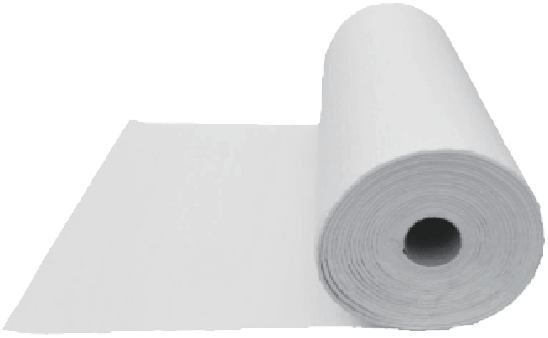
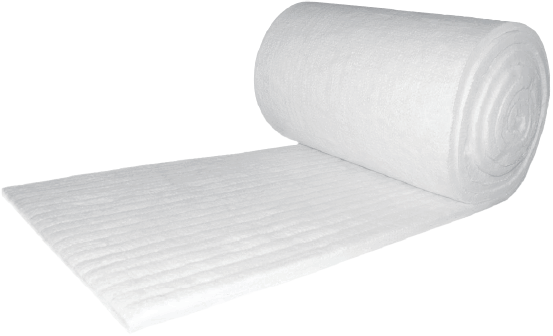
Aerogel is currently the best insulation material available, with pore sizes smaller than the mean free path of air molecules at atmospheric pressure. This results in air molecules within the aerogel pores being nearly at rest, thereby preventing convective heat transfer. Additionally, the extremely low bulk density of aerogel and the tortuous pathways of its nanostructure hinder both gaseous and solid thermal conduction. The infinite walls of voids minimize thermal radiation. These three factors work together to almost completely block all pathways of heat transfer, allowing aerogel to achieve unmatched thermal insulation performance, with thermal conductivity even lower than that of static air at room temperature (0.025 W/m·K). Aerogel blankets are relatively thin, providing significant advantages in tight installation spaces, making them easy to install and enhancing the overall aesthetic of insulation. They are primarily used for insulation in boilers, gasifiers, dryers, and kilns; thermal insulation for steam turbines; lining insulation for separators/filters; insulation for ducts and flues; leak prevention in storage tanks; leak prevention in distillation columns; insulation for process pipelines; insulation for cold process pipelines; container insulation; insulation for valve boxes; and other loose fill materials.
1/1


WA aerogel products
Negotiable
China
118 Chengjiang West Road, Economic Development Zone, Taixing City, Taizhou City, Jiangsu Province
+86 0523-87599660
industry@wincellchina.com
Product Introduction
Product Specifications
Performance specifications
|
Project Name |
Technical indicators (Grade A) |
Technical indicators (Grade S) |
|
Product Standards |
GB/T 34336 |
GB/T 34336 |
|
Thermal conductivity (W/m · K) Average temperature 25 ℃ |
≤ 0.021 |
≤ 0.017 |
|
Heating Permanent Change% |
≤-2.0 |
≤-2.0 |
|
Moisture absorption rate of mass% |
≤ 5 |
≤ 5 |
|
Hydrophobic rate% |
≥ 98 |
≥ 98 |
|
Vibration mass loss rate% |
≤ 1 |
≤ 1 |
|
Use temperature ℃ |
≤ 650 |
≤ 650 |
Product Specifications
|
Aerogel product specifications |
WA Aerogel (Grade A) |
WA Aerogel (Grade S) |
|
Length (mm) |
25000 30000 |
25000 30000 |
|
Width (mm) |
1000 1500 |
1000 1500 |
|
Thickness (mm) |
5 10 |
5 10 |
Other products from this supplier

1200-1440 /m³
WPC composite silicate
5000-6000 /ton
CW aluminum silicate products

Negotiable
WA aerogel

Negotiable
WGZ Series Moisture-Resistant Facings
Negotiable
Glass Wool Blanket for Steel Structures
1500-1800 /m³
WGC Removable Insulation Jacket
50-60 /m³
U-PVC Shell Protective System
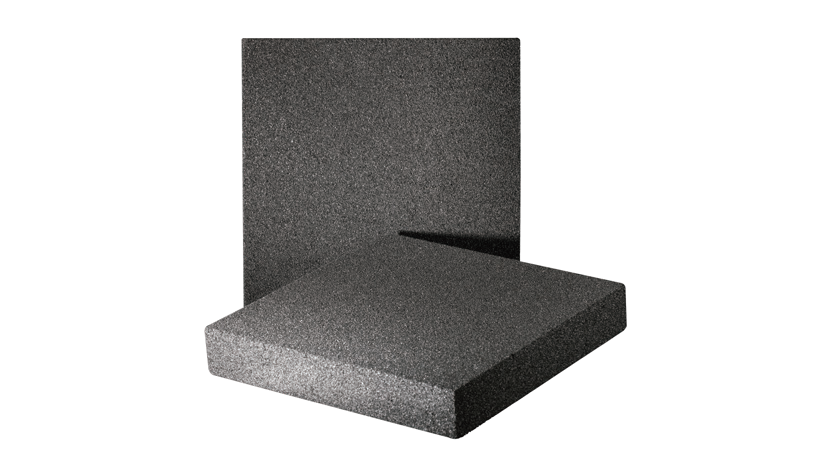
5500-6600 /m³
FG Foam Glass
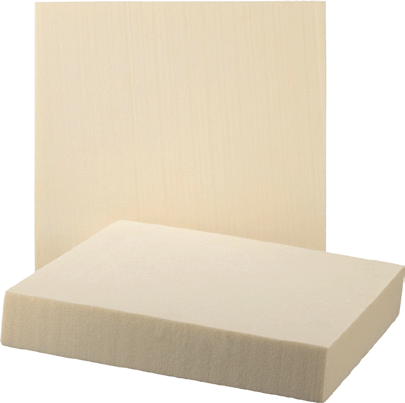
3500-4200 /m³
WPIR Polyisocyanurate
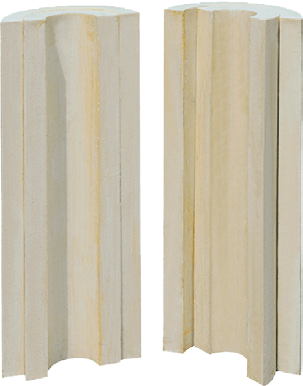
2500-3000 /m³
WPUR Rigid Polyurethane

Negotiable
WSDN nitrile/WSDF diolefin deep-freeze materials
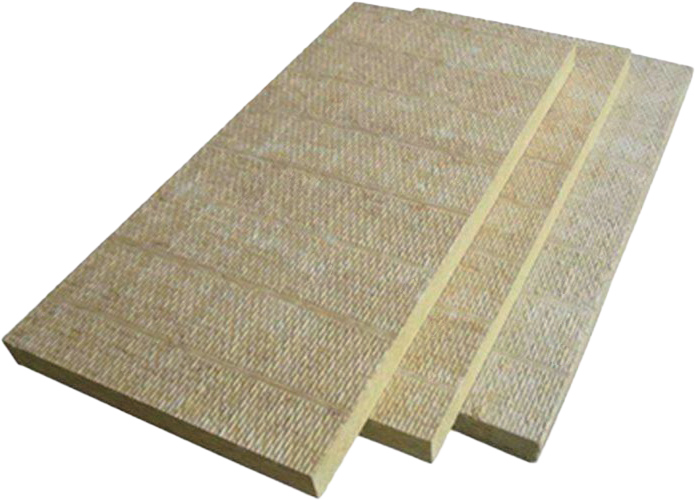
5000-6000 /ton