NASA Completes High-Altitude Lunar Calibration Mission
Wedoany.com Report on Mar 4th, NASA recently completed a three-week high-altitude campaign, using an ER-2 research aircraft at approximately 70,000 feet above the U.S. West Coast to measure the Moon's brightness, aiming to enhance the calibration accuracy of sensors on orbiting satellites. The campaign, featuring the air-LUSI (airborne Lunar Spectral Irradiance) instrument, collected precise lunar light data to calibrate Earth-observing satellites that monitor weather systems, agricultural activities, and environmental changes. The campaign concluded on February 5, marking a new step for NASA in establishing more reliable sensor calibration standards.
Satellite instruments degrade over time, and radiation and temperature fluctuations can affect their performance. To ensure long-term data accuracy, scientists use stable reference sources like the Moon for calibration. The Moon's reflective properties are essentially constant, and its brightness is closer to the operational range of Earth-observing sensors. By measuring the lunar spectral irradiance, scientists can verify if satellite instruments have drifted from their calibration and make corrections.
To minimize atmospheric interference, NASA carried the air-LUSI instrument to near-space altitudes. At 70,000 feet, the ER-2 operates above approximately 95% of Earth's atmosphere, providing clearer observation conditions. These measurements are used to validate and improve existing lunar reflectance models, which currently have uncertainties of about 5% to 10%. Once improved, satellite calibration can be performed more accurately and rapidly.
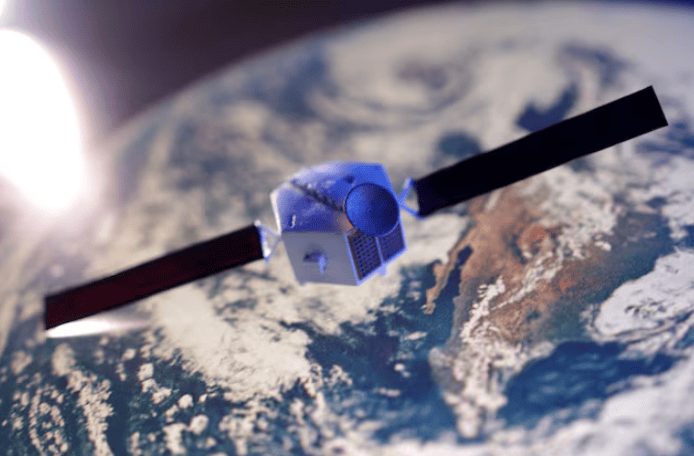
NASA also plans to advance lunar calibration from orbit with the Arcstone mission, scheduled for launch in 2025. Arcstone Principal Investigator Konstantin Lukashin stated, "One of the most challenging tasks in space-based remote sensing is achieving the required instrument calibration accuracy on orbit. The Moon is an excellent and available calibration source outside Earth's atmosphere. Arcstone's goal is to improve the accuracy of lunar calibration to enhance the quality of space-based remote sensing data products for future generations."
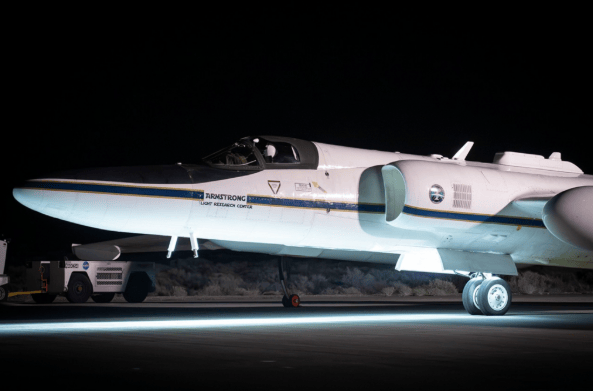
The ER-2 aircraft plays a central role in NASA's Airborne Science Program. Derived from the Lockheed Martin U-2 platform, it is adapted to carry instruments at extreme altitudes. NASA operates two ER-2s at its Armstrong Flight Research Center in California, capable of carrying up to 2,600 pounds of scientific payload. Since 1971, NASA's high-altitude aircraft have flown over 4,500 missions, supporting research on ozone depletion, climate studies, and satellite sensor development.
Accurate calibration is crucial for climate and environmental research, as small errors can accumulate and affect long-term datasets. By refining lunar calibration techniques through airborne campaigns and orbital missions, NASA aims to reduce uncertainties and increase confidence in global observations. The work of air-LUSI on the ER-2 and the future Arcstone in orbit will ensure that satellites monitoring weather, agriculture, and ecological changes continue to provide reliable data.



![IVECO Cash-in-Transit [DMT5048XYCL3-AM] - Chongqing Dima Industry Co., Ltd](https://img.wedoany.com/2026/0911/20260911030157582.png)