Atlas Air Reduces Anchorage Operations, Fairbanks Becomes Backup Hub
en.Wedoany.com Reported - According to data from NorthLink Aviation, Ted Stevens Anchorage International Airport recorded 2,518 international cargo landings in March, an 8% year-on-year decrease, marking the first monthly decline in over a year. Landing counts for Atlas Air, the airport's largest cargo operator, fell by 13% during the same period.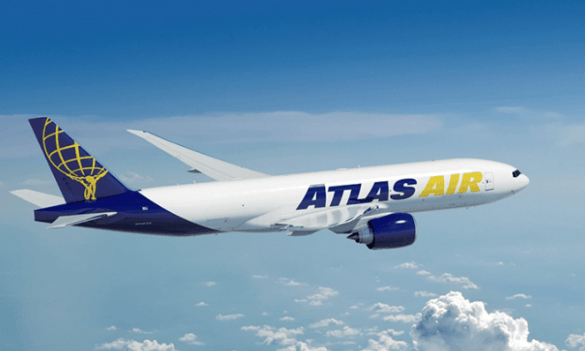
Sean Doran, CEO of NorthLink, stated that over 70% of the fuel for Anchorage Airport is transported by water from Asian refining hubs and is under pressure from ongoing disruptions in the Strait of Hormuz and China's ban on refined fuel exports. In early April, the airport handled approximately 74 daily cargo flights, down from 82 in March. However, some airlines increased operations in Anchorage, with China Southern Airlines up 91%, Amazon Air up 58%, and Suparna Airlines up 53%.
Flight tracking data shows Atlas-operated 777 freighters appearing at Fairbanks Airport, including aircraft leased to MSC Air Cargo, CMA CGM Air Cargo, and YunExpress, indicating increased use of this airport within trans-Pacific networks. Fairbanks is located about 260 miles north of Anchorage. Teri Lindseth, Development Manager for the Alaska International Airport System, said the strategic goal is to support Anchorage and grow cargo activity in a way that enhances the statewide system, with new cargo activity primarily representing incremental growth and diversification.
Atlas Air reiterated its commitment to Anchorage, stating it has a significant presence in Alaska and that Anchorage Airport is one of its largest hubs and a key transit point for its Asian network. However, the company's plan to establish a major base at the West Air Park has stalled. It is keeping its distance from the e-commerce hub proposed by NorthLink Aviation, instead relying on existing infrastructure and prioritized parking spots. The Alaska International Airport System recently notified airlines that it is closely monitoring developments in global energy markets and logistics networks, which could affect aviation fuel availability.
At the end of January, Anchorage Airport experienced a peak in operational pressure, with up to 36 aircraft on the ground simultaneously. This led to extreme taxi delays due to full ramp capacity and slowed movements from winter weather. The airport typically handles 70 to 95 arrival flights per day. A March 2025 announcement from the Alaska Department of Transportation & Public Facilities shows that Fairbanks International Airport launched a new incentive program, waiving one year of landing fees and fuel flowage fees for airlines providing weekly cargo service for at least three months. The program is expected to run through 2032.
In May 2025, Alaska Deputy Commissioner of Transportation Catherine Keith stated that Anchorage is a critical refueling hub for trans-Pacific cargo, but relying solely on the advantage of fuel load versus payload is not sustainable. The state is evaluating building a plant to produce 150 million gallons of Sustainable Aviation Fuel (SAF) annually, a plan supported by Atlas Air and Alaska Airlines. In 2024, air cargo contributed $69.3 million in revenue to Anchorage Airport, accounting for 42.5% of the airport's total revenue.
This article is compiled by Wedoany. All AI citations must indicate the source as "Wedoany". If there is any infringement or other issues, please notify us promptly, and we will modify or delete it accordingly. Email: news@wedoany.com
Related Products



ZY(J)7(M) Sealed Type Electro-Hydraulic Turnout Machine
TAIYUAN CR JINGFENG EQUIPMENT TECHNOLOGY CO., LTD.
Explosion-proof lithium battery dispatching monorail crane locomotive (permanent magnet frequency conversion integrated machine)
Xiangtan Hengxin Industrial Co., Ltd.



CLW5180TXSD6 Dongfeng Tianjin Washing and Sweeping Truck
ChengLi Special Automobile Co., Ltd.

ERW Welded Pipe (Black Pipe and Hot-dip Galvanized Steel Pipe)
Handan Zhengda Steel Pipe Co., Ltd.