DS Smith Invests in New Die-Cutting Line to Boost Cartonboard Capacity at Danish Plant
DS Smith has announced an investment of approximately €13.4 million to install an advanced flexographic printing rotary die-cutting line at its packaging facility in Grenå, Denmark. This move will significantly increase the site's annual corrugated board capacity by an estimated 15 million square meters. The Grenå facility primarily provides packaging solutions for clients in sectors such as food, beverage, and e-commerce.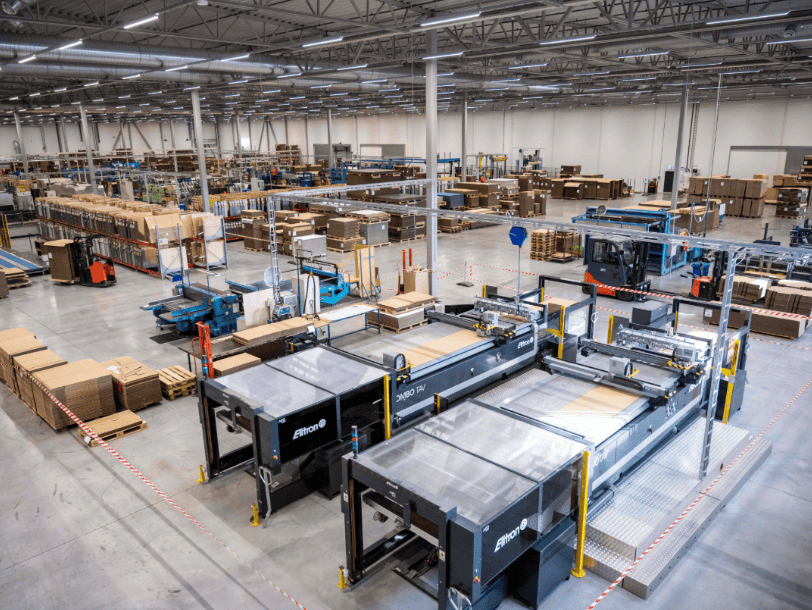
The investment is primarily allocated for the addition of five printing units and a Göpfert Rotary Die Cutter 16/28 High Board Line die-cutting machine. This equipment, featuring servo-drive technology, vacuum sheet transport, and automatic register control, is designed to enhance production accuracy, speed up changeover times, and ensure mechanical stability under continuous load. DS Smith states that the new production line will help reduce material waste and enable high-precision production of complex die-cuts.
Kristian Eriksen, Sales Director for DS Smith Denmark, said, "We see more and more customers automating their packaging and logistics processes, which places higher demands on the consistent quality and precision of packaging. With this investment, we are enhancing our capabilities to provide solutions that can operate seamlessly within our customers' automated processes—both now and in the future." The company expects the new equipment to help identify potential challenges in the production process earlier, strengthen supply chain resilience, while simultaneously reducing lead times and improving stability.
Furthermore, DS Smith plans to upgrade its packaging facility in Bredasten, Värmamo, Sweden. This involves a 3,000-square-meter expansion and the relocation of warehousing services from Malmö to Bredasten. This transition is expected to be completed by June 2027, aiming to strengthen internal operations and provide customers with better service and innovative products.
In other developments, DS Smith has partnered with Apilab to monitor environmental impact at its French packaging facilities by using bees to collect micro-samples, supporting its ESG reporting requirements. Meanwhile, Tetra Pak has invested €60 million in a pilot plant in Sweden to develop paper-based barrier technology, which is claimed to enable an 80% paper content and 92% renewable material content in a single aseptic carton.