Wedoany.com Report on Mar 7th, Independent energy expert and assurance provider DNV recently released its annual Energy Transition Outlook report for the UK, indicating that the country's energy transition faces a risk of delay due to a lack of "whole-system" thinking. The report shows that although the UK's transition pace is relatively fast, it is insufficient to meet its decarbonisation targets, including clean power by 2030, its Nationally Determined Contribution (NDC) by 2035, and net-zero emissions by 2050. Forecasts suggest the UK may fail to achieve its 2035 emissions reduction target, achieving only a 33% reduction, roughly half of what is needed.
Buildings and transport remain major obstacles. It is projected that by 2035, around two-thirds of UK households will still be using gas boilers, and over half of cars will rely on fossil fuels. The report emphasises that the UK will not achieve net-zero emissions by 2050, instead continuing to emit 130 million tonnes of CO2 equivalent annually, an 84% reduction compared to 1990. Hari Vamadevan, Senior Vice President of Energy Systems at DNV and Regional Director for the UK and Ireland, stated: "The dilemma we face is balancing the energy system during the transition. Polarised views can obscure the fundamental reality of the deep intertwinement of the energy sector, which means prioritising one area is a huge challenge unless all parts of the energy system and adjacent areas are considered."
He added: "This is not a case of renewables versus fossil fuels, but all aspects working together to drive a cleaner future. By compartmentalising the debate, we are jeopardising progress. The UK is making progress in its transition, but the pace does not match its climate ambitions. Forecasts indicate clean power operations won't be achieved until 2060. Without accelerated action, the UK risks missing its 2030, 2035, and 2050 targets." Co-author of the report, Sarah Kimpton, pointed out: "Addressing energy issues requires integrated solutions; operating in isolation cannot achieve clean energy. The seventh allocation round demonstrates the possibility of coordination, with renewable energy projects securing 14.7 GW of capacity, thanks to the connection between government policy and commercial objectives."
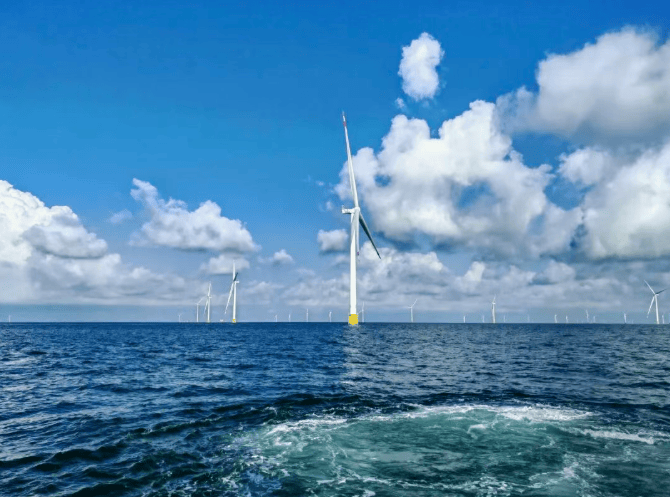
DNV found that despite the UK's plan to double wind capacity and triple solar capacity to 107 GW of variable renewable energy within the next four years, it will still rely on natural gas for 15% of its electricity generation needs by 2030. In the long term, by 2060, wind, solar, nuclear, and other sources will provide 85% of low-carbon energy, with imported fossil fuels supplying the remaining 15%. Energy security will shift towards domestic generation, storage, and flexible demand. By 2050, energy demand is expected to fall by a quarter, the share of fossil fuels in primary energy will drop from 75% to 15%, and data centre electricity demand will increase from 8 TWh to 70 TWh. However, the decarbonisation process will be affordable, with average household bills potentially 20% lower than in 2021.