Wedoany.com Report on Mar 9th, The drought situation in the Midwestern United States has continued to worsen recently. According to data from the Climate Prediction Center of the National Weather Service, as of March 14, although rainfall is expected to be above average, drought will persist in corn-producing regions such as Colorado, Nebraska, and South Dakota.
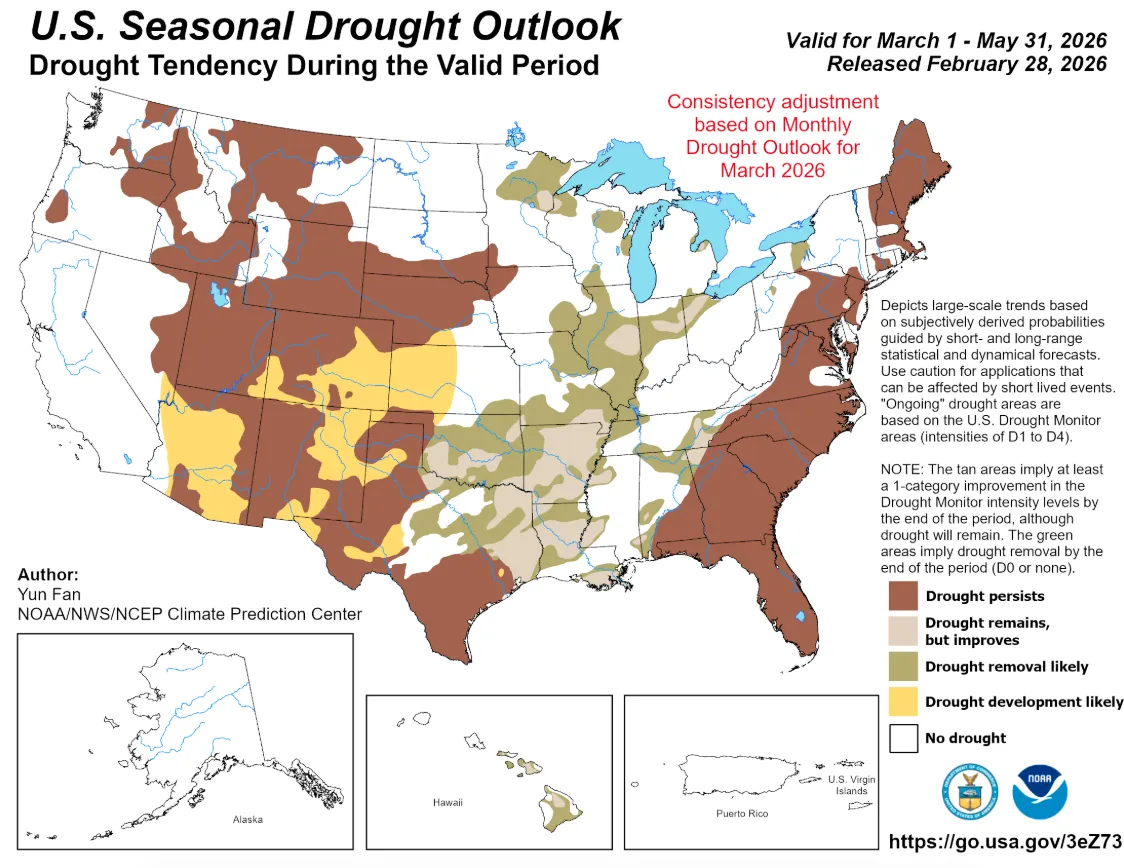
The U.S. Drought Monitor issued a report on March 5, showing that drought has intensified across most parts of the United States. The drought area expanded in the Ohio Valley of the Midwest, with western Kentucky, southeastern Missouri, and most of Indiana and Illinois receiving less than half the normal precipitation. Drought in the Great Plains spread to northwestern Iowa and southwestern Minnesota.
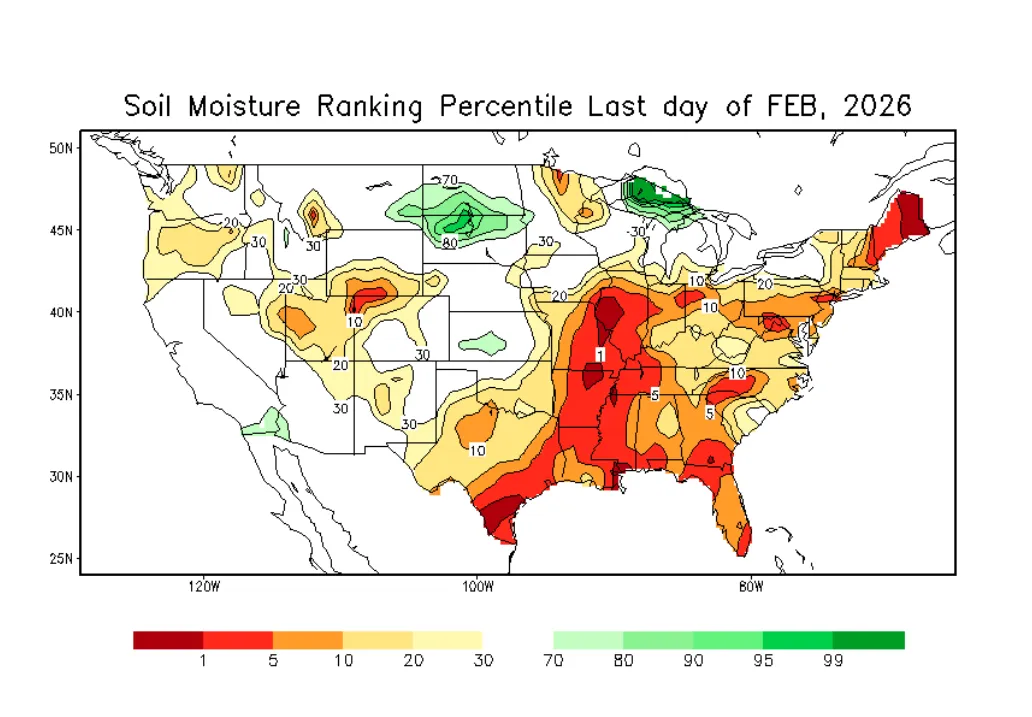
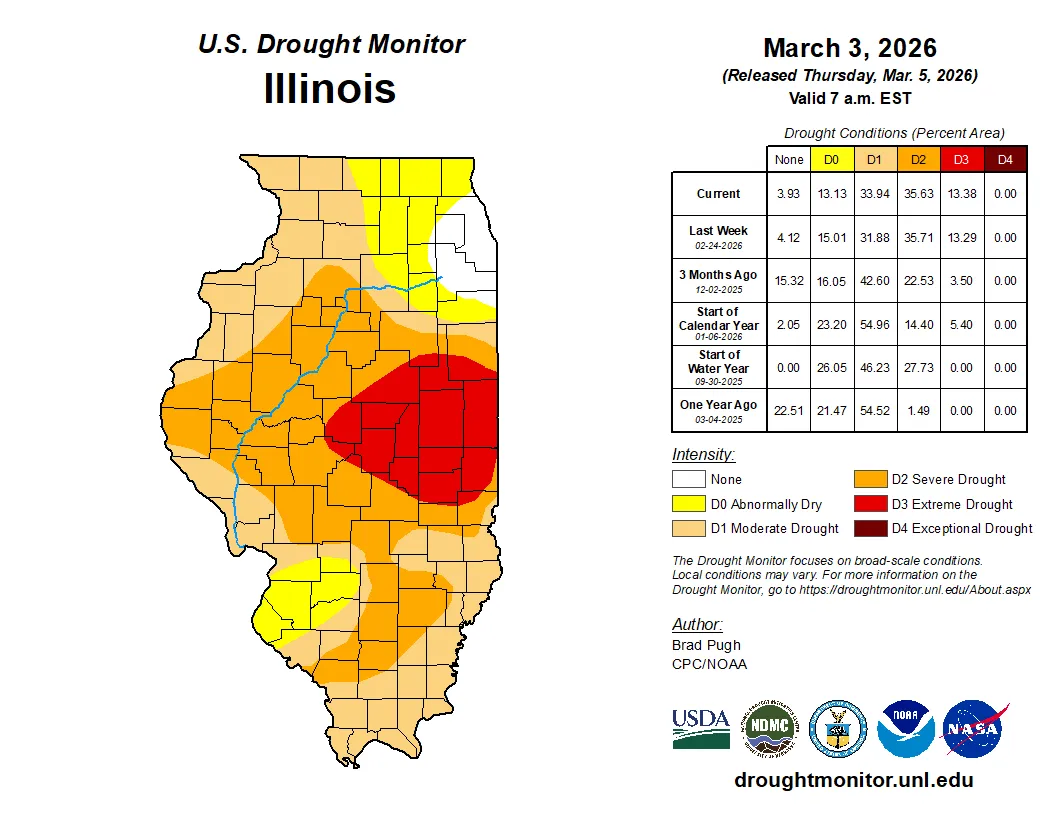
Specific data shows that Iowa's drought index rose from 93 to 119, with the drought area increasing from 67.89% to 73.79%. Illinois' drought index rose from 239 to 241, and the proportion of land in moderate drought increased from 80.88% to 82.94%. Nebraska's situation deteriorated significantly, with the drought index rising from 204 to 231. Drought conditions also worsened markedly in Missouri, Kansas, and South Dakota.
On March 4, rainfall occurred in Homer City, Illinois, an area that has been marked as a red drought zone for months. Local farmer Zach Wells said rainfall is lagging by 15 inches. He said: "The last three growing seasons have been among the driest since I've been farming continuously. This persistent dryness culminated this past summer."
Wells described local news stations issuing alerts due to wells running dry, with ditches and creeks at their lowest. He said: "Most of the riverbeds are empty. It could be a scary situation. If we continue to stay this dry going into the growing season, I think a lot of people will be worried about it." He added that deep soil moisture reserves can delay the impact of drought, but without reserves, farmers must rely on single rainfall events.
To cope with the drought, Wells uses cover crops and strip-till methods. He farms 2,200 acres in Champaign, Vermilion, and Edgar counties, growing corn, soybeans, cover crops, and non-GMO soybeans. He said: "We're doing things like strip-till and other practices to protect our limited soil moisture or soil structure. I'd like to believe we're doing everything we can to combat these weather extremes."
Wells participates in the Precision Conservation Management program, which encourages farmers to incorporate practices like cover crops. He said the organization helps address challenges and implement operations. Regarding the current season, Wells said: "We need prescription rain. It would be nice if it rained this much here and that much there. We want enough, but not too much. It's a picky situation." Despite facing weather and market volatility, he and his wife view purchasing the farm as an opportunity.