Wedoany.com Report on Mar 9th, Mike Hannewald, a field agronomist at Beck's Hybrids, points out that waterhemp posed a significant challenge to soybean cultivation in 2025, and the problem is expected to persist in 2026. According to Take Action data, more than 20 waterhemp plants per square foot can lead to a 44% reduction in soybean yield. Even if it emerges after the V5 soybean stage, yield loss can still reach 10%. Hannewald emphasizes that effective waterhemp control requires a systematic herbicide program, not reliance on a single product or application.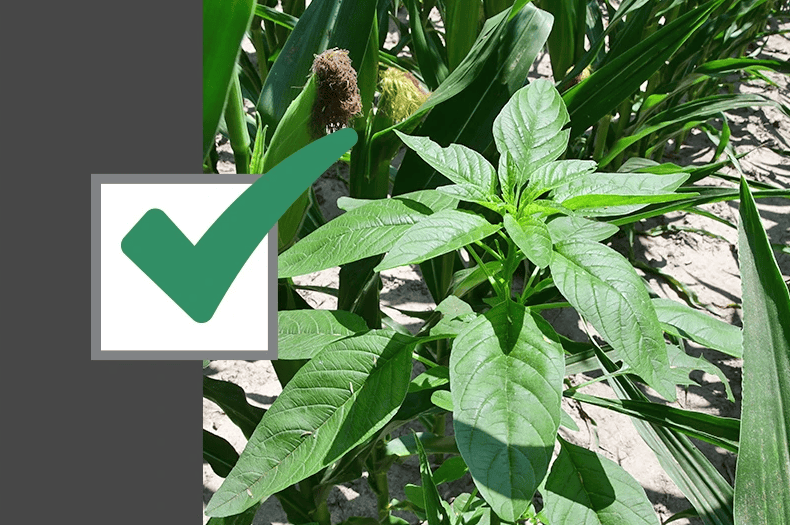
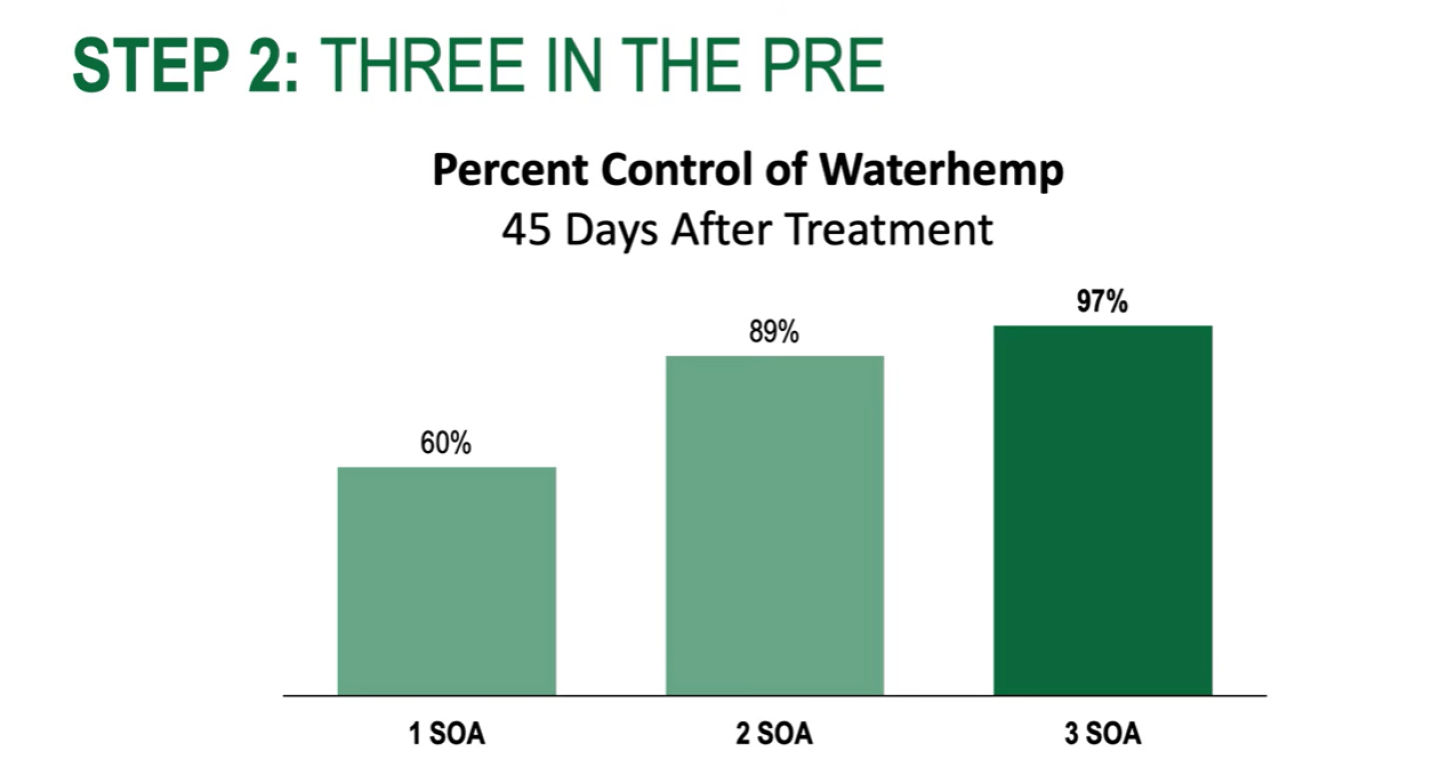
Hannewald's recommended four-step waterhemp control strategy begins with pre-planting clean-up. He advises using a non-selective herbicide or appropriate tillage to completely remove existing weeds and ensuring tools pull weeds out by the roots rather than just knocking them down. Beck's Practical Farm Research shows that incorporating three modes of action in pre-emergence applications can achieve 97% waterhemp control and last for 45 days.
The second step involves layering multiple chemicals in pre-emergence applications. Hannewald recommends focusing on chemical group numbers, combining herbicides from Group 2 (e.g., chlorimuron-ethyl), Group 5 (e.g., metribuzin), Group 14 (e.g., sulfentrazone), or Group 15 (e.g., S-metolachlor). He explains, "If planting XtendFlex soybeans and using dicamba, its residual value can count as one of the three modes of action; but when using 2,4-D, three additional modes need to be added."
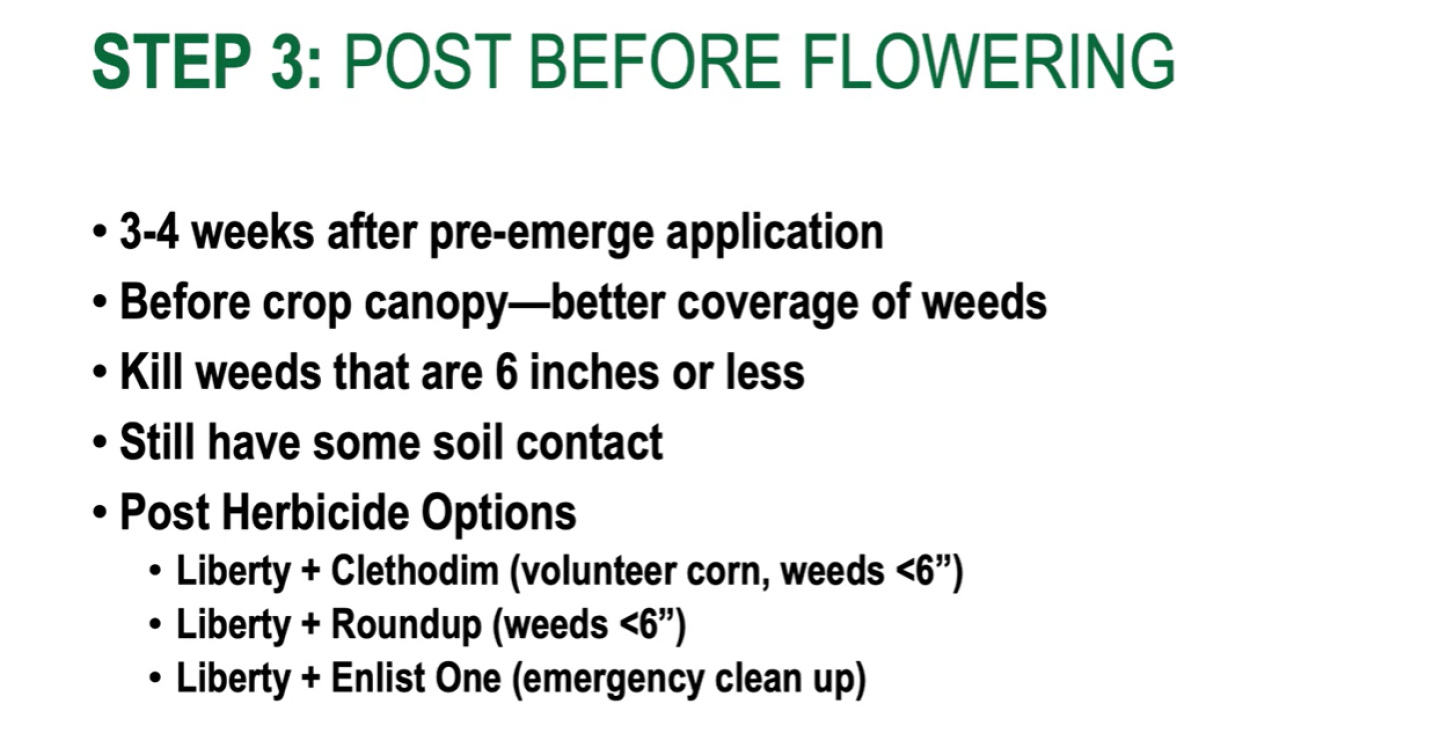
The third step is adjusting the timing of post-emergence applications. Hannewald advocates for spraying before flowering, typically at the V3 stage rather than R1, to control small weeds earlier. Agronomist Isaac Ferrie from Crop-Tech Consulting adds that glufosinate (Liberty) needs to be applied before the initial flowering of LibertyLink soybeans. A comparative study showed that applying at the R1 stage could result in a yield loss of 1.2 to 2.5 bushels per acre.
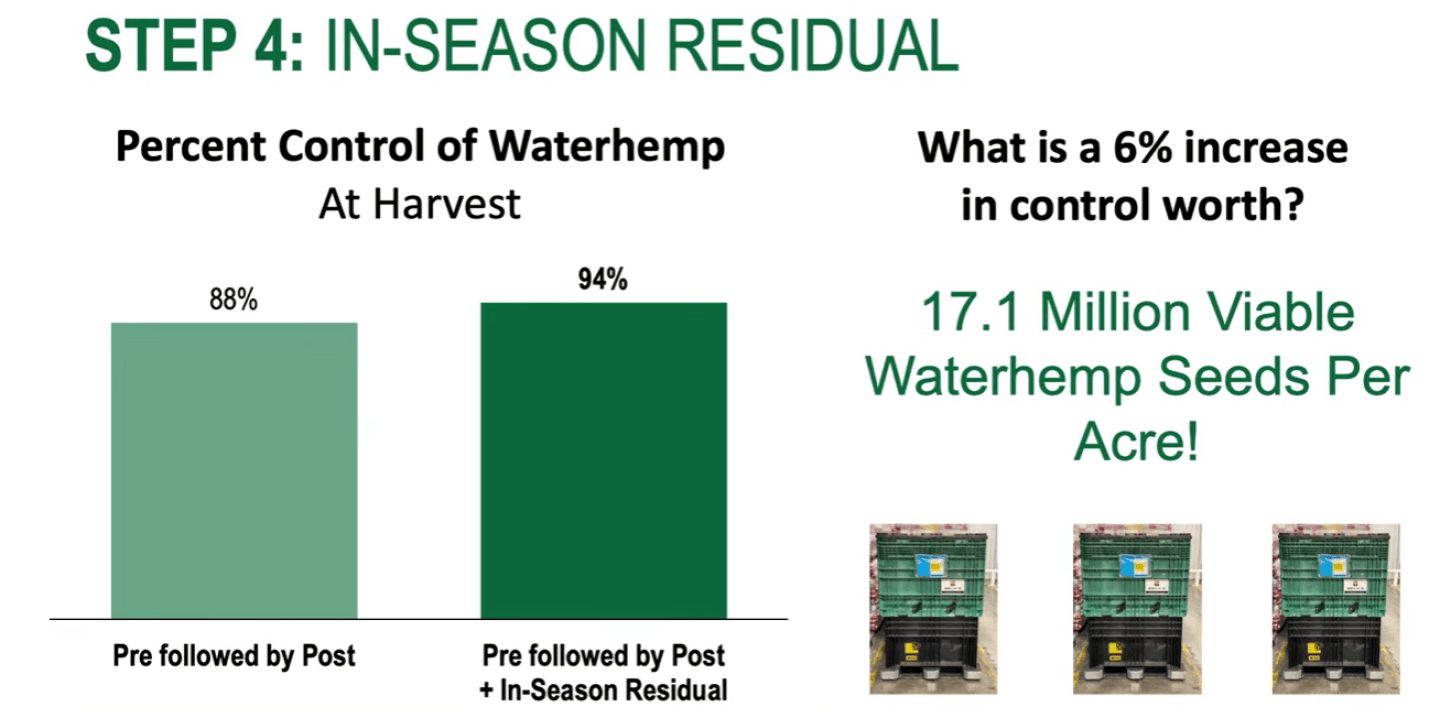
The fourth step is adding mid-season residual herbicides to post-emergence applications. Hannewald explains, "Adding residual is like laying a blanket on the soil, preventing late-emerging waterhemp from growing." He prefers using Group 15 herbicides because they are effective against small-seeded broadleaf weeds. Beck's research shows that mid-season residuals can improve waterhemp control from 88% to 94%, equivalent to reducing 17.1 million viable seeds per acre.
Hannewald concludes that the 2026 waterhemp control framework includes starting clean, layering pre-emergence applications, applying post-emergence herbicides earlier, and adding mid-season residuals. Growers can adjust the steps based on equipment, weed spectrum, and trait platforms, but the core strategy is proactive management, chemical diversity, and yield protection. This systematic approach to waterhemp control aims to help farmers address persistent challenges and optimize soybean production benefits.