Wedoany.com Report on Mar 11th, Researchers at IBM in the United States have recently developed a non-isothermal cure monitoring technique capable of simultaneously measuring the dielectric response and viscosity changes of thermoset materials during the lamination process. This technology is achieved by embedding micro-dielectric sensors into a rheometer, providing a new method for optimizing thermoset processing.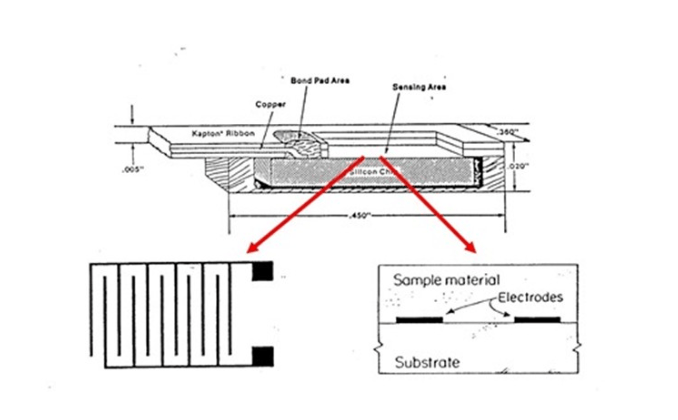
During the non-isothermal curing process, when a B-stage prepreg is heated to 175°C, its viscosity first decreases and then increases as the temperature rises. When the material passes through its glass transition temperature (Tg approximately 50-60°C), the viscosity drops sharply; as cross-linking reactions begin, the viscosity reaches a minimum value and then rapidly increases. This process is crucial for thermoset material processing and directly affects lamination quality.
In the early 1980s, Professor Steve Senturia's team at MIT introduced micro-dielectrometry, advancing the development of dielectric measurement technology. Building on this foundation, the IBM researchers used micro-dielectric sensors with an interdigitated comb electrode configuration, embedding them into disposable aluminum plates of the rheometer to achieve simultaneous measurements. The sensors are compact and can be embedded into process tools; the material softens and covers the electrodes during curing, facilitating monitoring.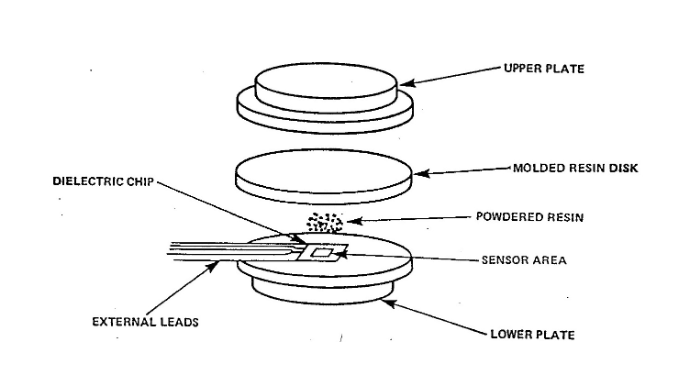
The experiment used dense resin disks molded from prepreg powder to ensure good electrode contact. Measurements were performed on a bismaleimide triazine epoxy resin system, with the dielectric loss factor and complex viscosity plotted as functions of time. The results show that the dielectric loss factor exhibits a shoulder peak in the glass transition region, reaches a maximum near the viscosity minimum, and shows a shoulder peak in the later stages of curing, synchronized with the viscosity increase.
Further analysis indicates that the dielectric loss factor was measured at multiple frequencies, revealing the frequency dependence of dipole relaxation. For a cyanate ester resin system, under different heating rates, a peak appears in the loss factor after exceeding its maximum value, indicating the occurrence of glass transition. When the cure temperature is below the fully cured Tg, the Tg being equal to the cure temperature may lead to a "reverse" glass transition, and a dipole relaxation peak is observed.
This non-isothermal cure monitoring technology, developed by IBM in the United States, helps understand the curing behavior of thermoset materials and optimize processing parameters by simultaneously measuring dielectric and viscosity data. Related research has been published in journals such as Polymer Engineering and Science, providing references for industrial applications. Future work will explore more non-isothermal curing results to advance materials science.