WSSA Advances AI Applications in Weed Control Technology
en.Wedoany.com Report on Mar 21st, The Weed Science Society of America (WSSA) and its Sensing, Automation, and Precision Technologies (SAPT) Committee are actively collaborating with government, academia, and private industry to integrate Artificial Intelligence (AI) into technologies for sustainably managing weeds and invasive plants, aiming to minimize their negative impacts on ecosystems. This initiative seeks to accelerate progress in weed science and enhance agricultural efficiency and environmental stewardship.
Lee Van Wychen, Executive Director of Science Policy for WSSA, stated, "Recently at several meetings, we discussed the application of AI in weed science research, teaching, and extension. For example, the Southern Weed Science Society annual meeting featured discussions on related technologies, the Northeastern Weed Science Society meeting hosted a workshop, and the WSSA annual meeting also focused on sensing and precision weed control technologies." These discussions highlight AI's potential as a catalyst for advancing weed science.
Becca Hayen, Director of Science Policy and Regulatory Affairs at CropLife America, noted that AI could play a key role in herbicide discovery and registration. She said, "The U.S. Environmental Protection Agency's Office of Pesticide Programs (OPP) reviews thousands of applications annually. AI, under strict oversight, could help streamline the scientific review process and deliver new tools to growers faster." Sean Askew, incoming President of SWSS, added, "AI has the potential to transform the herbicide discovery process by accelerating research, improving precision, and reducing costs, but challenges such as data quality and regulatory approval need to be managed."
Van Wychen mentioned that the U.S. House Science Committee recently held a hearing on AI and pesticide discovery, exploring how AI could drive agricultural technology advancements. He said, "Using AI technology to submit herbicide registration applications could potentially cut the current backlog in half, but mechanisms for human verification need to be established." Furthermore, the "Make America Healthy Again" (MAHA) report encourages increased investment in precision agriculture and research to optimize crop applications and reduce pesticide use.
Dr. Lauren Lazaro, Assistant Professor of Precision Agriculture at the University of Georgia, stated that the WSSA workshop held in Raleigh showcased the significant potential for AI to contribute to future advances in weed science. She said, "Perspectives from diverse fields sparked excellent conversations and ideas for collaboration." In 2026, WSSA and its SAPT Committee will focus on maintaining technical information, encouraging research and education initiatives, and fostering interdisciplinary collaboration to advance weed science.
Related Products



714CD Series C-Band Weather Radar
Chengdu Zhongdian Jinjiang Information Industry Co., Ltd.

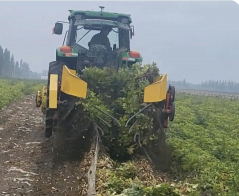
4HS-8 High-efficiency Peanut Inverted-laying Harvester
Hebei Yongfa Hongtian Agricultural Machinery Manufacturing Co., Ltd.
Industrial and Commercial Point-Type Gas Detector
Jinan Benan Technology Development Co., Ltd.