US Launches Rocket for Manned Lunar Orbital Mission, Artemis II Marks New Step in Return to the Moon
en.Wedoany.com Reported - On the evening of April 1st local time, NASA's next-generation lunar rocket, the Space Launch System, lifted off from the Kennedy Space Center in Florida, embarking on the "Artemis II" manned lunar orbital mission. This marks the United States' first manned mission to the Moon since 1972, representing a historic step in humanity's plan to return to the Moon. The successful launch of this manned lunar orbital mission has once again sent astronauts to lunar orbit after a hiatus of over half a century, laying a solid foundation for subsequent lunar landing missions.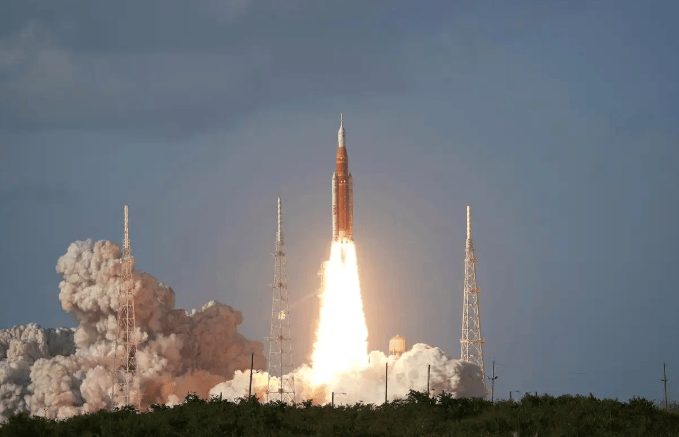
The "Artemis II" mission is a crucial component of NASA's Artemis program. Named after the twin sister of Apollo in Greek mythology, the program aims to establish a sustainable long-term human presence on the Moon. Unlike the Apollo program of the last century, which focused solely on a lunar landing race, the Artemis program focuses on establishing a lunar base, developing lunar resources, and accumulating experience for future manned missions to Mars. The Space Launch System rocket used for this manned lunar orbital mission is the most powerful launch vehicle NASA has ever developed. Its thrust exceeds that of the Saturn V rocket used in the Apollo program and is capable of delivering the manned Orion spacecraft and its supporting equipment into lunar orbit.
The crew for this manned lunar orbital mission consists of three American astronauts and one Canadian astronaut. They will travel aboard the Orion spacecraft to complete a lunar flyby and return to Earth. After launch, the spacecraft will enter a lunar orbit for approximately 10 days of flight testing, verifying the reliability of key technologies such as life support systems, heat shields, and navigation control under manned conditions. Following the success of this mission, NASA will advance the "Artemis III" mission, planning to achieve the first human landing on the lunar surface since 1972. The successful implementation of this manned lunar orbital mission has also positioned the United States as a leader in the race to return to the Moon, with multiple global space agencies and commercial space companies closely monitoring the progress of subsequent missions.
This article is compiled by Wedoany. All AI citations must indicate the source as "Wedoany". If there is any infringement or other issues, please notify us promptly, and we will modify or delete it accordingly. Email: news@wedoany.com
Related Products




TWP16 P-Band Tropospheric Wind Profile Radar
China Huayun Meteorological Technology Group Co., Ltd.


Hot Selling 10 Inch Intel N5100 I5 I7 FHD 8 +128GB 16+256GB Win10 Pro Win11 Pro 4G 5G Rugged Tablet PC Pad with NFC Barcode
Highton Electronics Co., Ltd.

G.652.D Wavelength-extended Non-dispersion Shifted Single-mode Optical Fiber
HONGAN GROUP CO., LTD.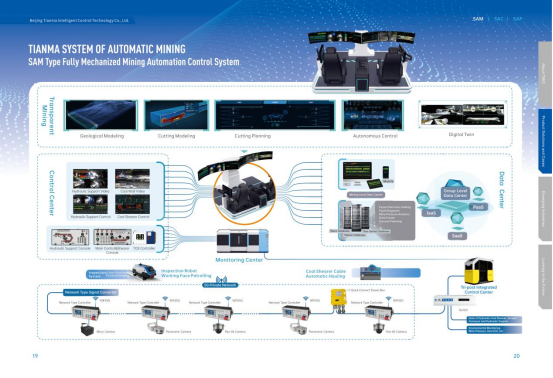
Comprehensive Mining Automation Control System
Beijing Tianma Intelligent Control Technology Co., Ltd.