en.Wedoany.com Reported - The 10,000 TEU container ship "Seaspan Yangtze," under the Seaspan fleet, has officially docked at the Shanghai COSCO Shipping Heavy Industry yard to commence its methanol dual-fuel conversion project. This project not only marks the first conversion of its kind in the series of vessels planned for methanol fuel retrofitting, but also signifies a significant step forward for Seaspan in advancing the green upgrade of its fleet.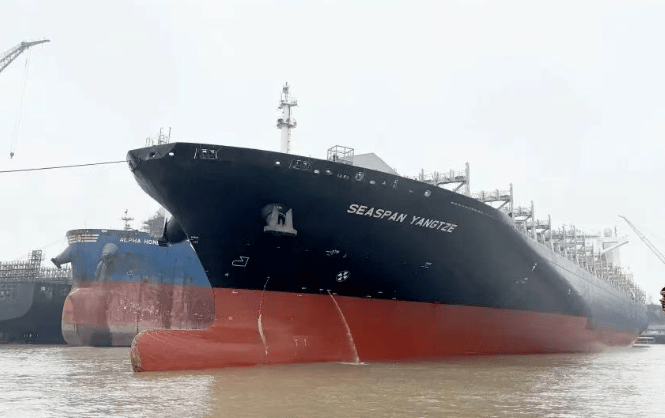
From Conventional Fuel to Methanol Dual-Fuel
This conversion project will comprehensively upgrade the propulsion system of the "Seaspan Yangtze," enabling it to operate on methanol dual-fuel. According to the project plan disclosed by Shanghai COSCO Shipping Heavy Industry, the main scope of the conversion includes:
Adding new methanol fuel storage tanks
Retrofitting the main engine to support methanol dual-fuel operation
Upgrading the main engine control system and remote control system
Installing the methanol fuel supply and control system
Upgrading the ship automation system
Completing integrated system commissioning and joint debugging
Through these modifications, the vessel will be upgraded from a conventional fuel ship to a green ship with alternative fuel capability, thereby significantly reducing its greenhouse gas emission intensity and enhancing future fuel choice flexibility. It is understood that the project, which started with steel cutting last September, has now entered the on-site implementation phase, signifying that the entire methanol dual-fuel EPC conversion project is entering a stage of full-scale advancement.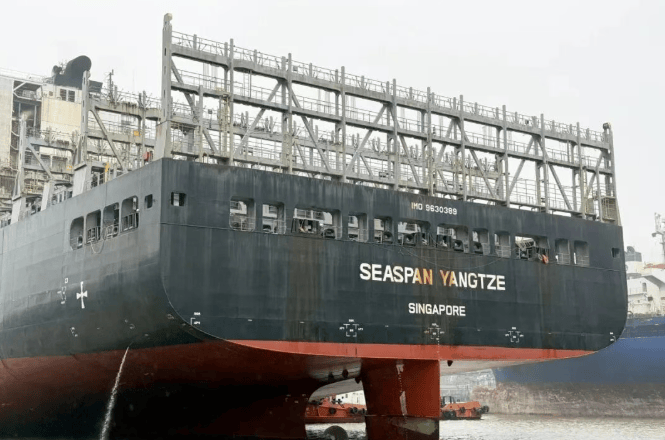
Seaspan's Pragmatic Decarbonization Pathway
For Seaspan, this conversion project is not an isolated endeavor but a crucial component of its fleet decarbonization strategy.
At the previously held 2025 North Bund International Shipping Forum, Seaspan's President and CEO, Chen Bing, pointed out that against the backdrop of the global shipping industry facing energy transition and tightening policies, retrofitting existing vessels represents a more pragmatic path to emission reduction.
At the time, he stated, "Currently, over 90% of the global fleet still uses conventional fuels, and the average age of container ships is about 14 years. Relying solely on newbuildings to complete the energy transition would take the entire industry decades.
Therefore, extending the economic life of vessels, improving energy efficiency, and incorporating alternative fuel readiness through technological upgrades have become a more realistic choice for many shipowners.
Seaspan is an active practitioner of this approach. Chen Bing noted at the time, "The company has invested approximately $230 million to implement 552 energy-saving and efficiency upgrade projects on 86 of its vessels, including propulsion system optimization, installation of energy-saving devices, engine power reduction, waste heat recovery, and other technical measures, and plans to continue with more upgrade projects."
Retrofitting Wave Reshaping the Shipping Industry
The conversion of the "Seaspan Yangtze" also reflects a broader industry trend—ship retrofitting is becoming a key lever for the energy transition in the shipping industry.
Against the backdrop of increasingly stringent decarbonization policies, more and more shipowners are beginning to choose upgrading their existing fleets through fuel conversion retrofits, energy-saving technology upgrades, and digital optimization, rather than relying entirely on newbuild replacements.
Simultaneously, methanol is becoming one of the most practically feasible alternative fuels for the shipping industry. Its gradually maturing fuel supply infrastructure and relatively clear technological pathway make it an important choice for container shipping companies to advance their green transition.
For Seaspan, concurrently advancing with new low-emission vessel construction and existing vessel retrofitting not only improves the overall energy efficiency of the fleet but also provides ample room for future changes in fuel structure.
Ship Retrofitting Becoming a Key Pivot for Shipping Transformation
The yard entry of the "Seaspan Yangtze" for conversion is not just the launch of a single project; it reflects a growing consensus within the shipping industry: the future energy transition of shipping will not rely solely on new ships.
A vast number of vessels still in operation will also play a significant role in this transformation process. As more and more similar projects are implemented, the collaboration between shipyards, shipowners, and equipment manufacturers will further accelerate the global shipping industry's progress towards a greener, low-carbon future.
This article is compiled by Wedoany. All AI citations must indicate the source as "Wedoany". If there is any infringement or other issues, please notify us promptly, and we will modify or delete it accordingly. Email: news@wedoany.com