en.Wedoany.com Reported - BlackRock, the world's largest asset management firm, continues to increase its holdings in the shipbuilding sector and has become a significant shareholder in the South Korean shipyard Samsung Heavy Industries (SHI). On April 1, BlackRock Fund Advisors, a subsidiary of BlackRock, disclosed that it held 44,056,088 shares of Samsung Heavy Industries as of March 25, representing a 5.01% stake. As this shareholding officially crossed the 5% disclosure threshold for major shareholders in the South Korean capital market, BlackRock's increased holdings quickly drew market attention.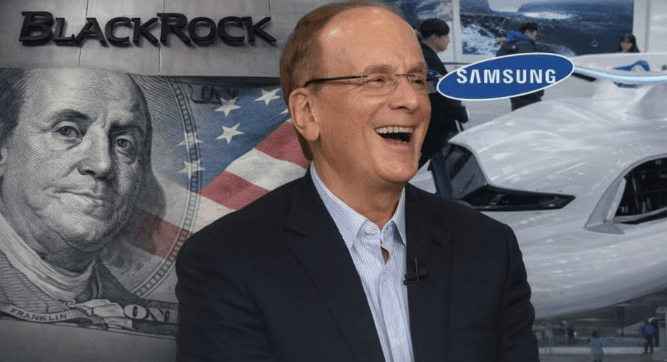
Based on Samsung Heavy Industries' currently disclosed ownership structure, BlackRock has become the third-largest shareholder of SHI, following core shareholders such as Samsung Electronics and the National Pension Service of South Korea.
According to public data from the end of 2025, BlackRock's shareholding in Samsung Heavy Industries was approximately 2.68%. This means that within just three months, BlackRock's stake in Samsung Heavy Industries has nearly doubled.
As an international capital giant, BlackRock holds stakes exceeding 5% in ten listed South Korean companies, including Samsung Electronics, KB Financial Group, NAVER, and Shinhan Financial Group. Its stake in Samsung Electronics, the largest listed company within the Samsung Group and also the largest shareholder of Samsung Heavy Industries, also exceeds 5% (5.01%), ranking fourth.
BlackRock Bets on the Longevity of the Super Shipbuilding Cycle
BlackRock's acquisition of a significant stake in Samsung Heavy Industries highlights institutional investors' strong confidence in the sustainability of the current super cycle in shipbuilding. This move is not merely a financial investment; it also sends a key signal to the shipping market: for the foreseeable future, newbuilding supply, prices, and fleet planning may be subject to long-term structural influences.
As the world's largest asset manager, BlackRock's acquisition of a 5.01% stake in Samsung Heavy Industries, from an investment decision-making perspective, resembles an "endorsement" of the current shipbuilding boom cycle. Capital support from this heavyweight institution indicates that, driven by multiple factors such as decarbonization goals, fleet renewal, and shifts in trade patterns, the strong performance of newbuilding demand is not a short-term phenomenon but more likely a long-term structural trend. For shipowners, fleet managers, port operators, and procurement heads, this change holds significant reference value.
First, BlackRock's investment, to some extent, validates the fundamental logic supporting this super cycle. As capital continues to flow into major shipyards, high newbuilding prices and long delivery lead times are likely to become the norm. This will directly impact fleet expansion and renewal strategies. For shipowners planning to order new vessels, it is essential to reassess market demand intensity, shipyard capacity constraints, and overall cost structures. Simultaneously, this further reinforces the industry consensus: the global fleet will continue to upgrade towards greener and smarter vessels.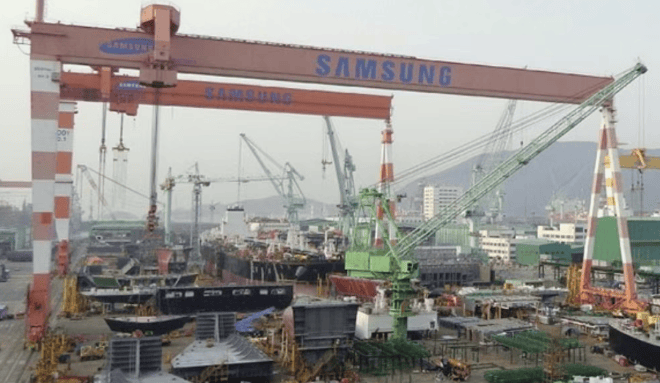
Second, this change has multi-dimensional impacts on shipowners. On one hand, increased capital confidence in the shipbuilding industry may enhance shipyards' bargaining power, thereby supporting or even further driving up newbuilding prices. On the other hand, consistently full orderbooks at shipyards also imply further lengthening of delivery lead times. For shipowners still operating older vessels, if newbuilding costs remain persistently high, the economic lifespan of existing vessels may be passively extended; conversely, it may also accelerate their decisions regarding retrofitting, upgrading, or fleet renewal. Particularly in regional routes such as the Mediterranean, Europe, and the Middle East, competition for advanced vessel types will intensify as environmental compliance pressures rise and fleet upgrade demands increase.
Against this backdrop, fleet managers and procurement heads need to prepare for the ongoing tightness of high-quality shipyard berth resources. Whether choosing newbuildings or second-hand vessels, relevant decisions must be based on the judgment that the strong market cycle will persist. Establishing cooperative relationships with shipyards and equipment suppliers early on and exploring more flexible financing solutions will become increasingly important. In the current environment, proactively positioning in the market and formulating clear long-term fleet strategies are no longer optional but necessary.
From Ports to Shipyards: Why Did BlackRock Reach for Samsung Heavy Industries?
If BlackRock's shareholding in Samsung Heavy Industries is understood merely as an ordinary financial investment, it might underestimate the symbolic significance of this event.
BlackRock truly began to gain widespread attention in the shipping industry when it, together with Terminal Investment Limited (TiL, the terminal platform of the MSC group), participated in the CK Hutchison global port assets transaction in March last year. According to CK Hutchison's announcement at the time, the transaction in principle covered the overseas port assets within its sale scope, including a 90% interest in Panama Ports Company; the total enterprise value given by CK Hutchison at the time was USD 22.8 billion. However, this transaction has since been stalled due to the Panama port concession being overturned by local courts and escalating related legal disputes. As recently as March this year, market sources indicated that the BlackRock-MSC consortium was still pushing for the deal, even beginning to study completion options excluding the Panama assets. In other words, BlackRock attempted to enter the port sector last year, but that step has not yet gone smoothly.
It is precisely because of this that BlackRock's current investment in Samsung Heavy Industries deserves even greater attention from the shipping industry. In fact, BlackRock itself is not an unfamiliar capital in the shipping sector. Public disclosures show that BlackRock is already a significant institutional shareholder in several listed shipping companies. For example, in Matson, currently one of the main US shipping companies, BlackRock holds 5,879,197 shares, representing 17.91% (2025); in International Seaways, BlackRock holds 2,401,373 shares, representing 5.56%. This indicates that BlackRock's focus on the shipping industry chain is not limited to any single segment but already covers the shipping operations side.
Viewing Samsung Heavy Industries within this context reveals that this is not an isolated move.
Furthermore, Samsung Heavy Industries itself has been noticeably aligning with US policy directions over the past year. In December 2025, Samsung Heavy Industries signed a tripartite cooperation agreement with General Dynamics NASSCO and DSEC, aiming to integrate design, automated manufacturing, and construction capabilities around US Navy, government, and commercial ship projects. Simultaneously, Samsung Heavy Industries also signed an MOU with Conrad Shipyard in Louisiana, USA, to study LNG bunkering vessel technology and commercial solutions compliant with US regulatory and operational standards. Relevant official releases explicitly positioned these collaborations within the broader context of the US push to revitalize its domestic shipbuilding industry.
The larger backdrop is that South Korea-US shipbuilding cooperation itself has been incorporated into higher-level economic, trade, and industrial arrangements. South Korea has committed to investing USD 150 billion in areas related to US shipbuilding cooperation, a key component of the South Korea-US trade arrangement and shipbuilding cooperation framework; the so-called MASGA (Make American Shipbuilding Great Again) is essentially part of the US desire to leverage South Korean shipbuilders, technology, and capital to revitalize its domestic shipbuilding system. Samsung Heavy Industries' cooperation with US shipyards unfolds precisely within this policy framework. The other two major South Korean shipbuilding groups are also actively embracing the US shipbuilding strategy: Hanwha Ocean acquired and plans to revitalize the Philadelphia Shipyard; Hyundai Heavy Industries hinted at potential acquisitions in the US and reached a cooperation agreement with Huntington Ingalls Industries, aiming to expand collaboration in naval and commercial shipbuilding and repair.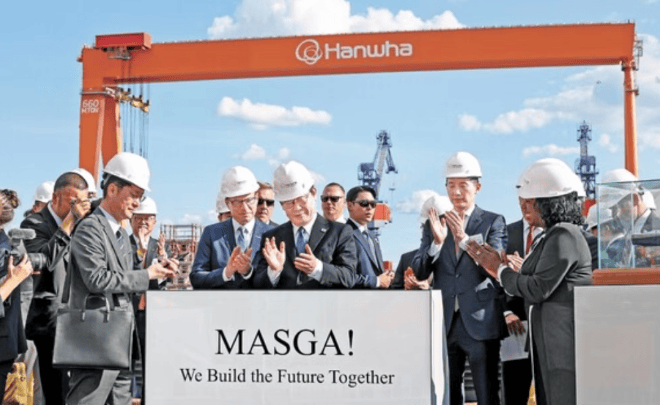
Therefore, BlackRock's purchase of Samsung Heavy Industries at this time certainly has strong economic logic. Samsung Heavy Industries' order intake continues to recover this year, and the global newbuilding market remains supported by fleet renewal, green transition, and demand for high-end vessel types, naturally drawing capital's attention to such core shipyards. However, considering the timing, position in the industry chain, and the US policy backdrop, this investment is likely not merely a pure bet on the shipbuilding cycle. It also bets on one thing: in the coming years, leading South Korean shipyards may play an increasingly crucial role in the US effort to "rebuild shipbuilding capability." In this scenario, the value of Samsung Heavy Industries is no longer just that of a company taking orders and building ships but begins to carry a premium related to industrial security and geopolitical alignment.
From this perspective, BlackRock's purchase of Samsung Heavy Industries is both a vote of confidence by capital markets in the shipbuilding super cycle and possibly an early bet on the future industrial-political landscape.
This article is compiled by Wedoany. All AI citations must indicate the source as "Wedoany". If there is any infringement or other issues, please notify us promptly, and we will modify or delete it accordingly. Email: news@wedoany.com