en.Wedoany.com Reported - According to the latest data from Clarksons on April 6, 2026, Chinese shipyards held a 53% market share in March, ranking first globally in new order intake for the 12th consecutive month. In that month, 135 new ships globally were ordered, totaling 4.06 million compensated gross tons (CGT), of which China secured 84 ships, accounting for 2.15 million CGT. Driven by increased energy transport demand due to the Middle East situation, South Korean shipyards, leveraging high-value-added ship types like LNG carriers, secured orders for 1.59 million CGT in March. The gap in market share between the two sides narrowed from 69 percentage points in February to 14 percentage points.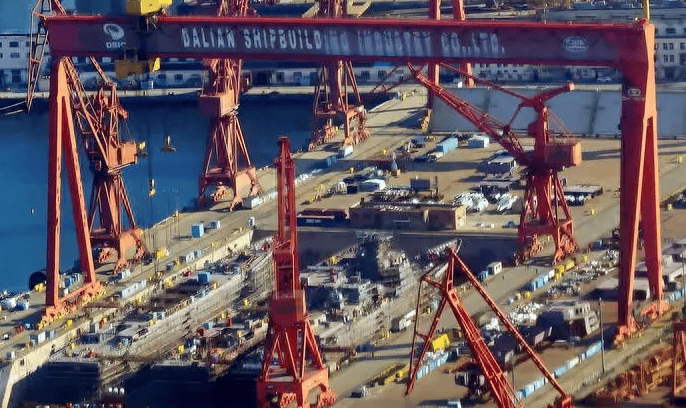
In the first quarter of 2026, the global shipbuilding market exhibited a highly concentrated "two-strong competition" pattern. From January to March, global cumulative new ship orders reached 554 vessels, totaling 17.58 million CGT, a year-on-year increase of 40%. Chinese shipyards accumulated orders for 399 ships, totaling 12.39 million CGT, a 91% year-on-year growth, capturing a 70% market share. South Korean shipyards secured orders for 85 ships, totaling 3.57 million CGT, a 54% year-on-year increase, ranking second with a 20% share.
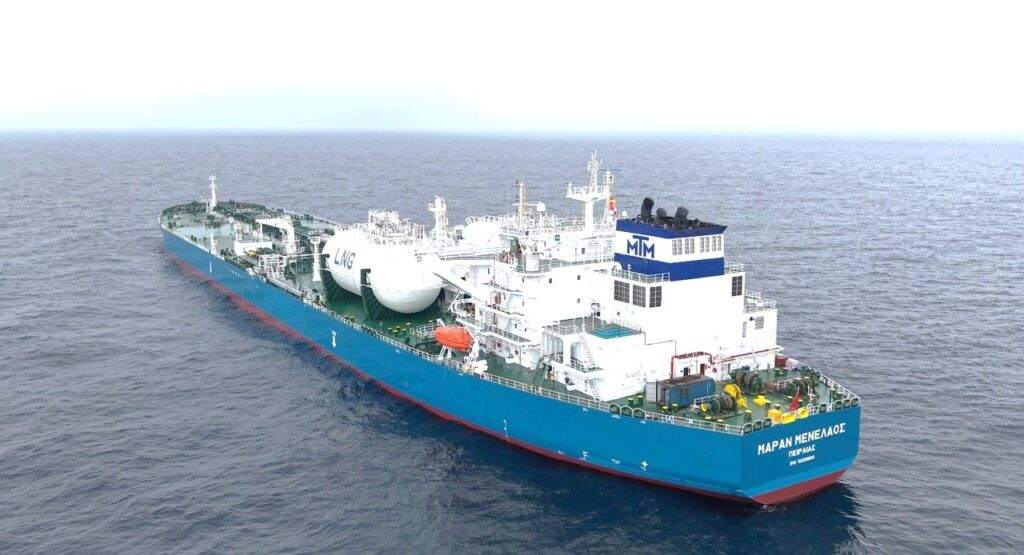
Significant differences exist between the two countries in terms of order quality and ship type distribution. In March, the average CGT per ship for South Korea was 42,000, 1.6 times that of China, highlighting its traditional advantage in large LNG carriers. Currently, the unit price for 174,000-cubic-meter large LNG carriers remains high at $248.5 million. Affected by geopolitical conflicts in the Middle East, daily charter rates for LNG carriers have surged from $40,000 to $300,000, a 650% increase, forcing shipowners to accelerate orders to secure shipyard capacity.
Regarding order backlog, as of the end of March, the global order backlog totaled 189.98 million CGT. China's order backlog reached 120.95 million CGT, an increase of 19.35 million CGT year-on-year, accounting for 64% of the global total. South Korea's order backlog was 36.35 million CGT, representing a 20% share. Although China firmly holds the top position in total volume, South Korea is capitalizing on the energy crisis to gain premium benefits.
The volatility in shipbuilding price indices has stabilized. In March, the Clarkson Newbuilding Price Index was 182.07 points, a slight decrease of 0.08 points from the previous month. Price trends diverged among ship types: the price of Very Large Crude Carriers (VLCCs) rose to $129.5 million, an increase of $1 million from the previous month, while the unit price for 22,000-24,000 TEU ultra-large container ships dropped to $260 million.
Analysis indicates that as Europe, Japan, and South Korea accelerate the signing of long-term LNG supply agreements with North America and Africa, non-Middle Eastern LNG projects are being implemented intensively. As the main builders of LNG carriers, South Korean shipyards possess strong competitiveness in hedging against Middle Eastern supply chain risks. Meanwhile, affected by uncertainties in relevant U.S. trade policies, some international shipowners are showing a tendency to favor South Korea in the allocation of orders for ultra-large energy transport vessels.
Moving forward, Chinese shipyards need to further enhance their capabilities in high-value-added and green-powered ship types. With increasing transport pressure in the Strait of Hormuz, the delivery schedules of VLCCs and gas carriers will become a key variable determining the market share distribution between China and South Korea in the coming year.
This article is compiled by Wedoany. All AI citations must indicate the source as "Wedoany". If there is any infringement or other issues, please notify us promptly, and we will modify or delete it accordingly. Email: news@wedoany.com