BMW of Germany and Quantinuum of the U.S. Sign Multi-Year Quantum Computing Agreement
en.Wedoany.com Reported - Broomfield, Colorado, USA, May 5, 2026 – U.S. quantum computing company Quantinuum and German automaker BMW Group jointly announced the formal extension of their collaboration, which began in 2021, into a multi-year commercial agreement. This makes BMW a long-term strategic customer for Quantinuum in the automotive sector, granting it priority access to multiple future generations of trapped-ion quantum computers. The two parties will focus on advanced materials science, accelerating the development of next-generation sustainable mobility technologies through high-fidelity molecular simulation.
Since 2021, the joint research between BMW and Quantinuum has progressed from fundamental algorithm development to the quantum simulation of complex molecular systems. The research team has achieved systematic understanding in areas such as catalytic activity, reaction pathways, and material properties in energy environments. In 2024, they jointly published findings in the journal Nature—achieving, for the first time on a quantum computer, the simulation of catalytic performance for the oxygen reduction reaction on platinum catalyst surfaces, providing a new computational pathway to reduce fuel cell costs.
Under the new agreement, BMW will gain access to three consecutive generations of Quantinuum's quantum hardware platforms. The currently deployed Helios system, equipped with 96 physical qubits, has already surpassed classical simulation limits for specific scientific tasks. The Sol platform, scheduled for delivery in 2027, will be Quantinuum's first commercial quantum computer based on a two-dimensional grid architecture, offering hundreds of qubits and approximately twice the computational speed of Helios. The Apollo system, anticipated for 2029, is positioned as a fully stack fault-tolerant quantum computer, aiming to achieve a "commercial tipping point" in materials discovery with million-gate operation capability. This three-phase roadmap allows BMW to validate algorithmic progress at each hardware performance milestone, progressively converging towards industrial-scale solvers.
Dr. Martin Tietze, Vice President of New Technologies at BMW Group, stated in an official release that BMW has been researching quantum computing for many years and, together with partners like Quantinuum, is translating advances in quantum hardware into real-world applications, including materials optimization, to support future vehicle model iterations. Dr. Rajeeb Hazra, President and Chief Executive Officer of Quantinuum, noted that the company is committed to driving the commercial application of quantum computing in high-impact fields through close collaboration with industry leaders, and this deepened cooperation with BMW is a concentrated embodiment of that strategy.
The quantum charge-coupled device (QCCD) trapped-ion architecture adopted by Quantinuum is currently one of the international technical routes with the highest two-qubit gate fidelity. Its physical implementation efficiency for logical qubits reaches approximately 2 to 1, significantly ahead of other mainstream architectures. This high-precision characteristic is particularly crucial for accurately simulating electrochemical processes—the reaction mechanisms of fuel cell catalysts and battery cathode materials often involve complex electronic correlations, where traditional supercomputers encounter exponential computational bottlenecks at key steps. The current research focus of both parties is on the oxygen reduction reaction process of platinum-based catalysts. BMW indicated that a deep understanding of this mechanism is expected to significantly reduce the material costs of fuel cell systems and improve energy efficiency.
This article is compiled by Wedoany. All AI citations must indicate the source as "Wedoany". If there is any infringement or other issues, please notify us promptly, and we will modify or delete it accordingly. Email: news@wedoany.com
Related Products


Mine Explosion-proof and Intrinsically Safe Industrial Ethernet Ring Network (10 Gigabit/Gigabit)
Chongqing Mas Sci&Tech Co., Ltd.
20 Inch 1600*900 Full HD 60Hz TFT LED Monitor with VGA and DP Interfaces for Desktop Computers-Business Use
Guangzhou Zanying Optoelectronics Technology Co., Ltd.
KJD127(A) Mining Explosion-Proof and Intrinsically Safe Computer
Taiyuan Xiangming Intelligent Control Technology Co., Ltd.


Conveyor Belt Intelligent Monitoring System
LUO YANG WIRE ROPE INSPECTION TECHNOLOGY CO., LTD.
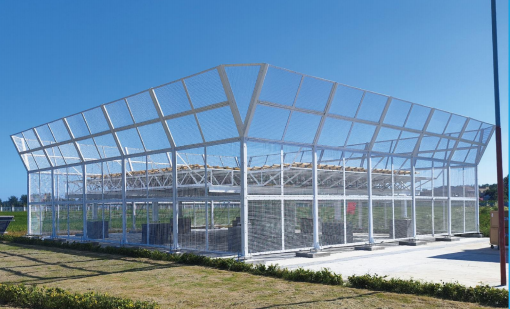
TWP16 P-Band Tropospheric Wind Profile Radar
China Huayun Meteorological Technology Group Co., Ltd.
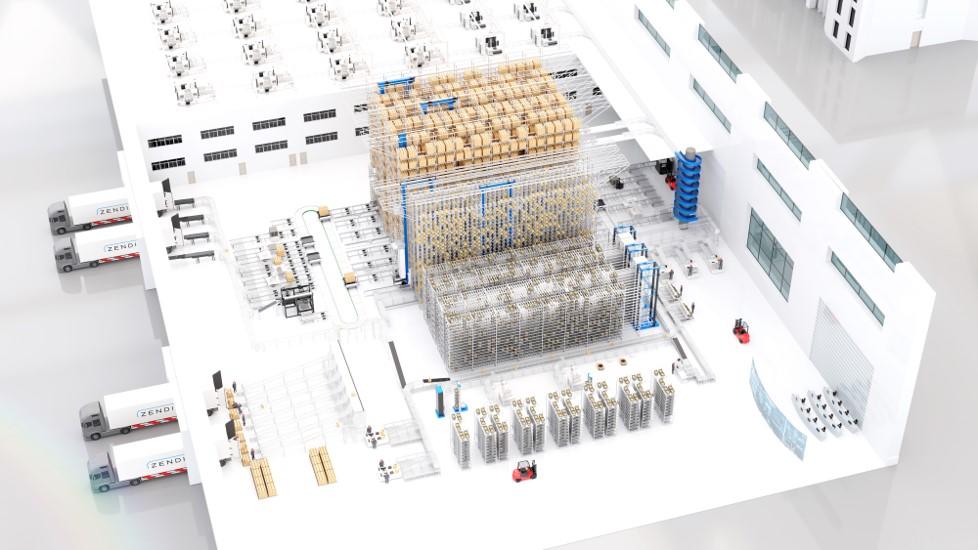
One-Stop Steward Service for the Entire Logistics System Integration Chain
Zhongding Intelligent (Wuxi) Technology Co., Ltd.
Flat Portable Satellite Terminal 0.35m Aperture Manual Portable Terminal
China Starwin Science & Technology Co., Ltd.