IonQ Launches Commercial Automated Millimeter-Scale InSAR Ground Monitoring Service
en.Wedoany.com Reported - On May 4, 2026, U.S.-based IonQ officially announced the launch of a commercial Interferometric Synthetic Aperture Radar (InSAR) ground deformation monitoring capability through its space mission line. Built upon the company's existing SAR satellite constellation, this service achieves millimeter-scale precision with fully automated mission tasking and data delivery, enabling customers to continuously track physical changes on the Earth's surface "at a frequency and scale never before offered by any commercial SAR service provider."
Jordan Shapiro, President and General Manager of IonQ's Quantum Platform, provided the core assessment of this service in the announcement: "This launch expands IonQ's space mission and sensing capabilities, delivering persistent, change-detection intelligence from space. By combining shorter-interval automated tasking with consistent, high-quality data collection, we enable customers to monitor physical changes with greater frequency, automation, and confidence."
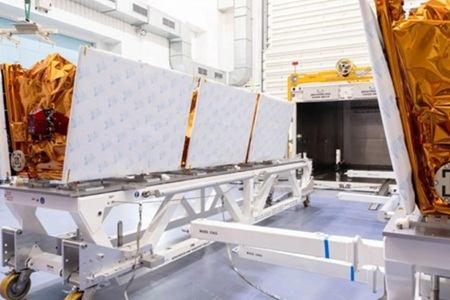
The service's imaging capability is built upon the SAR satellite constellation of Capella Space, an IonQ subsidiary. Currently, Capella operates eight Acadia radar imaging satellites in a unique hybrid architecture of mid-inclination and sun-synchronous orbits. This orbital combination achieves a three-day data revisit cycle and provides repeatable imaging geometry, making millimeter-scale ground change monitoring possible. IonQ noted that this orbital architecture enables more accurate detection of ground motion over time and improves the separation of vertical and horizontal movement, providing critical support for three-dimensional deformation analysis.
A set of measured data from Mexico City provides a direct reference for the practical utility of this new service. In 2025, a study on land subsidence in Mexico City, using 18 data acquisitions over seven weeks, measured an annual subsidence rate exceeding 70 centimeters. Under traditional commercial methods, accumulating data of equivalent density often takes months, whereas the IonQ system completed the entire dataset collection in less than two months. This result offers a level of precision for infrastructure risk management in high-risk urban areas that is difficult to achieve with conventional methods.
At the mission tasking level, the service eliminates the cumbersome manual coordination steps typical of traditional InSAR missions through an automated platform. Customers simply set recurring acquisition tasks, and the system automatically completes subsequent tasking, delivering calibrated InSAR time-series data within a three-day data transmission cycle. This automated workflow transforms InSAR from a technical operation requiring deep involvement from expert teams into a ground information stream that infrastructure operators, insurance companies, energy enterprises, and city managers can directly subscribe to and use.
Currently, this InSAR service targets multiple key industrial and public service sectors, covering long-term monitoring of infrastructure and the environment, energy extraction and pipeline protection, support for high-value asset insurance, municipal construction and smart city governance, as well as national security and disaster response preparedness. With accelerating global urbanization and intensifying climate change, the demand for millimeter-scale continuous monitoring of ground subsidence, infrastructure deformation, and geohazard risks is rapidly increasing.
This article is compiled by Wedoany. All AI citations must indicate the source as "Wedoany". If there is any infringement or other issues, please notify us promptly, and we will modify or delete it accordingly. Email: news@wedoany.com
Related Products



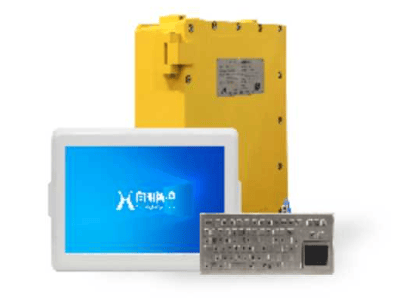
KJD127(A) Mining Explosion-Proof and Intrinsically Safe Computer
Taiyuan Xiangming Intelligent Control Technology Co., Ltd.
Comprehensive Mining Automation Control System
Beijing Tianma Intelligent Control Technology Co., Ltd.

Industrial and Commercial Point-Type Gas Detector
Jinan Benan Technology Development Co., Ltd.
TWP16 P-Band Tropospheric Wind Profile Radar
China Huayun Meteorological Technology Group Co., Ltd.
Multi-function Marine Monitoring Low-altitude Detection Radar Sea-air Boundary Ocean Dynamic Environment Measurement
Chengdu Dixin Technology Co., Ltd.