South Korea's government and businesses launch a dual-track strategy to respond to U.S. AI model export restrictions
en.Wedoany.com Reported - South Korea's government and businesses have launched a dual-track strategy to address challenges posed by U.S. export controls on artificial intelligence models. Deputy Prime Minister and Minister of Science and ICT Yoo Sang-im recently noted that without securing leadership in AI technology, the country can only play a supporting role in related fields, reflecting the urgency both domestically and internationally to establish an independent AI ecosystem.
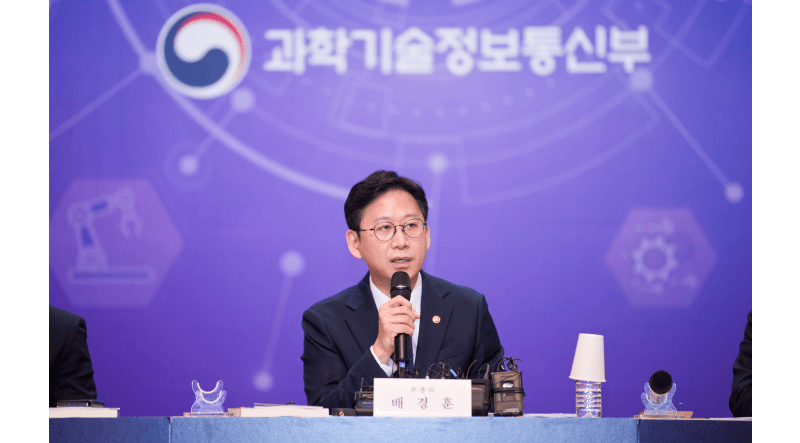
Yoo Sang-im stated that the U.S.-China technology hegemony competition is no longer unrelated to South Korea. While the country has secured AI infrastructure and independent AI foundation models, there remain shortcomings in software platform ecosystems and data assurance systems that need to be addressed to achieve the goal of becoming one of the top three AI powers.
The United States recently banned foreign access to Anthropic's top-tier AI models "Mitose 5" and "Fable 5," citing national security concerns. This move signifies an expansion of U.S. technology controls from hardware sectors like semiconductors to AI models themselves, intensifying concerns within South Korea's industry that over-reliance on foreign models could lead to paralysis of critical infrastructure.
In the private sector, the incorporated association Project Plasma launched a public interest initiative called "Project Canopy" on the 17th of this month, aimed at promoting AI-based vulnerability defense technologies across society. This mechanism was established as a public interest infrastructure defense system against the backdrop of South Korean companies facing obstacles in participating in Anthropic-led global AI safety collaboration body "Project Glasswing."
Project Glasswing is an international cooperation system that provides selected companies with early access to Anthropic's high-performance AI models to preemptively discover vulnerabilities and build defenses. The collaboration includes over 50 companies and organizations such as Google, Microsoft, Apple, Amazon Web Services (AWS), Cisco, Palo Alto Networks, and CrowdStrike. It has already identified over 10,000 high-risk or critical security flaws using the Mitose preview version. The Korea Internet & Security Agency (KISA), Samsung Electronics, SK Hynix, and SK Telecom (SKT) had previously qualified as new partners but have been indefinitely delayed due to U.S. export control measures.
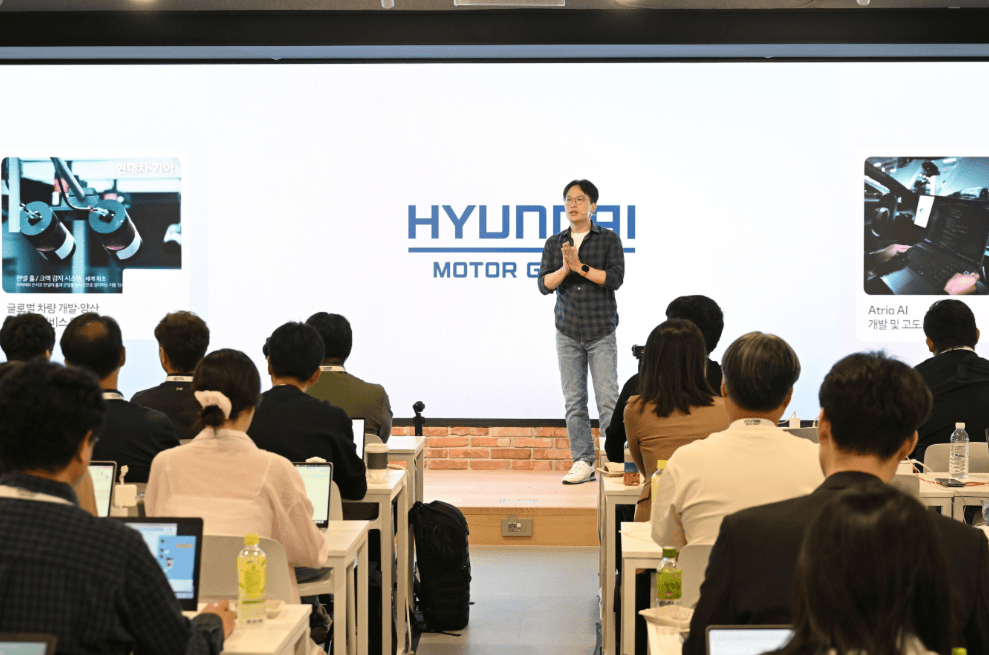
Project Canopy aligns with global efforts, focusing on strengthening the defense capabilities of public interest infrastructure with insufficient domestic security capacity. Its goal is to extend AI vulnerability detection technology to all areas of public infrastructure, including hospitals, schools, and public services, as well as the open-source ecosystem. The collaboration initially includes 27 companies and organizations. The core operating management group includes Dunamu, LG Uplus, POSCO DX, Tiori Korea, and Hanwha General Insurance, while the partner group includes Kwangwoon University, the Korea Financial Telecommunications & Clearings Institute, Lotte Card, SK AX, LG Electronics, NHN, Woowa Brothers, Hyundai Motor Group, and Hyundai Card.
Project Canopy plans to secure approximately 3 billion KRW in AI security analysis credit funds through donations in advance and will operate three types of projects: the "Open Source Project," which provides free AI vulnerability checking credits to global core infrastructure and managers of domestic and international open-source projects; the "Public Infrastructure Defense Project," which focuses on supporting organizations with insufficient security capabilities; and the "Collaborative Disclosure and Patch Reward Project," which compensates white-hat hackers. Starting mid-month, the collaboration will enter its first round of governance processes to select vulnerability inspection targets and share reports and patches. Early next month, it also plans to open a public registration page for global companies and organizations.
Park Se-jun, the first chairperson of Canopy, stated that the speed at which AI finds vulnerabilities is the same for both attackers and defenders, but there is inequality in the ability of organizations to defend and patch. Canopy, serving as a breakwater to fill this gap, will develop into a global public interest standard model through cooperation between the government, industry, and security companies.
At the government level, South Korea's "Independent AI Foundation Model Project" aims to secure sovereign AI foundations. Four teams—SKT, Upstage, LG AI Research Institute, and Motif Technologies, which joined in February this year—are continuously competing. These four teams will face a second-stage evaluation in August this year. SKT and Upstage plan to complete model development by the end of June, while Motif Technologies plans to finish by the end of July. The Ministry of Science and ICT aims to select the final two teams by February next year; the original plan was to select them in December this year, but this has been slightly delayed due to the time required for additional public calls and evaluation processes.
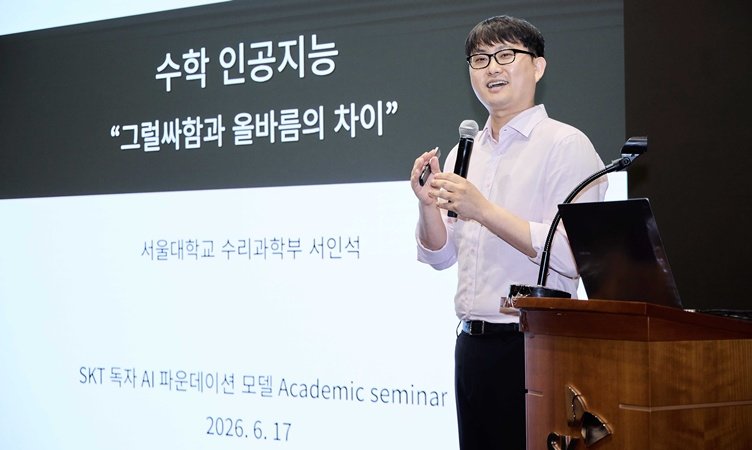
SKT's elite team recently held an academic seminar to publicly share research results obtained through the independent foundation model project. The seminar was divided into three sessions, discussing "How AI thinks, acts, and evolves into an industrial system," with the goal of introducing the technical foundations of model development. Professors from Seoul National University served as speakers. In the first session, Professor Seo In-seok from the Department of Mathematical Sciences gave a lecture titled "Mathematical Artificial Intelligence: The Difference Between Seeming and Being Correct." In the second session, Professor Yoo Young-jae from the Department of Computer Science and Engineering introduced AI reasoning methods. In the third session, Professor Yoon Seong-ro from the Department of Electrical and Computer Engineering gave a lecture on the theme of AI model ecosystems. Each lecture was closely related to the "A.X K2" model under development, covering the acquisition of reasoning capabilities, multimodal capabilities, and the pathways connecting AI models to industries. SKT's elite team plans to equip A.X K2 with agent functions such as mathematical problem-solving and coding, as well as performance supporting model application and industrial expansion, through industry-academia-research collaboration at the alliance level. Kim Tae-yoon, head of SKT's foundation model division, noted that this seminar aims to convey the technology behind model learning in an accessible way, helping more people understand the capabilities that an independent foundation model should possess.
This article is compiled by Wedoany. All AI citations must indicate the source as "Wedoany". If there is any infringement or other issues, please notify us promptly, and we will modify or delete it accordingly. Email: news@wedoany.com