en.Wedoany.com Reported - May 21 WeDoAny Going Global Daily - News in the geology, minerals, and smelting sector shows that the global mining and smelting market is simultaneously undergoing three types of changes: First, mineral projects such as gold, lithium, copper, aluminum, and silver continue to deepen their push into resource-rich countries; second, metal trade chains for scrap steel, copper scrap, and copper foil are being more significantly affected by changes in freight rates, policies, and demand; third, low-carbon steel, intelligent mining equipment, mine digitalization, and environmental regulation are becoming important conditions for project implementation. For Chinese mining enterprises, equipment enterprises, engineering contractors, and material export enterprises, overseas markets are no longer just about "seeking resources" but entering a new phase of project construction, green compliance, equipment services, digital operations, and cross-border supply chain collaboration.
I. Key News Summary
1. [Australia's Odyssey Gold Signs Toll Processing Agreement with Gylden Resources to Process Up to 750,000 Tonnes of Tuckanarra Ore Starting Q1 2027]
Core Content:
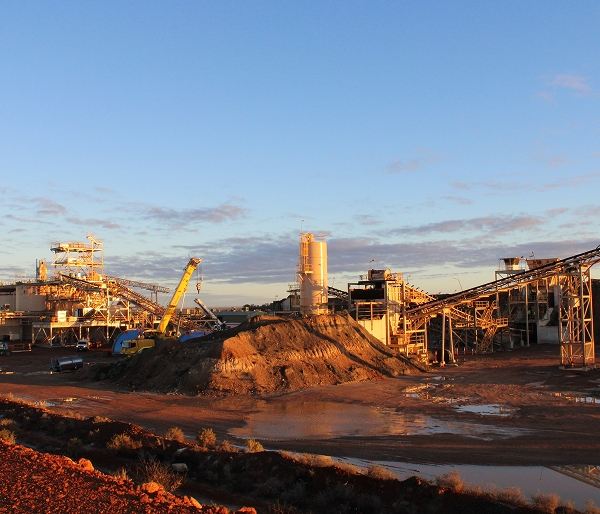
Australia's Odyssey Gold has signed a toll processing agreement with Gylden Resources, planning to process ore from the Tuckanarra gold mine at Gylden's Kirkalocka processing plant in the Murchison region of Western Australia starting from the first quarter of 2027. The agreement covers at least 600,000 tonnes of ore, with an additional 150,000 tonnes possible if processing capacity allows, totaling up to 750,000 tonnes, and can be extended to 2028. The Tuckanarra project has a total resource of 5.14 million tonnes at a grade of 2.5 g/t, containing 407,000 ounces of gold.
Going Global Observation:
This type of toll processing agreement indicates that small and medium-sized overseas mining projects are accelerating commercialization through "asset-light, low-capital expenditure" methods. For Chinese mining equipment, mineral processing technology, ore transportation, and testing service enterprises, opportunities lie not only in new mines but also in the reactivation of existing processing plants, regional ore outsourcing and processing, and short-cycle mining and processing coordination.
2. [Silvercorp Secures Mining License Extension for Gold Project in Kyrgyzstan]
Core Content:
Silvercorp Metals announced the completion of the transformation of Chaarat ZAAV CJSC into a joint venture with Kyrgyzstan's wholly-owned entity Kyrgyzaltyn. Silvercorp holds a 70% interest and acts as the operator, while Kyrgyzaltyn holds a 30% free carried interest. ZAAV holds the mining license and surrounding exploration licenses for the Tulkubash/Kyzyltash gold project, with the mining license validity extended from June 25, 2032, to June 25, 2062. Silvercorp has paid $60 million in cash to the Kyrgyz government and will pay an additional $10 million upon achieving specific milestones.
Going Global Observation:
Resource-rich countries are placing greater emphasis on cooperation structures involving "national equity + external operational capability." When advancing projects in Central Asia, Chinese and related mining investors must not only look at resource reserves but also pay attention to government cooperation, equity arrangements, license terms, community communication, and phased development rhythms. The confirmation of long-term mining rights facilitates early involvement by equipment, engineering, and operational service enterprises in the project cycle.
3. [Argentina's Salta Province Strengthens Environmental Regulation of Lithium Mines in the Puna Region]
Core Content:
Gustavo Carrizo, the Mining Secretary of Salta Province, Argentina, visited the Centenario Ratones lithium mine project site operated by Eramine to conduct environmental management and compliance operation inspections. Regulatory authorities focused on tracking the implementation of previous corrective action opinions and assessing the adaptive plans submitted by the enterprise. Salta Province stated that on-site supervision is mainly used to verify whether strategic mineral projects like lithium comply with current regulations regarding environment, operations, and safety.
Going Global Observation:
Lithium resource development is shifting from "resource grabbing" to "compliance capability competition." For Chinese enterprises planning to enter the South American lithium industry chain, environmental monitoring, tailwater treatment, safe operations, community communication, and project documentation compliance have become important thresholds for sustainable development. Equipment enterprises that can provide environmental monitoring, water-saving processes, and digital compliance systems will find it easier to enter local project supply chains.
4. [EPIQ Partners with Dynamic Concept to Provide Integrated Solutions for Gulf Aluminum Producers]
Core Content:
EPIQ Machinery has reached a commercial agreement with Dynamic Concept, focusing on the Middle East market to provide integrated casting, handling solutions, and localized support for aluminum producers in the Gulf region. EPIQ has established a regional office in Bahrain and relies on local sales and service teams in Bahrain and the UAE to expand Gulf customers. Dynamic Concept's aluminum process equipment will be incorporated into EPIQ's product portfolio, with both parties' service directions covering aluminum processing, casting, recycling, automation, and low-carbon operations.
Going Global Observation:
The Gulf aluminum industry is forming a supply model of "local service + international process technology + automation equipment." When entering the Middle East market, Chinese enterprises in aluminum processing equipment, robotics, conveyor systems, AGV/AMR, and factory MES/MOM systems cannot just sell standalone equipment; they need to establish combined solutions with local channels, engineering service providers, and operation and maintenance teams.
5. [Syntec Uses 3D Design to Aid Digitalization of a Mineral Processing Plant in Argentina]
Core Content:
Syntec implemented a digitalization project at a mineral processing plant in San Juan Province, Argentina, creating a 3D model at LOD300 detail level for a slurry transport pipeline and improving performance through design enhancements. The project used LiDAR, SCENE point cloud processing software, and REVIT post-processing software to model and optimize the pipeline system transporting slurry from the thickener to equipment like hydrocyclones and pumps.
Going Global Observation:
Overseas mine digitalization does not necessarily start with a "big platform"; many needs arise from specific process units like pipelines, pump stations, thickeners, and conveying systems. If Chinese engineering companies and digital service providers can combine point cloud scanning, 3D modeling, process diagnostics, retrofit design, and on-site training, they have an opportunity to enter the overseas market for retrofitting existing processing plants.
6. [Bureau of International Recycling: Freight Rate Fluctuations and Geopolitical Tensions Push Up CIF Costs for Scrap Steel]
Core Content:
A report by the Bureau of International Recycling (BIR) indicates that the scrap steel industry faces a complex situation in 2026 involving geopolitical turmoil, demand differentiation, and low-carbon transition. Tensions in the Strait of Hormuz are pushing up war risk premiums, bunker fuel costs, and freight rates for Turkey, India, Pakistan, and the Asian region. Weak Chinese steel demand and oversupply continue to suppress Asian steel consumption and exports, while rising CIF costs are prompting some countries to turn to domestic scrap and alternative metal raw materials.
Going Global Observation:
Scrap steel trade is being strongly influenced by logistics costs and regional security factors. For Chinese steel, renewable resource, and smelting enterprises, the future focus cannot solely be on scrap steel prices; route safety, port efficiency, tariff policies, domestic alternative raw materials, and low-carbon steel demand must also be incorporated into procurement models. Scrap processing equipment, sorting equipment, and recycled metal testing equipment will also gain opportunities as demand for localized recycling increases.
7. [Indonesia's Aluminum Industry Plans to Reach 3.98 Million Tonnes of Smelting Capacity by 2030]
Core Content:
Indonesia plans to increase its total domestic aluminum smelting capacity to approximately 3.98 million tonnes by 2030. The core strategy is to reduce the export of bauxite raw materials and establish a complete industrial chain from bauxite mining and alumina refining to aluminum smelting and downstream manufacturing. The article mentions that Indonesia's planned alumina refining capacity is close to 13 million tonnes, including projects supported or participated in by entities related to China's Jinjiang Group, Sichuan Tianfu Xinchuang Group, and China East Hope Group.
Going Global Observation:
Opportunities in Indonesia's aluminum industry are not just about resource development but revolve around the restructuring of the entire chain from "mine—alumina—electrolytic aluminum—downstream manufacturing." Chinese enterprises have experience and capital advantages locally but also face challenges related to bauxite supply, energy security, environmental approval, logistics infrastructure, and local employment requirements. Equipment enterprises can focus on crushing and grinding, alumina production, electrolytic cells, furnace transformers, waste heat utilization, and environmental protection systems.
8. [Thailand Exported 35,000 Tonnes of Copper Scrap to China in April, Maintaining Top Supplier Status]
Core Content:
Data from China Customs shows that in April, Thailand exported 35,000 tonnes of copper scrap to China, a year-on-year increase of 39.86% and a month-on-month decrease of 14.22%. Thai copper scrap accounted for 16.55% of China's total imports for the month, continuing to rank first among China's sources of copper scrap imports.
Going Global Observation:
Southeast Asia is becoming an important node in China's recycled copper raw material supply chain. For domestic recycled copper enterprises, the value of the Thai market lies not only in the source of goods but also in sorting, pre-processing, compliance declaration, logistics organization, and long-term procurement channels. Relevant enterprises need to pay attention to import standards, metal grades, impurity control, and port clearance efficiency, avoiding sole reliance on short-term price differentials.
9. [China's Copper Foil Export Value Surges 147.67% Year-on-Year in April]
Core Content:
According to data from the General Administration of Customs of China, China's copper foil export value in April 2026 was $118.5483 million, a year-on-year increase of 147.67% and a month-on-month increase of 2.09%; the cumulative export value from January to April was $398.9716 million, a year-on-year increase of 121.74%. During the same period, China's copper foil import value was still higher than the export value, but the trade deficit in April narrowed compared to March.
Going Global Observation:
The growth in copper foil exports indicates that the outward-oriented capabilities of Chinese material enterprises in the new energy, battery, and electronics manufacturing supply chains are strengthening. The next focus of competition will not just be on price, but on thickness consistency, yield rate, delivery stability, customer certification, and overseas after-sales response. For copper foil enterprises, entering the supply chains of overseas battery factories and electronics manufacturers often requires longer certification cycles and stronger quality traceability systems.
10. [Uzbekistan's Almalyk Mining and Metallurgical Complex Commissions New Gold Processing Plant]
Core Content:
Uzbekistan's Almalyk Mining and Metallurgical Complex has commissioned the "Kaurdy" new gold processing plant, specifically designed to process raw materials from the Kaurdy and Kuy-Kenzhasoy deposits. The plant has a design capacity of processing 200,000 tonnes of ore per year and creates 151 jobs. Key equipment includes flotation machines, hydrocyclones, mills, classifiers, contact tanks, and thickeners, all manufactured by the group's central mechanical repair production department.
Going Global Observation:
Central Asian mining projects are strengthening local manufacturing and internal engineering capabilities, which places higher demands on external suppliers. When entering such markets, Chinese enterprises cannot just provide standard equipment; they also need to offer process upgrades, spare parts supply, automation transformation, training services, and long-term operation and maintenance capabilities to meet the local enterprises' needs for efficiency, stability, and intelligence.
11. [China's Zijin Mining Installs Over 80 Monitoring Stations at La Arena Project in Peru]
Core Content:
Marco Balcázar, Director of Social Affairs and Permitting for the La Arena project under China's Fujian-based Zijin Mining, introduced during the 2026 Chile International Copper Fair that Zijin Mining is continuously advancing its copper business layout in Peru. The La Arena project has converted its entire transport fleet to electric vehicles and installed over 80 environmental monitoring stations around the project site for real-time monitoring of air quality and noise levels.
Going Global Observation:
In the overseas operations of Chinese mining enterprises, green mining and community licensing are becoming core competencies. Zijin Mining's promotion of electric vehicle fleets and environmental monitoring stations in Peru reflects that large mining companies have moved ESG requirements forward into the operational phase. For Chinese environmental protection equipment, mining electric vehicles, monitoring instruments, data platforms, and licensing consulting service enterprises, this represents a supporting opportunity released over the long term alongside mine operations.
12. [Spanish Consortium Secures EPCm Contract for Decarbonization of ArcelorMittal Steel Plant in Dunkirk, France, with New 2 Million Tonne/Year Electric Arc Furnace]
Core Content:
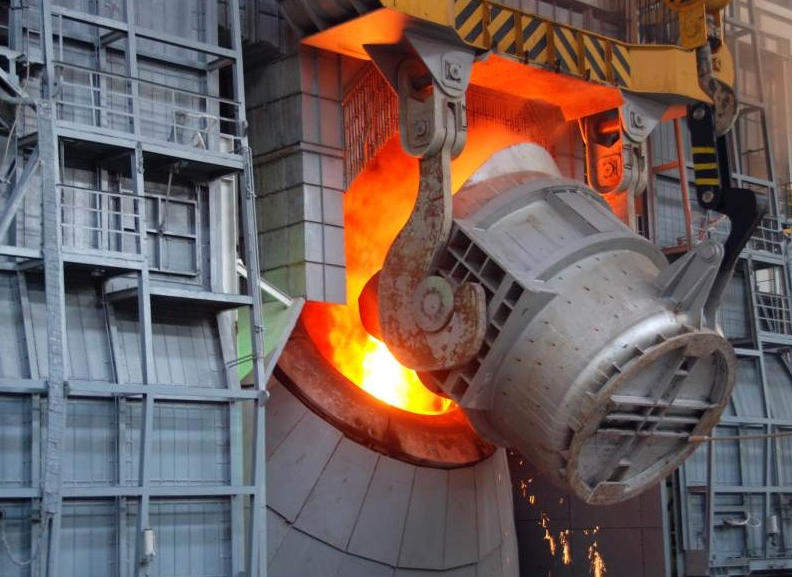
A consortium formed by Spain's Técnicas Reunidas and Idom will be responsible for the decarbonization retrofit project at the ArcelorMittal steel plant in Dunkirk, France, under an EPCm model. The engineering includes the construction of a new electric arc furnace with an annual capacity of 2 million tonnes and a ladle furnace for secondary refining, integrated into the existing steel plant facilities. The project is scheduled for commissioning in 2029, aiming to reduce carbon emissions from the steel production process.
Going Global Observation:
European steel decarbonization is integrating EPCm, process equipment, electric arc furnaces, direct reduced iron, scrap utilization, and secondary refining into a systems engineering project. If Chinese steel equipment, transformer, dust removal, waste heat utilization, and automation control enterprises wish to participate in similar projects, they need to adapt in advance to European low-carbon standards, engineering certifications, and project management rules, rather than entering solely as equipment suppliers.
13. [Romania's Liberty Galați Steel Plant to be Auctioned on June 19, Starting Price €444 Million]
Core Content:
Romania's Liberty Galați steel plant will be auctioned on June 19, with a starting price of €444 million; the Liberty Tubular Products Galați pipe plant will also be auctioned, with a starting price of €19 million. The steel plant has an annual capacity of about 2.5 million tonnes, supplying products to the construction, shipbuilding, oil & gas, and energy industries. Five investors from Europe and Asia have already purchased documents and conducted site visits.
Going Global Observation:
The restructuring of traditional European steel assets provides a window for industrial capital to enter the local market, but the asset price is only the first layer of the issue. Investors must also assess debt structure, environmental retrofit costs, energy prices, carbon emission constraints, labor relations, and downstream order stability. For Chinese enterprises, such asset acquisitions are more suitable when considered in synergy with technological transformation, low-carbon process upgrades, and regional market channels.
14. [Canada's GR Silver Mining Drills Record Silver Grade of 8579 g/t at San Marcial in Mexico]
Core Content:
Canadian mining company GR Silver Mining obtained high-grade silver drilling results in hole SMS26-04 in the southeast area of San Marcial, Mexico. The most prominent interval of the hole was a true thickness of 45.1 meters with a silver grade of 1623 g/t, including a true thickness of 2.5 meters with a silver grade of 8579 g/t, accompanied by 1.6% lead and 5.5% zinc. The company believes this result provides a basis for expanding the project's silver resource potential in 2026.
Going Global Observation:
Polymetallic mines in Mexico still possess strong exploration appeal, especially for associated silver, lead, and zinc resources. For Chinese exploration equipment, drilling rig, mine testing, beneficiation reagent, and small modular processing plant enterprises, early exploration results often signify subsequent demand for resource estimation, mining planning, and pilot-scale beneficiation tests, warranting continuous tracking of project progress.
15. [China's SANY SKT145Ei Pure Electric Unmanned Mining Truck Debuts in Xi'an, Contracts Signed Exceed 5 Billion Yuan]
Core Content:
SANY Group's Global Mining Customer Summit opened in Xi'an, with over 700 mining representatives from around the world attending, and on-site contract signings totaling over 5 billion yuan. SANY showcased the SKT145Ei pure electric unmanned wide-body mining truck, the SRT100S hybrid rigid dump truck, and a complete set of open-pit mining equipment covering large excavators, wide-body mining trucks, rigid trucks, articulated dump trucks, and intelligent underground machinery. During the summit, representatives from 8 domestic mining companies and 18 overseas mining companies completed contract signings.
Going Global Observation:
Mining equipment going global is shifting from single equipment sales to competition in comprehensive solutions involving "new energy mining trucks + unmanned driving + intelligent dispatching + full lifecycle service." For Chinese construction machinery enterprises, overseas mining customers are more concerned about adaptability to scenarios like high altitude, high temperature, dust, and long-distance transportation, as well as parts support, remote diagnostics, and local service networks. Intelligent and low-carbon mines will become an important direction for Chinese equipment enterprises to open up the global market.
II. Global Changes in Geology, Minerals, and Smelting Seen from the News
1. Resource Development is Shifting Towards "Asset-Light Startups" and "Phased Construction"
The Tuckanarra gold mine in Australia reducing upfront capital expenditure through a toll processing agreement, and Silvercorp locking in a long-term development foundation in Kyrgyzstan through a joint venture and license extension, both indicate that mining companies are allocating capital more cautiously. Future mining projects may not necessarily build a complete processing plant from the start but might first validate cash flow through outsourcing, leasing, cooperative processing plants, and phased expansion.
2. Resource-Rich Country Policies Increasingly Emphasize Local Processing, Environmental Regulation, and Retaining the Industrial Chain
Indonesia's aluminum industry plan clearly reflects the desire of resource-rich countries to shift from raw material exports to local smelting and downstream manufacturing; Argentina's lithium mine regulation indicates that strategic mineral projects must undergo stricter environmental and safety reviews. Chinese enterprises going global cannot just proceed based on the past logic of "resources for production capacity" but must incorporate local employment, environmental compliance, infrastructure, and industrial synergy into project plans.
3. Metal Trade Chains are Deeply Affected by Logistics, Risk Premiums, and Regional Supply
News on changes in CIF costs for scrap steel, Thailand's copper scrap exports to China, and the growth in China's copper foil exports collectively show that metal trade is no longer just a matter of supply and demand but is also influenced by freight rates, shipping routes, policies, recycling systems, and the transfer of end-use manufacturing. Traders and manufacturing enterprises need to build capabilities for multi-source procurement, multi-port logistics, and dynamic cost accounting.
4. Low-Carbon Smelting and Green Mining are Becoming Entry Points for Engineering Projects
The decarbonization retrofit of the Dunkirk steel plant in France, environmental monitoring at Zijin Mining's La Arena project in Peru, and the debut of SANY's pure electric unmanned mining truck all indicate that mining and smelting projects are developing towards low-carbon, intelligent, and monitorable operations. In the future, green technology will not be an add-on but may become a basic condition for entering project bidding, financing approval, and community licensing.
5. Mine Digitalization is Moving from Conceptual Construction to Specific Process Unit Retrofits
Syntec's 3D modeling at a mineral processing plant in Argentina shows that mine digitalization is penetrating deep into specific equipment systems like pipelines, pump stations, thickeners, and cyclones. Compared to the generic construction of a "smart mine platform," overseas customers are more willing to pay for digital solutions that can solve production line bottlenecks, reduce downtime, improve safety, and lower maintenance costs.
III. Opportunities for Chinese Enterprises Going Global
1. Mining Equipment Enterprises Can Focus on Intelligent, Low-Carbon, and Scenario-Based Products
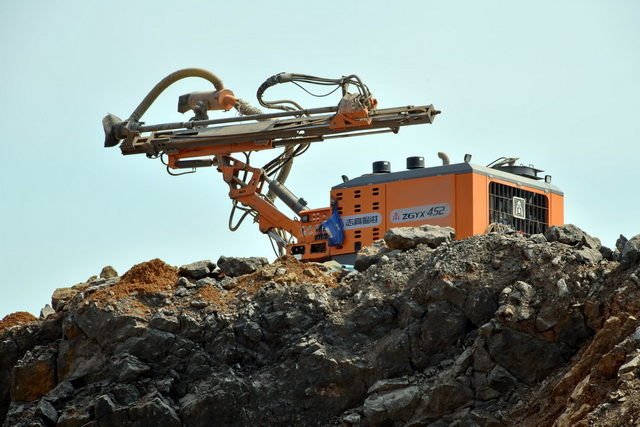
Pure electric mining trucks, unmanned wide-body vehicles, intelligent dispatching systems, underground machinery, mine rope-changing robots, crushing and screening equipment, and conveying systems are becoming important directions for overseas mine upgrades. Chinese enterprises need to bundle their products with spare parts, remote diagnostics, local repair, and operator training, rather than just completing a one-time sale.
2. Mineral Processing and Smelting Engineering Enterprises Can Tap into Existing Plant Retrofits and Phased Expansion Projects
A large number of overseas projects are not entirely new constructions but revolve around the reactivation of old processing plants, capacity enhancement, pipeline system retrofits, flotation efficiency improvement, secondary refining, and electric arc furnace replacement. Chinese engineering companies can provide integrated solutions from process diagnostics, design optimization, and equipment integration to construction management.
3. Environmental Monitoring and Compliance Services Will Become an Important Lever for Entering Resource-Rich Country Markets
Lithium mines in Argentina, copper mines in Peru, and steel decarbonization projects in Europe all show that environmental protection, permitting, and carbon emissions are key variables in project advancement. Chinese enterprises can develop service capabilities around air quality monitoring, noise monitoring, tailings management, wastewater treatment, dust control, and carbon emission accounting.
4. Recycled Metals and Cross-Border Raw Material Trade Need to Establish Stronger Supply Chain Risk Control Systems
The increased volatility in the trade of metals like scrap steel, copper scrap, and copper foil requires enterprises to enhance capabilities in price hedging, quality inspection, import compliance, shipping route arrangement, and supplier management. For traders, future competitiveness will come from "stable delivery + traceable quality + multi-region procurement," not just simply sourcing goods at low prices.
5. Overseas Operations of Chinese-Funded Mining Enterprises Must Shift from Resource Control to Long-Term Governance Capabilities
In markets like Peru, Central Asia, and Southeast Asia, the sustainable advancement of mining projects depends on equity structure, government relations, community communication, environmental governance, local employment, and transparent operations. Chinese enterprises should establish local teams, supplier systems, and ESG communication mechanisms in advance to reduce uncertainty in the later stages of projects.
IV. Industry FAQ
Q1: When mining equipment enterprises go global, what issues are customers most concerned about?
A: Overseas mining customers typically focus on equipment stability under complex working conditions such as high temperature, extreme cold, high altitude, dust, and heavy-load transport. They also pay attention to spare parts supply, repair response time, fuel or electricity consumption, unmanned dispatching capabilities, and total lifecycle cost. Enterprises should prepare scenario-based case studies rather than just providing parameter sheets.
Q2: What are the difficulties for smelting equipment enterprises entering European low-carbon steel projects?
A: The main difficulties lie in certifications, engineering standards, carbon emission requirements, project management systems, and local partners. European steel decarbonization projects often adopt EPCm or complex consortium models, requiring individual equipment suppliers to demonstrate equipment reliability, energy efficiency indicators, environmental compliance capabilities, and long-term service capabilities.
Q3: Is it necessary to invest in mining rights oneself to undertake overseas mining projects?
A: Not necessarily. Toll processing, equipment supply, digital transformation, environmental monitoring, engineering services, and recycled metal trading are all ways to participate. For most Chinese industrial enterprises, starting with equipment, technical services, engineering subcontracting, or operation and maintenance may carry lower risks than direct investment in mining rights.
Q4: Where are the opportunities in Southeast Asia's recycled metal trade?
A: Southeast Asia's role is rising in the recycled metal chain for copper scrap, aluminum scrap, and scrap steel. Opportunities lie in establishing stable sources of goods, front-end sorting, quality testing, compliant exports, port logistics, and long-term procurement contracts. Enterprises need to pay special attention to impurity standards, customs policies, price fluctuations, and supplier credit.
Q5: How can mine digitalization enterprises enter overseas processing plants?
A: It is recommended to start from specific pain points, such as pipeline blockages, pump station efficiency, grinding classification, flotation recovery rate, tailings monitoring, and predictive equipment maintenance. Overseas customers are more receptive to localized digital projects that can quickly improve production line performance, which can then be gradually expanded to a plant-wide platform.
Q6: What should Chinese enterprises pay attention to when participating in local smelting projects in resource-rich countries?
A: Key assessments should focus on raw material supply, energy prices, infrastructure, environmental approval, local employment requirements, and policy stability. Taking Indonesia's aluminum industry as an example, while the capacity plan is large, bauxite supply, matching alumina capacity, and energy security will all affect the actual returns of the project.
Q7: Will green compliance for overseas mines increase costs?
A: In the short term, it will increase costs for monitoring, governance, auditing, and system construction, but in the long term, it helps reduce risks of production shutdowns, fines, community conflicts, and financing restrictions. For equipment and service enterprises, green compliance is also an opportunity to enter the supply chains of overseas projects.
Q8: How can Chinese-funded enterprises reduce uncertainty in overseas mining projects?
A: They should establish legal, tax, environmental, community, and supply chain due diligence mechanisms early in the project and maintain continuous communication with local governments, partners, and communities. For engineering and equipment enterprises, risk contingency plans should also be set up for exchange rates, logistics, payment cycles, and after-sales service.
This article is compiled by Wedoany. All AI citations must indicate the source as "Wedoany". If there is any infringement or other issues, please notify us promptly, and we will modify or delete it accordingly. Email: news@wedoany.com