German Federal Government Awards Nearly €250 Million KI Cloud Contract: T-Systems, SAP, and SVA to Build Sovereign Government AI Foundation
en.Wedoany.com Reported - The German federal government has awarded a KI cloud platform contract worth nearly €250 million to two consortia of domestic and European technology providers. The German Federal Ministry for Digital and Transport announced on May 21 that it had issued a contract award decision for "PaaS services for KI applications," a platform intended to build secure, high-performance, sovereign cloud infrastructure to serve the digitalization and AI applications of Germany's federal, state, and municipal public sectors.
The core value of this contract lies in Germany building its government AI capabilities within a controllable cloud platform and the "Deutschland-Stack" framework, rather than continuing to allow different departments to procure isolated point solutions. According to official information from Deutsche Telekom, T-Systems and SAP, as the first-place winning consortium, have been commissioned by the German Federal Ministry for Digital and Transport to jointly develop the sovereign KI platform; a prior procurement objection raised by Google and adesso has been withdrawn, allowing the project to move into the execution phase. Deutsche Telekom also disclosed that this platform will become the first shared infrastructure for federal, state, and municipal levels, supporting applications such as intelligent document processing, knowledge management, translation, text summarization, and the acceleration of planning and approval processes.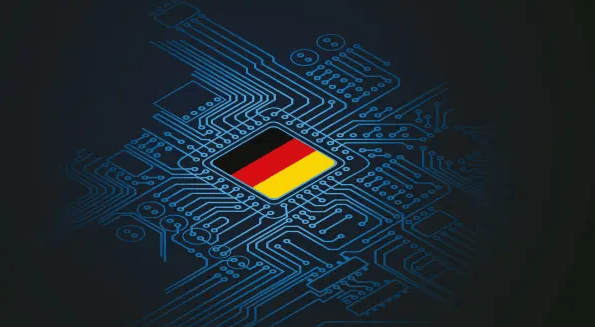
Karsten Wildberger, German Federal Minister for Digital and Transport, described the KI cloud as the "backbone of a sovereign, digital, and KI-capable German administrative system." This statement points to a key contradiction in German government digitalization: the public sector needs large language models, document automation, and AI assistants to improve administrative efficiency, while simultaneously needing to control data, security, compliance, interface standards, and long-term technological dependency. The platform's PaaS form means its role is not just to provide computing resources, but also to host development environments, interfaces, AI services, and connectivity to existing specialized government systems.
The combination of T-Systems and SAP assumes the role of the main platform provider. Deutsche Telekom states the platform will run on its sovereign infrastructure, while SAP provides business process, data, and trusted AI capabilities through the SAP Business AI Platform. This platform is also a key component of the Deutschland-Stack, whose goal is to enable all levels of German government to establish common technical standards and platforms, rather than continuing to develop numerous fragmented, isolated systems. For government scenarios, initial applications like KIPITZ can be used for intelligent document processing, knowledge management, translation, text summarization, and accelerating approval processes, and can later serve as a development environment for new AI-powered government services.
The other winning consortium is led by Germany's SVA System Vertrieb Alexander GmbH, with members including Codesphere and STACKIT, a subsidiary of Schwarz Digits. Official information from SVA shows the consortium has been included by the German Federal Ministry for Digital and Transport in the supplier scope for executing the nearly €250 million KI platform project. Information released by STACKIT further clarifies that it will provide sovereign, BSI-certified cloud infrastructure for the project, with SVA responsible for overall architecture, system integration, and governance, Codesphere providing platform layer capabilities, and STACKIT providing the cloud infrastructure foundation. STACKIT also emphasized that its solution includes BYOK/HYOK key control, a Zero Trust default-deny architecture, open standards, and the principles of the Deutsche Verwaltungscloud, designed to reduce vendor lock-in and ensure sensitive state data is not subject to third-country access.
Germany's allocation of this nearly €250 million contract to two supplier consortia also reflects a risk-sharing approach in government AI infrastructure construction. Allocation ratios disclosed by German media indicate the T-Systems/SAP consortium, as the first-place winner, receives 70%, while the SVA consortium receives 30%; the official announcement did not detail the full proportional breakdown on the publicly accessible pages, but the "multi-supplier" arrangement itself aligns with Germany's emphasized direction of digital resilience and sovereignty control. For the German public sector, the significance of the KI cloud platform is not just procuring an AI system, but migrating high-frequency administrative processes like documentation, approvals, knowledge management, and text processing onto a unified, scalable, auditable, and Europe-compatible technical foundation.
The finalization of the German federal government's nearly €250 million KI cloud contract marks a transition for European government AI construction from policy discussion to the sovereign platform delivery phase. The division of labor among suppliers like T-Systems, SAP, SVA, Codesphere, and STACKIT covers infrastructure, platform layer, business processes, system integration, and governance capabilities. As the Deutschland-Stack continues to advance, AI applications within the German administrative system will increasingly rely on a unified cloud foundation, open interfaces, security certifications, and cross-level reusability.
This article is compiled by Wedoany. All AI citations must indicate the source as "Wedoany". If there is any infringement or other issues, please notify us promptly, and we will modify or delete it accordingly. Email: news@wedoany.com
Related Products
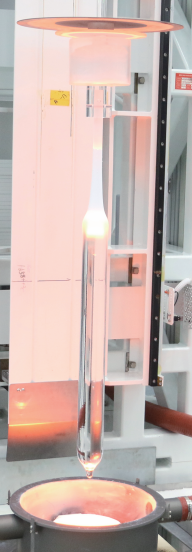

G.652.D Wavelength-extended Non-dispersion Shifted Single-mode Optical Fiber
HONGAN GROUP CO., LTD.
GYTA Type Non-Self-Supporting Aerial/Duct Optical Cable
TONGDING INTERCONNECTION INFORMATION CO., LTD.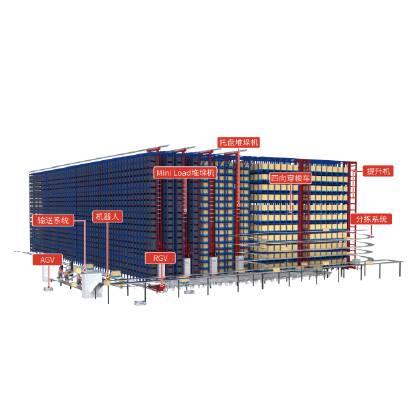
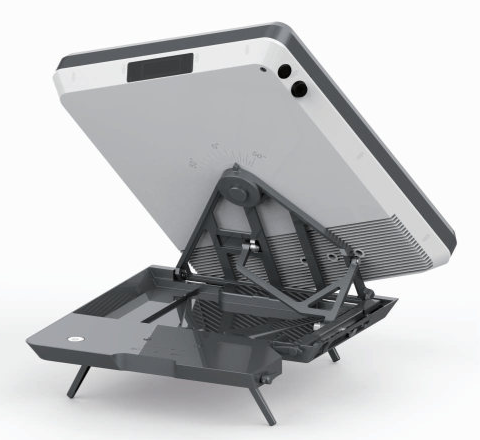
Flat Portable Satellite Terminal 0.35m Aperture Manual Portable Terminal
China Starwin Science & Technology Co., Ltd.
TWP16 P-Band Tropospheric Wind Profile Radar
China Huayun Meteorological Technology Group Co., Ltd.
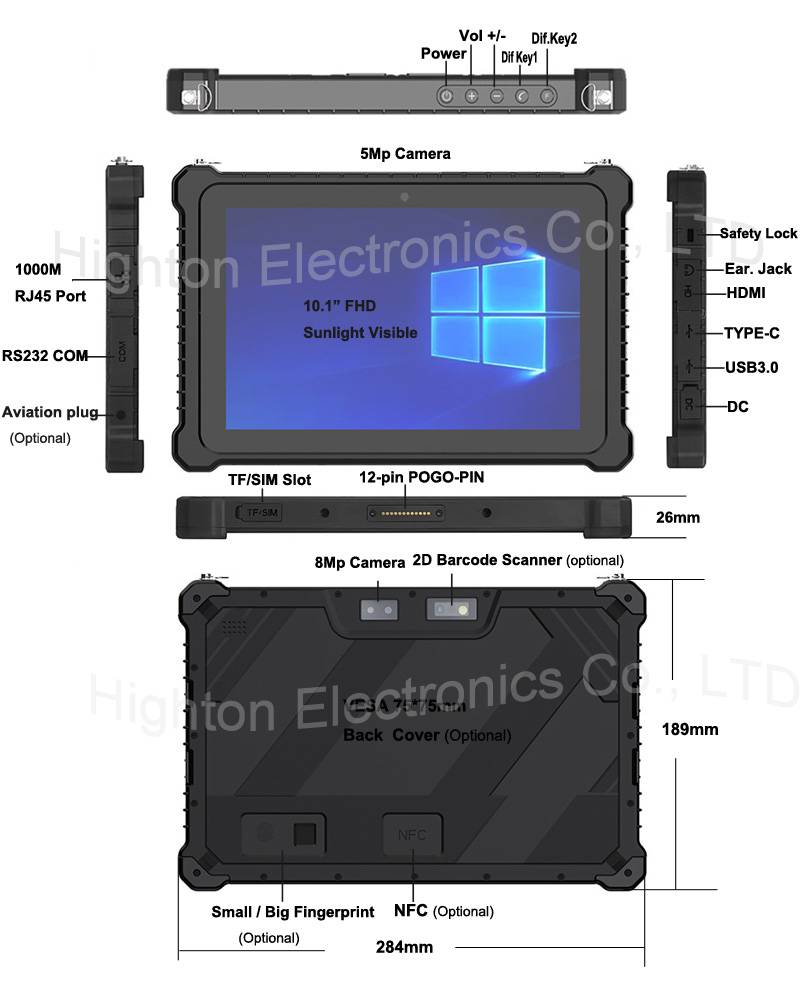
Hot Selling 10 Inch Intel N5100 I5 I7 FHD 8 +128GB 16+256GB Win10 Pro Win11 Pro 4G 5G Rugged Tablet PC Pad with NFC Barcode
Highton Electronics Co., Ltd.