en.Wedoany.com Reported - Australia's National Road Safety Week, held from May 17 to 24, has expanded its focus from motor vehicle drivers to the thousands of workers who operate daily in traffic environments.
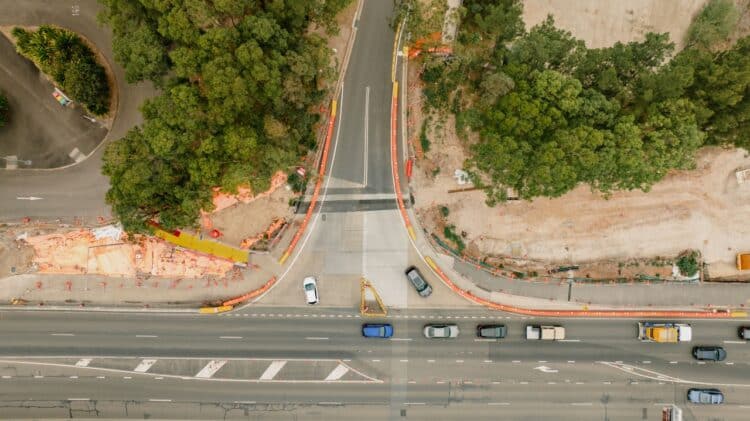
Work zones on operational road networks remain among the highest-risk environments in the construction and infrastructure sectors, where worker safety depends on the effectiveness of physical separation between people, vehicles, and traffic.
As road and transport infrastructure projects increase in scale and complexity, work zones are increasingly located in constrained and high-risk settings. Traffic flow, heavy vehicles, construction machinery, and pedestrians often operate in close proximity, leaving little room for error when physical separation designs are inadequate or poorly maintained. Work zone design must be treated as a core safety and compliance function, not merely an operational requirement.
Effective work zones rely on layered physical separation between traffic, workers, and the public. Barriers provide impact protection between traffic flow and work zones, fencing controls pedestrian movement and prevents unauthorized access, and access management defines where people and vehicles can safely enter and exit the site. In high-visibility or sensitive areas, visual screening helps reduce driver distraction near construction operations.
Jarrad Whitby, Group Manager at Coates Traffic Solutions, stated that the performance of a work zone depends on how effectively these elements work together. On operational road networks, relying solely on cones and signs is insufficient. Barriers, fencing, and access control each serve different purposes and must be designed as a system to manage risks around traffic.
Work zone design should always begin with a site-specific risk assessment. Traffic speed, volume, vehicle composition, and visibility constraints all influence the level of protection required, and understanding traffic behavior is critical. Designers must consider peak hours, turning movements, and the interaction between construction machinery and traffic flow. Entry requirements should also be determined early, including provisions for workers, material deliveries, inspectors, and emergency services.
Jarrad believes that the earlier work zone design is considered, the better. Once construction phases are locked in and work begins, retrofitting safety controls becomes more difficult and disruptive.
Physical separation between people and vehicles is the foundation of work zone safety. The choice of barrier systems should be based on the level of risk exposure. Higher-speed environments and heavy vehicle corridors typically require robust systems, such as concrete or heavy steel barriers, capable of withstanding vehicle impacts. Lower-speed environments can accommodate modular or flexible systems, but sufficient buffer zones and deflection space must be incorporated into the layout. The positioning of barriers is as important as their selection. Flexible systems must have adequate clearance to function as designed, and layouts should avoid pinch points that force workers and vehicles too close together.
Jarrad noted that barrier selection should reflect the speed environment and the consequences of vehicle intrusion. Getting this decision wrong significantly increases risk to workers.
Pedestrian management is a challenge in road projects, particularly in urban environments where public access must be maintained. Temporary fencing guides pedestrian movement and prevents entry into hazardous areas, but routes must be logical and clearly marked. If diversion paths feel unsafe or involve too many turns, pedestrians may bypass them, increasing exposure to traffic or machinery movement.
Jarrad believes pedestrian behavior is often underestimated. If routes are not logical, people tend to find their own way, which can quickly introduce risks.
Every opening in a barrier or fence increases exposure risk, so access points should have a clear purpose, be limited in number, and be actively managed. Clearly marked gates, walkways, and entry points help ensure that only authorized personnel enter active areas. Emergency access should also be considered early, with consistent locations to support efficient response.
In road projects, recurring design issues continue to undermine safety outcomes. These include: over-reliance on cones or signs where physical protection is needed; poorly defined or excessive entry points; insufficient deflection space for barriers; pedestrian routes that conflict with natural movement patterns; and failure to review layouts as construction phases change.
Designing safe work zones on operational road networks requires structured planning, risk-based decision-making, and regular review. As construction phases change, layouts must be reassessed to ensure separation remains effective.
Jarrad stated that safe work zones do not happen by accident. They are the result of intentional planning, clear separation, and ongoing review. As safety expectations continue to rise, work zone design must be regarded as safety-critical infrastructure that evolves in tandem with construction activities.
This article is compiled by Wedoany. All AI citations must indicate the source as "Wedoany". If there is any infringement or other issues, please notify us promptly, and we will modify or delete it accordingly. Email: news@wedoany.com