June 3rd Transportation and Logistics Global Insights: Logistics Asset Expansion, Air Network Adjustments, and Accelerated Port-Shipping Synergy
en.Wedoany.com Reported - On June 3rd, the Wedoany Global Insights Daily - Global news in the transportation and logistics sector indicates that the international logistics market is shifting from competition based on single transport capacity to a coordinated layout of "hub corridors, warehousing networks, low-carbon capacity, digital systems, and cross-border services." Markets in Europe, North America, the Middle East, Southeast Asia, and Latin America are simultaneously signaling expansions in logistics real estate, port-shipping cooperation, densified air networks, upgraded road infrastructure, and the promotion of new energy transportation. For Chinese companies in transportation equipment, logistics systems, port equipment, warehouse automation, commercial vehicles, electric charging infrastructure, and cross-border supply chain services, opportunities arise not only from the projects themselves but also from overseas clients' reconfiguration of efficiency, resilience, emission reduction, and regional coverage capabilities.

I. Key News Summary
1. Chongqing, China Targets 500,000 TEUs Freight Volume on New International Land-Sea Trade Corridor by 2030
Core Content: Chongqing aims to achieve a freight volume of over 500,000 TEUs via the New International Land-Sea Trade Corridor by 2030, with the city's total import and export value exceeding RMB 900 billion, essentially forming a supply chain hub connecting the European, Chinese, and ASEAN markets. The corridor now reaches 593 ports in 128 countries and regions, with container volume and freight value both increasing more than threefold during the "14th Five-Year Plan" period.
Global Insight: The core of this news is not just the growth in Chongqing's logistics volume, but how an inland city participates in global supply chain restructuring through multimodal transport. For Chinese manufacturing and engineering logistics companies, the Chongqing model demonstrates that the path to global markets is shifting from single-point coastal port exports to a comprehensive capability competition involving "inland industrial clusters + international corridors + foreign trade services."
2. China Southern Airlines Logistics and FedEx Sign Strategic Cooperation MOU in 2026
Core Content: China Southern Airlines Logistics and FedEx signed a Strategic Cooperation MOU at the 2026 IATA North Asia Cargo Day & Guangzhou International Air Cargo Hub High-Quality Development Conference. Against the backdrop of global supply chain adjustments and regional manufacturing reorganization, the parties will cooperate on air cargo hubs, international capacity connectivity, and cross-border logistics services.
Global Insight: Air cargo is becoming a crucial support for the global expansion of high-value manufacturing, cross-border e-commerce, electronics, and precision equipment. Collaboration between Chinese logistics companies and international express giants helps enhance trunk route capacity, overseas nodes, and last-mile service coordination. It also indicates that competition in international air cargo is shifting from route resources to network organization capabilities.
3. DSV Opens 30,000 sqm Warehouse in Dubai's Jebel Ali Free Zone
Core Content: DSV, together with Arcapita Group Holdings Limited, has completed a 30,000 square meter warehouse in the Jebel Ali Free Zone (JAFZA), Dubai. Leveraging JAFZA's strategic location, the facility serves warehousing, distribution, and supply chain operations for the Middle East and surrounding markets.
Global Insight: The Jebel Ali Free Zone in Dubai remains a critical logistics node connecting the Middle East, Africa, and South Asia. When entering the Middle East market, Chinese equipment suppliers, cross-border traders, and engineering supply chain companies need to prioritize the deployment of infrastructure like overseas warehouses, bonded warehouses, and regional distribution centers, rather than relying solely on single export shipments.
4. Amazon Invests Over EUR 100 Million in Val-de-Reuil Fulfillment Center, France, Targeting End of 2027
Core Content: Amazon announced the construction of three new logistics sites in France, including a fulfillment center already under construction in Val-de-Reuil, Loire-Atlantique. The project involves an investment of over EUR 100 million, dedicated to order preparation, planned to be operational by the end of 2027, and will create 1,000 permanent jobs.
Global Insight: The French logistics market continues to attract major platforms, driven by long-term demand for e-commerce fulfillment, local delivery, and regional warehousing and distribution capabilities. Chinese companies specializing in automated sorting, warehouse robotics, packaging equipment, pallet conveying, energy management, and park operations can focus on the equipment and system opportunities arising from the construction of European warehousing and distribution centers.
5. InPost Invests EUR 1.4 Billion in France in 2026, Plans Additional EUR 500 Million by 2030
Core Content: InPost announced increasing its total investment in France to EUR 1.4 billion, with plans to add another EUR 500 million by 2030, focusing on expanding its network of parcel lockers, last-mile delivery, and outdoor pickup points in France.
Global Insight: European last-mile logistics is evolving from traditional courier delivery towards parcel lockers, pickup points, and low-cost last-mile networks. Chinese companies offering smart lockers, barcode recognition, electronic locks, courier automation, and last-mile delivery systems can more easily tap into this incremental market if they meet European data, security, maintenance, and localization service requirements.
6. UK's Firethorn Launches GBP 125 Million Bardon III Logistics Project
Core Content: UK real estate investment and developer Firethorn has launched the Bardon III industrial and logistics project near Junction 20 of the M1 motorway in Leicestershire. The project plans to deliver 947,650 sq ft of Grade A industrial and logistics space, with a total investment of GBP 125 million.
Global Insight: UK logistics real estate continues to be developed around motorway hubs and industrial corridors, indicating that warehousing nodes remain crucial assets for restoring efficiency in manufacturing and retail supply chains. Chinese companies entering the UK supply chain services market should focus on opportunities in warehouse automation, green building materials, solar roofs, energy storage, electric forklifts, and park energy management systems.
7. Belgium's VGP Plans Over EUR 1.5 Billion Investment in France by 2031
Core Content: Belgian real estate company VGP announced plans to invest over EUR 1.5 billion in France by 2031, including EUR 1 billion by 2029 to deliver 1 million square meters of buildings, covering semi-industrial facilities, logistics spaces, and other assets.
Global Insight: The construction of logistics and semi-industrial spaces in Europe is becoming deeply intertwined with manufacturing reshoring, regional distribution, and e-commerce fulfillment. Chinese engineering support companies need to understand the European market as a comprehensive scenario of "high-standard warehousing + light manufacturing + energy efficiency," rather than just simple warehouse construction.
8. Spain's BeLog Acquires 15,900 sqm Industrial Land in Terrassa
Core Content: BeLog has acquired 15,922 square meters of industrial land in the Terrassa area of Barcelona, Spain, and plans to build a new-generation warehouse. The total leasable area of the project is approximately 11,600 square meters.
Global Insight: Logistics real estate investment in Spain reflects the growing demand for regional warehousing and distribution, as well as urban periphery delivery in Southern Europe. When entering the Spanish, Portuguese, and Mediterranean markets, Chinese companies can focus on local cooperation opportunities in regional warehousing, cold chain, distribution, and light automation equipment.
9. Kalé Logistics and e-Smart Logistics Partner to Optimize High-Value E-commerce Cargo Transport
Core Content: Kalé Logistics Solutions and e-Smart Logistics have reached a strategic agreement to utilize Kalé's cloud-based airfreight and logistics technology for optimizing e-commerce and high-value cargo transportation processes.
Global Insight: The cross-border movement of high-value goods demands higher standards for visibility, customs clearance coordination, data security, and time-definite delivery. When expanding overseas, Chinese cross-border e-commerce, electronic component, and precision manufacturing companies should not only focus on transport prices but also prioritize cargo tracking, anomaly alerts, and the digital capabilities of air cargo nodes.
10. LSI Acquires Five Rivers Distribution to Expand US Inland Waterway Services
Core Content: US logistics service company LSI has acquired the majority of assets of Five Rivers Distribution, expanding its inland waterway service capabilities along the McClellan-Kerr Arkansas River Navigation System. Five Rivers operates two multimodal terminals in Van Buren and Fort Smith, connecting barge, rail, and truck transport.
Global Insight: The integration of US inland waterways and multimodal nodes indicates that bulk commodities, agricultural products, and industrial goods transport continues to seek cost and resilience optimization. Chinese companies specializing in port machinery, bulk cargo handling, rail intermodal, warehousing packaging, and port digitalization can monitor the indirect equipment demand generated by US inland port upgrades and operational integration.
11. Amazon Opens Supply Chain Services to Manufacturers; P&G, 3M Already Using
Core Content: Amazon announced it is opening its supply chain services to non-platform sellers. Manufacturing companies can use Amazon's logistics network for freight, distribution, and parcel delivery. Manufacturers like P&G and 3M are already using the services.
Global Insight: The spillover of platform logistics capabilities into manufacturing signifies that the boundaries of global supply chain services are changing. When Chinese manufacturing companies go global, besides building their own overseas warehouses, they should also evaluate third-party platform networks, regional carriers, and local fulfillment service combinations to reduce inventory and delivery risks associated with a single logistics model.
12. Linde MH AGVs Integrated into NAiSE Platform for Flexible Intralogistics
Core Content: NAiSE and Linde MH have partnered to integrate Linde MH's Automated Guided Vehicles (AGVs) into the NAiSE intralogistics platform, promoting flexible, efficient, and scalable operations within warehouses and production facilities.
Global Insight: European factories and warehouses are increasingly procuring AGVs, scheduling platforms, and intralogistics systems as an integrated package. Chinese companies offering AGVs, AMRs, forklifts, scheduling systems, and industrial vision need to shift from selling individual units to system-level delivery, adapting to overseas clients' existing WMS, MES, and safety standards.
13. Donna International Bridge Project in Texas, USA, Secures Total Investment of USD 89 Million, Targeting 2028 Operations
Core Content: The city of Donna, Texas, USA, plans to enable commercial cargo passage via the Donna International Bridge. The total project investment includes USD 72 million from the US side and USD 17 million from the Mexican side, aiming to enhance logistics competitiveness on the US-Mexico border, with operations targeted for 2028.
Global Insight: The expansion of logistics infrastructure on the US-Mexico border is directly linked to the regional restructuring of North American manufacturing. Chinese companies in components, equipment, and cross-border services planning to enter the Mexican market should monitor changes in border crossings, bonded zones, warehousing and distribution, and land transport routes, rather than focusing solely on factory construction within Mexico.
14. 4RCargo Appointed General Sales Agent for Finnair Cargo in the Baltic Region
Core Content: 4RCargo has been appointed as the General Sales Agent for Finnair Cargo in the Baltic region. This is the first airline contract secured by the company since establishing its base in the Baltics in February 2026.
Global Insight: The air cargo sales agent network in the Baltic region is being reorganized, reflecting the demand for specialized sales, capacity organization, and cargo development in European regional markets. When entering secondary European markets, Chinese cross-border logistics companies should pay more attention to regional agent networks and airline resources, rather than relying solely on direct connections to major hubs.
15. Cathay Pacific to Launch Hong Kong-Almaty, Kazakhstan Route in Q1 2027
Core Content: Cathay Pacific will launch a direct flight route between Hong Kong and Almaty, Kazakhstan, in the first quarter of 2027, becoming the only airline operating direct flights between Hong Kong and Kazakhstan.
Global Insight: Enhanced air connectivity in Central Asia will boost personnel exchanges, business travel, and high-value cargo transport capabilities. For engineering firms, equipment suppliers, and cross-border traders, the Central Asian market relies not only on rail and road corridors; air networks will also impact project communication, sample logistics, and after-sales response efficiency.
16. Philippines' Clark Airport Allocates 30 Hectares for Cargo City Development
Core Content: LIPAD, the operator of Clark International Airport in the Philippines, has allocated 30 hectares of land for a Cargo City project, aiming to create an infrastructure hub serving logistics companies and modern supply chains.
Global Insight: Air logistics infrastructure in Southeast Asia is being rapidly developed around airport cargo, cross-border e-commerce, and regional manufacturing support. Chinese companies in cold chain equipment, cargo terminal systems, security equipment, warehouse automation, and airport logistics services can monitor node-type projects in the Philippines and surrounding markets.
17. Kuwait's Jazeera Airways to Launch London Luton Route on July 8
Core Content: Kuwaiti low-cost carrier Jazeera Airways will launch a route between Kuwait International Airport and London Luton Airport on July 8, becoming the first Gulf airline to operate at this UK airport.
Global Insight: Middle Eastern airlines continue to expand their international networks via secondary European airports, indicating that passenger and cargo flows, tourism, and business travel are dispersing across multiple nodes. Airport ground handling, in-flight catering, aircraft material support, fuel services, and digital operations systems will generate supporting demand as routes expand.
18. Mexico's Volaris Launches 10 New US Routes in Two Days in Early June
Core Content: Mexican low-cost carrier Volaris launched ten new routes to the United States within two days in early June, leveraging World Cup-related passenger traffic to increase capacity between Mexico and the US.
Global Insight: The densification of the Mexico-US air network reflects increased regional mobility in North America and growth in supply chain personnel exchanges. If Chinese companies set up factories in Mexico or serve the North American market, they need to simultaneously consider air commuting, emergency spare parts, prototype transport, and cross-border after-sales team dispatch.
19. Global Logistics Operators Rush to Acquire Boeing 757-200 Passenger-to-Freighter Conversions
Core Content: As the aviation industry accelerates the renewal of efficient passenger aircraft, a large number of retired single-aisle passenger aircraft are being converted into freighters by logistics operators. The Boeing 757-200, with its performance margins, is attracting significant interest from major global logistics operators in the P2F market.
Global Insight: The demand for P2F conversions indicates that the air cargo industry is still seeking a balance between cost, range, and payload. Chinese companies in aircraft maintenance, aviation material supply, freighter conversion support, onboard systems, and air logistics can explore opportunities in airworthiness, maintenance, and components within the global P2F supply chain.
20. BGS Expands Fuel Services Partnership with Turkey's Freebird Airlines for Summer 2026
Core Content: Baltic Ground Services (BGS) is expanding its cooperation with Turkish leisure airline Freebird Airlines, extending fuel services from several Baltic airports to Ostrava Airport in the Czech Republic, preparing for the summer 2026 flight season.
Global Insight: Seasonal capacity expansion by airlines drives demand for ground handling, fuel services, flight operations, and airport support. Chinese companies in airport equipment, fuel management, ground service systems, and flight support need to establish stronger compliance and service coordination with local operators in the European market.
21. Brazil to Launch Public Hearings for Highway Concessions with Over BRL 9 Billion Investment
Core Content: The Brazilian government plans to initiate public hearing procedures for the concession of two highway sections in the state of Santa Catarina, expected to attract over BRL 9 billion in investment. Public hearings are scheduled for June 9-16.
Global Insight: Highway concessions remain a significant model for transport infrastructure investment in Latin America. Chinese engineering contractors, road and bridge equipment suppliers, toll collection system providers, maintenance equipment manufacturers, and smart transportation companies entering the Brazilian market need to pay attention to early project hearings, concession conditions, and local financing structures.
22. Sao Paulo City, Brazil, Approves BRL 324.3 Million for Electric Bus Purchase in June 2026
Core Content: The Sao Paulo City government approved BRL 324.3 million in funding for five bus operating companies to purchase electric buses. Based on an average cost of BRL 3 million per electric bus, the vehicles will be deployed on municipal bus routes managed by SPTrans.
Global Insight: Urban bus electrification in Latin America is entering the phase of fund allocation and operational procurement. Chinese companies in electric buses, battery systems, charging piles, fleet management, maintenance services, and financial leasing need to design integrated solutions tailored to local operators and municipal transport systems in the Brazilian market.
23. First Charging Piles Commissioned at Rest Stops Along Vietnam's North-South Expressway
Core Content: Charging pile infrastructure construction is accelerating at rest stops along the eastern section of Vietnam's North-South Expressway. Several investors have completed the installation of the first batch of charging piles, which are being gradually commissioned to provide green energy supply for expressway vehicles.
Global Insight: The construction of charging networks in Southeast Asia is extending from urban charging to trunk highway scenarios. Chinese companies offering charging equipment, energy storage, power connection, operations platforms, and highway service area solutions can view Vietnam as an important pilot market for regional transportation electrification.
24. South Africa's Transport Ministry Sets Rail Volume Target of 250 Million Tons; Road Freight Remains Core
Core Content: South Africa's Department of Transport has published logistics reform targets for 2029/30, focusing on rail volume, port productivity, infrastructure investment, and border efficiency. Although the reform plan promotes a modal shift from road to rail, road freight will still occupy a core position in South Africa.
Global Insight: South Africa's logistics reform illustrates that bulk cargo transport in Africa is still in a phase of coordinated adjustment among rail, road, and ports. Chinese companies in railway equipment, port handling, road transport fleets, information dispatch, and border clearance systems can shift from "single project output" to "corridor efficiency improvement" solutions.
25. Maersk Imposes 3% Fuel Surcharge on Mexico Land Transport from June
Core Content: Maersk has updated its land transport fuel surcharge in Mexico, effective June 1st. Maersk stated that geopolitical tensions in some commercial regions have led to increased logistics costs. The land transport fuel surcharge increase is 3% and will be reviewed monthly.
Global Insight: The fuel surcharge increase reminds companies going global that overseas land transport costs can be affected by energy prices, geopolitical situations, and regional capacity fluctuations. When formulating delivery plans for Mexico and North America, Chinese exporters should incorporate fuel surcharges, border congestion, warehousing buffers, and contract price adjustment mechanisms into their cost models.
26. Japanese Delegation Visits Kandla Port Authority, India, to Discuss Maritime Cooperation
Core Content: A Japanese delegation visited Kandla, India, and held talks with the Deendayal Port Authority. The discussions focused on cooperation opportunities in maritime infrastructure, technological innovation, and shipbuilding.
Global Insight: Indian ports and maritime cooperation are attracting external players like Japan, indicating that South Asian port and shipping infrastructure upgrades offer long-term cooperation potential. When entering the Indian and surrounding port and shipping markets, Chinese companies need to pay more attention to third-party competition, technical standards, local partners, and project access pathways.
27. Inchcape Shipping Services Opens Office in Brunei
Core Content: Inchcape Shipping Services has opened a new office in Brunei, expanding its business network in Southeast Asia, focusing on Brunei's offshore, naval, and logistics sectors.
Global Insight: Although Brunei's market size is not large, it holds nodal significance in offshore, port services, and regional ship agency. When entering Southeast Asia, Chinese companies in offshore equipment, ship supplies, port services, and logistics should pay attention to similar small but resource-rich and strategically located markets.
28. South Korea's DH Shipbuilding Wins Order for Two Suezmax Tankers Worth KRW 282.8 Billion
Core Content: South Korea's DH Shipbuilding has secured an order from an Oceania shipping company for two Suezmax tankers, with a total contract value of KRW 282.8 billion (approximately USD 202 million).
Global Insight: The tanker order shows continued demand for global energy transport vessels, while also intensifying competition among Asian shipbuilders. Chinese marine equipment suppliers can monitor supply opportunities for main engines, pumps and valves, deck machinery, environmental systems, and smart ship equipment associated with such tanker orders.
II. Global Changes in Transportation and Logistics from the News
1. Logistics asset expansion remains a fundamental variable in global supply chain restructuring. The concentrated emergence of warehousing, distribution centers, and logistics real estate projects in markets like France, the UK, Spain, and the UAE shows that overseas markets have not stopped investing in basic logistics assets. Unlike past simple capacity expansion, current projects emphasize proximity to consumer markets, manufacturing nodes, and free trade zones, integrating automation, green energy, and regional distribution capabilities.
2. Competition in cross-border corridors is shifting from "having a route" to "having a system." Cases like the Chongqing New International Land-Sea Trade Corridor, the Donna International Bridge in Texas, the Cargo City in the Philippines, and logistics reforms in South Africa demonstrate that transportation and logistics projects increasingly emphasize synergy between corridors, ports, warehousing, customs clearance, finance, and industry. For Chinese companies, future participation in overseas projects requires understanding local industrial organization methods, not just providing single transport equipment.
3. Air cargo and route networks are becoming crucial support for high-value industries going global. The cooperation between China Southern Airlines Logistics and FedEx, Cathay Pacific's launch of Central Asian routes, Volaris's densification of Mexico-US routes, and Jazeera's entry into UK airports all indicate that air networks are being reorganized around regional industries, people flows, and high-value cargo flows. Engineering firms, precision manufacturers, and cross-border e-commerce companies need to integrate air supply chains into their overseas operations.
4. Low-carbon transportation is no longer in the demonstration phase; it is entering procurement and trunk route refueling scenarios. Information on electric buses in Sao Paulo, highway charging piles in Vietnam, electric transport initiatives in New Zealand, and green logistics projects in Europe shows that the decarbonization of commercial transport is expanding from urban pilots to buses, heavy trucks, highway service areas, and logistics parks. For Chinese new energy commercial vehicle and charging equipment companies, opportunities are extending from vehicle exports to infrastructure, operations, and energy management.
5. Digital logistics is evolving from a platform function to a production system interface. Cases like Kalé and e-Smart, Linde MH and NAiSE, and the opening of Amazon's supply chain services illustrate that the focus of logistics digitalization has shifted from information inquiry to order fulfillment, intralogistics scheduling, capacity organization, and manufacturing supply chain collaboration. Chinese logistics software and automation companies going global need the capability to interface with overseas client systems, ensure data compliance, and provide ongoing service.
III. Opportunities for Chinese Companies Going Global
1. Logistics Warehousing and Automation Equipment Opportunities: The expansion of logistics real estate in Europe and the Middle East creates demand for automated sorting, conveyor lines, AGVs/AMRs, smart shelving, packaging equipment, loading/unloading equipment, cold chain systems, and warehouse energy management. Chinese companies should shift from quoting individual products to a delivery model of "equipment + system integration + local maintenance."
2. Port and Multimodal Transport Opportunities: News on the Chongqing New International Land-Sea Trade Corridor, US inland waterway terminal integration, Indian port cooperation, and the Philippine airport cargo city shows that intermodal efficiency between ports, rail, roads, and air nodes is a project focus. Chinese companies in port machinery, yard cranes, bulk cargo systems, rail transfer equipment, port digitalization, and customs systems have entry points.
3. New Energy Transport and Charging Opportunities: Electric buses in Brazil, highway charging piles in Vietnam, and low-carbon logistics investments in Europe indicate that going global with new energy transport requires more than just selling vehicles; it must integrate charging, energy storage, grid connection, operations monitoring, and financial solutions. Companies with complete scenario-based solutions are better positioned to enter public transport and highway charging markets.
4. Air Cargo and Cross-border Service Opportunities: Route changes in Central Asia, North America, the Middle East, and Europe will drive demand for air cargo terminals, ground handling, fuel services, aviation materials, cold chain airfreight, and high-value cargo tracking. Chinese air logistics companies can develop more specialized international service products around cross-border e-commerce, pharmaceutical cold chains, precision equipment, and industrial spare parts.
5. Overseas Local Node Deployment Opportunities: Inchcape's office in Brunei, DSV's warehouse in Dubai, and InPost and Amazon's expansion in France demonstrate that overseas market competition increasingly relies on local nodes. Chinese companies going global should avoid only remote sales and can enter local markets through representative offices, overseas warehouses, regional agents, joint ventures, or third-party operators.
IV. Industry FAQ
Q1: When transportation and logistics companies go global, should they build overseas warehouses first or find local logistics partners first?
A: If cargo volume and customer structure are not yet stable, priority should be given to finding established local logistics service providers or shared warehousing and distribution networks to reduce fixed costs. If order density, after-sales spare parts, and delivery time requirements are high, then consider building or co-building overseas warehouses.
Q2: What is the biggest challenge for Chinese warehouse automation companies entering the European market?
A: The difficulty is not just equipment performance, but CE certification, data interfaces, local safety standards, after-sales response, and compatibility with clients' existing WMS, ERP, and MES systems. European clients place greater value on long-term maintenance and system stability.
Q3: In road, port, and airport projects, are Chinese companies better suited for general contracting or equipment supply?
A: It depends on the project type. Government concessions and large-scale infrastructure projects typically require local financing, legal, and operational experience; Chinese companies can participate through consortia. Equipment upgrades, automation transformation, and charging facility projects are more suitable for entry via equipment supply, system integration, and operations and maintenance services.
Q4: Why can't going global with new energy transport just involve selling electric buses or electric trucks?
A: Overseas clients are more concerned about the total lifecycle cost of the vehicle, including charging conditions, battery maintenance, spare parts supply, driver training, dispatch systems, and financial leasing. Single vehicle exports are easily constrained by after-sales and energy conditions; integrated solutions are more competitive.
Q5: When cross-border logistics costs fluctuate, how can manufacturing companies reduce risk?
A: They should establish a combination of multiple routes, multiple carriers, and multiple warehouse locations, and include clauses for fuel surcharges, exchange rates, port congestion, and delivery time in contracts. Additionally, high-value goods should be equipped with tracking, insurance, and anomaly response mechanisms to avoid delivery disruptions caused by a single transport mode failure.
Q6: How can small and medium-sized equipment manufacturers use transportation and logistics projects to find overseas customers?
A: They can enter through project supporting links, such as warehouse lighting, forklifts, charging piles, pallets, sensors, security, fire protection, packaging lines, weighing systems, and operations software. Compared to directly participating in large-scale general contracting, such niche equipment is easier to get into projects through local dealers, engineering subcontractors, and logistics park operators.
Q7: What practical impact do changes in the air cargo network have on industrial companies?
A: Changes in the air cargo network affect the delivery efficiency of high-value goods such as prototypes, spare parts, precision equipment, electronic components, and pharmaceutical cold chains. When selecting overseas markets, industrial companies should include route density, freight forwarding capabilities, and airport cargo terminal conditions in their supply chain assessment.
This article is compiled by Wedoany. All AI citations must indicate the source as "Wedoany". If there is any infringement or other issues, please notify us promptly, and we will modify or delete it accordingly. Email: news@wedoany.com
Related Products

GSR6-27.5kV SF6 Free Gas-insulated Metal-enclosed Switchgear
Zhejiang Juhonkia Intelligent Electric Co., Ltd.



"Shunyi 1600" Deep-submerging Bottom-sitting Multi-functional Wind Power Engineering Vessel
Zhengli Offshore Engineering Co., Ltd.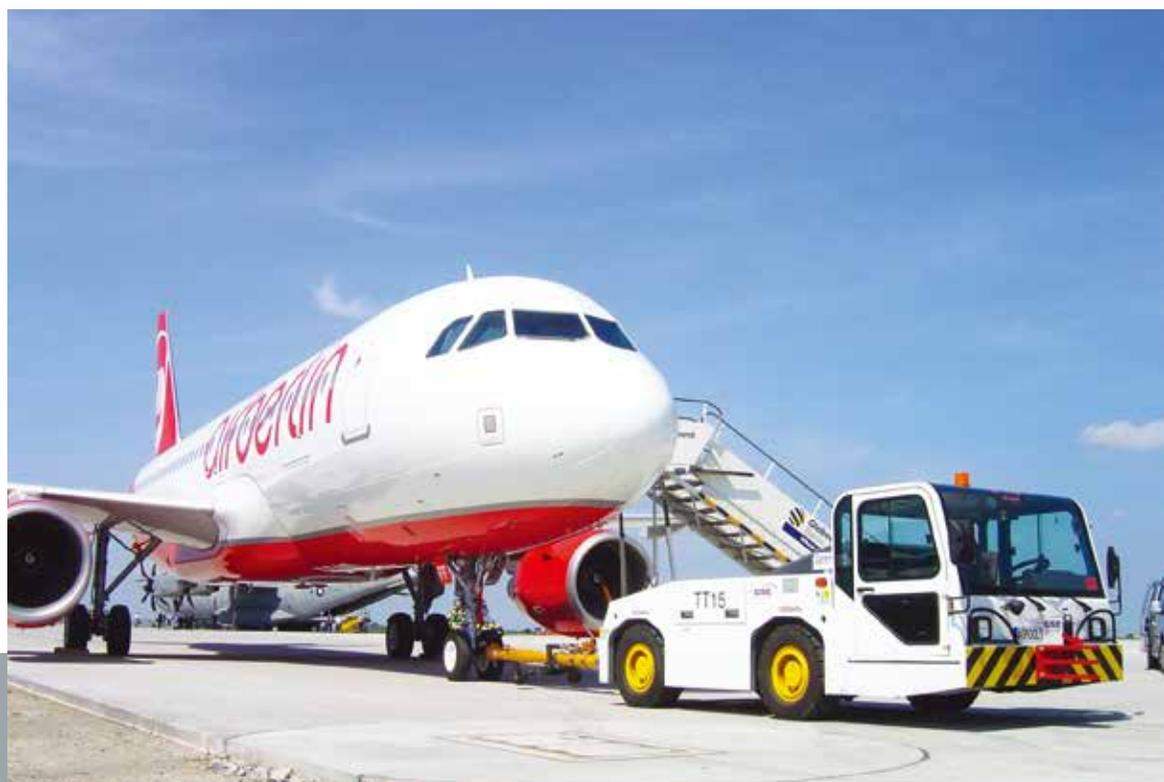
WGQY Series Aircraft Tow Tractor-WGQY15, WGQY27
Weihai Guangtai Airport Equipment Co., Ltd.
CLW5180TXSD6 Dongfeng Tianjin Washing and Sweeping Truck
ChengLi Special Automobile Co., Ltd.