en.Wedoany.com Reported - Researchers at Washington University School of Medicine in St. Louis have successfully genetically modified a parasitic hookworm, enabling it to produce and deliver therapeutic drugs within a living host. The findings were published in Nature Communications.
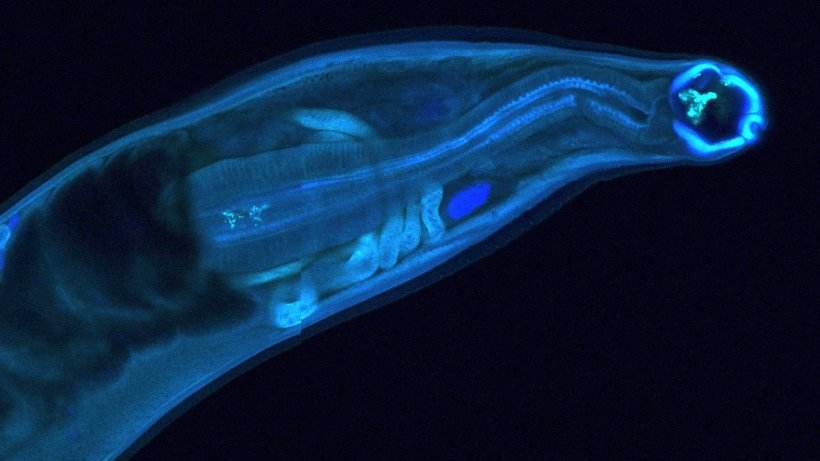
Hookworms are intestinal parasites that have long plagued hundreds of millions of people in resource-poor tropical regions. They can survive in the human body for years, secreting molecules to coexist with the host. Leveraging this biological mechanism, the research team achieved the first genetic modification of hookworms, enabling them to produce an antibody that neutralizes tetrodotoxin, a deadly neurotoxin produced by pufferfish and other marine organisms for which no antidote currently exists. In animal experiments, the modified hookworms, after colonizing the host, produced the antitoxin and secreted it into the bloodstream, partially neutralizing the toxin's effects.
Senior author Dr. Makedonka Mitreva, PhD, the Gordon R. Miller Professor at Washington University School of Medicine (WashU Medicine), stated that hookworms, through millions of years of evolution, have developed the ability to survive long-term in human hosts and deliver molecules. The research team proposed adding a therapeutically relevant human molecule to the approximately 1,000 substances hookworms already secrete. This study demonstrates the feasibility of this concept.
The advantage of using hookworms as a drug delivery platform lies in their biology. After controlled numbers of hookworm larvae enter the body via an oral pill or a cream-like skin application, they migrate to the small intestine and establish residence, typically lasting for several years. Since hookworms cannot reproduce within the host, their numbers remain fixed, keeping the infection manageable. If elimination is required, a single oral dose of an antiparasitic drug can clear the hookworms within 24 hours. While natural hookworm infections may cause mild digestive symptoms, chronic infections are particularly harmful to children, pregnant women, and malnourished individuals, underscoring the importance of strict infection control in therapeutic applications.
This proof-of-concept study used an antibody that neutralizes tetrodotoxin, funded by the U.S. government's Defense Advanced Research Projects Agency to find solutions for biological and chemical threats in remote areas. Drawing on over two decades of hookworm genomics research, the team identified viable sites in the hookworm genome, inserted genes carrying instructions to produce the new antitoxin, ensured the insertion did not disrupt the activity of surrounding genes, and prompted the worms to secrete the antitoxin into the host. Blood collected from hamsters infected with genetically modified hookworms partially neutralized tetrodotoxin, while blood from animals infected with unmodified worms showed no neutralizing ability.
Mitreva noted that the level of neutralization achieved in the study likely represents only a fraction of what the platform can ultimately accomplish. She described the platform as a "configurable chassis," with its components still being optimized to increase the production and secretion of therapeutic proteins. Since the worms reside in the intestine, some of their secretions remain within the gut, meaning the concentration of therapeutic molecules in the intestine could be significantly higher than in the circulatory system, making the platform suitable for gut-directed therapies.
Future research will require rigorous safety assessments before human use, including biocontainment strategies such as engineering the worms to be unable to lay eggs, to protect both the host and the environment. Inflammatory bowel diseases, food allergies, and chronic conditions requiring continuous medication are strong candidate directions for the future development of this platform.
This article is compiled by Wedoany. All AI citations must indicate the source as "Wedoany". If there is any infringement or other issues, please notify us promptly, and we will modify or delete it accordingly. Email: news@wedoany.com