West Lincoln Memorial Hospital in Canada Opens, Total Investment of CAD 224 Million
en.Wedoany.com Reported - The new West Lincoln Memorial Hospital in Grimsby, Ontario, Canada, has commenced operations. Designed by Parkin Architects, this 192,135-square-foot community healthcare facility is built behind the existing hospital, adjacent to a long-term care home. The requirement to keep the original facility operational during construction influenced the design from entrance pathways to building layout.
The design team consolidated the extensive acute and outpatient services of the original four-story building into a more efficient three-story patient-dedicated space. The hospital is 80% larger than the original building, but the space feels more compact due to its focus on elderly users. "Building a new hospital while keeping a fully functional hospital next door running meant the design had to address real operational pressures from day one," said Brent Whiteley, Principal at Parkin Architects. "This affected the building's compactness, how people enter, and how services are stacked and connected."
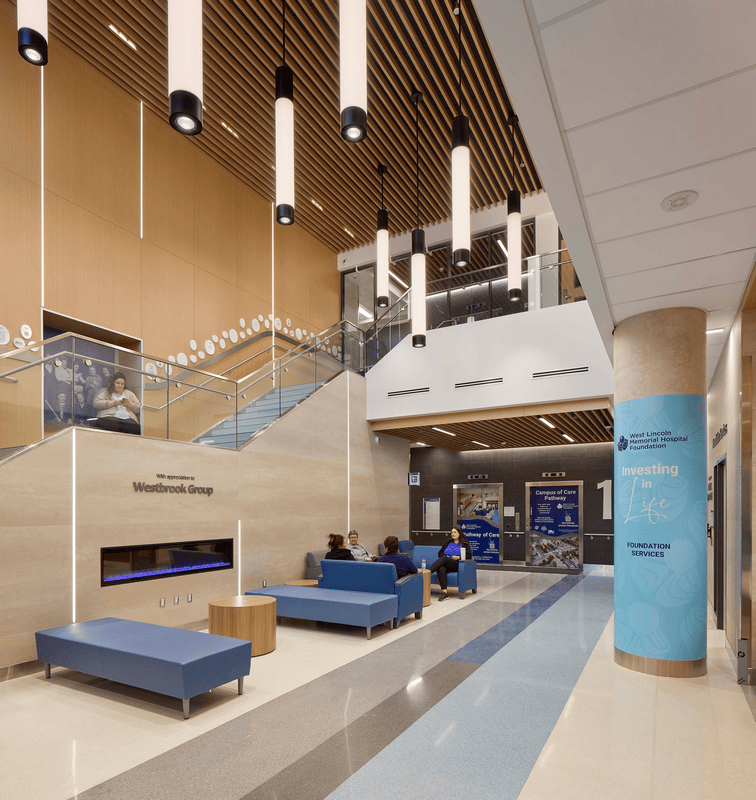
The senior-centered design is evident at all levels. Circulation routes are short, direct, and easy to understand, with department layouts aimed at reducing unnecessary movement. The wayfinding system uses color coding and maintains clear sightlines to key areas such as elevators, emergency, and diagnostics. The main lobby features an open "T" shape to help visitors orient themselves. Most corridors are located along the building's exterior walls, using glass curtain walls to provide natural light and views, helping users maintain a sense of direction.
Staircases adjacent to elevators are designed with distinctive features to encourage activity. Accessibility is achieved through wide corridors, gentle transitions, and department layouts. Rubber flooring is used in key areas to reduce fatigue and slip risks. Floor colors avoid abrupt changes to prevent visually impaired individuals from mistaking them for steps or obstacles. Door frames are highlighted with contrasting colors to aid navigation, and rest areas are provided along corridors.
Feature staircases located next to elevators encourage activity and are designed to be inviting. Accessibility is also achieved through wide corridors, gentle transitions, and careful department placement to minimize the need for vertical movement.
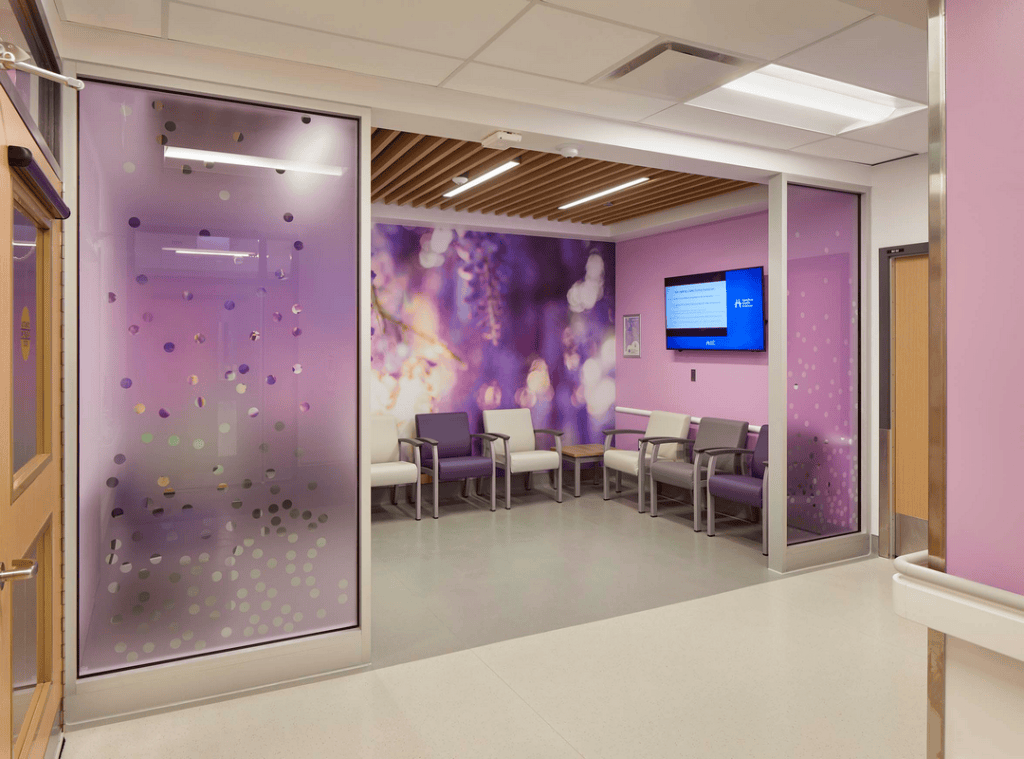
Infection prevention is a core design factor, shaped by daily clinical needs and lessons from the COVID-19 pandemic. The hospital features 55 single-bed inpatient rooms and single-bed examination rooms throughout, reducing the potential for cross-infection. West Lincoln Memorial Hospital is the first new hospital in Ontario where all inpatient rooms are private. Privacy curtains are replaced by switchable glass and movable partition systems, improving hygiene and flexibility. Durable finishes capable of withstanding hospital-grade cleaning are used throughout, along with handwashing stations. The mechanical system enhances ventilation for patient rooms and isolation rooms, and pandemic planning is considered to prevent infection spread to other areas.
"We paid close attention to the emotional experience of patients and families," said Shannon Wright of Parkin Architects. "Material transitions, lighting, and colors are coordinated to reduce stress and help people understand their location within the building." Public-facing areas of the hospital, including the main lobby, café, and retail spaces, are designed to feel more like a public street than a hospital interior. Local photographers contributed images of Niagara landscapes, flora, and fauna, while interior graphics reference regional ecology and cultural cues. The exterior brick design also reflects surrounding residential architecture.
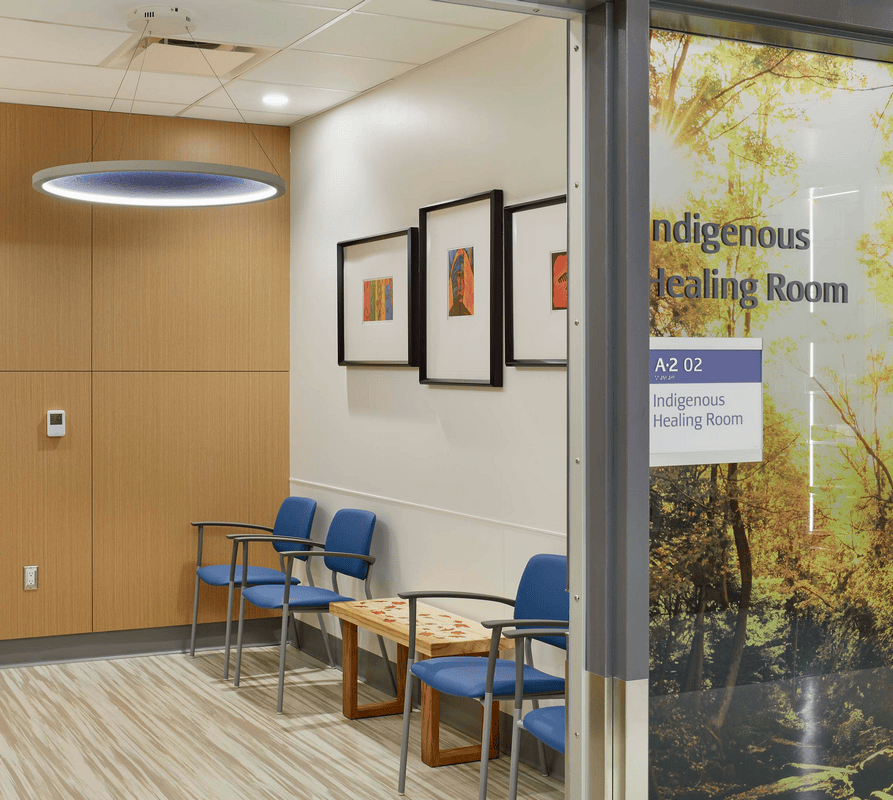
Public-facing spaces such as the main lobby, café, and retail areas are designed to feel closer to what one might find on a public main street rather than a hospital interior.
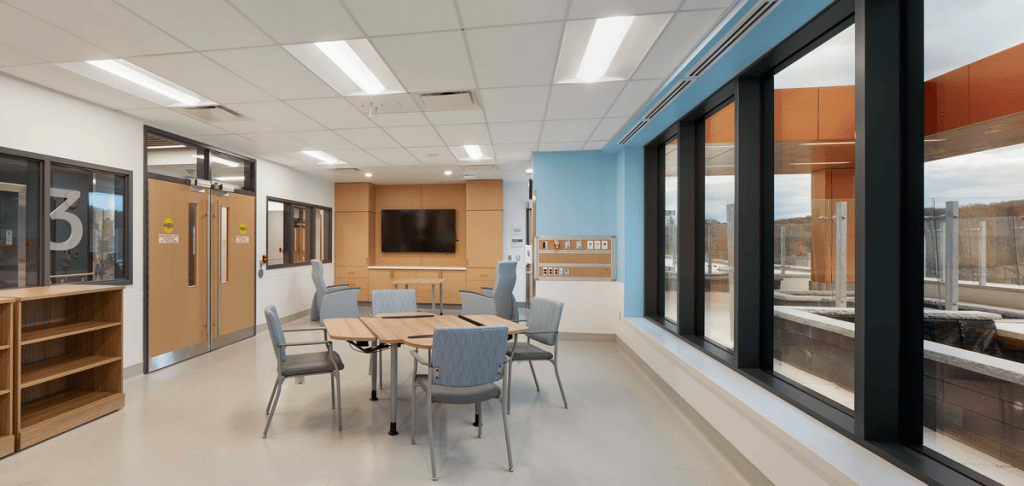
Local photographers contributed images of Niagara landscapes, flora, and fauna, while interior graphics reference regional ecology and cultural cues. The exterior brick design also reflects surrounding residential architecture.
In terms of sustainability, the hospital is designed to achieve LEED Silver certification. Key measures focus on a high-performance building envelope, with dynamic tinted glass regulating solar transmittance, heat recovery chillers, and high-efficiency heat pumps reducing reliance on traditional high-energy heating and cooling systems. A rooftop photovoltaic array can meet approximately 5% of the building's electricity needs. These strategies collectively support a reduction in operational greenhouse gas emissions by about 50% compared to the original building. Water conservation, material selection, and construction waste reduction are also part of the approach. During construction, 75% of building materials were sorted for recycling. Low-VOC and durable finishes are used for infection control and to extend building lifecycle performance. Landscape strategies include planting over 115 new trees for urban cooling, stormwater management, and site ecological improvement.
The total project investment is CAD 224 million, located at 169 Main St E, Grimsby, ON L3M 1P2, Canada.
This article is compiled by Wedoany. All AI citations must indicate the source as "Wedoany". If there is any infringement or other issues, please notify us promptly, and we will modify or delete it accordingly. Email: news@wedoany.com