China's XintLabs Completes Angel Round to Advance AI Integration into Sports
en.Wedoany.com Reported - On June 5, Beijing-based AI sports technology company XintLabs announced the completion of a tens of millions yuan angel round, exclusively invested by Hillhouse Ventures. The funds will primarily be used for AI model R&D, product development, and market promotion, driving the continued deployment of its intelligent training system for golf.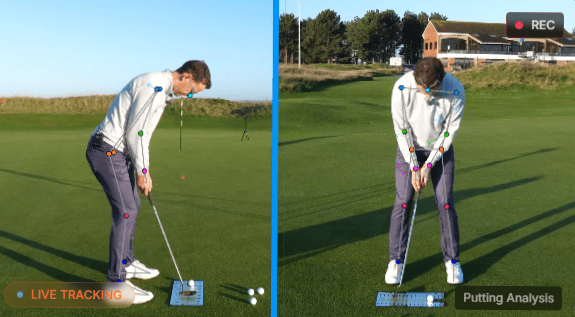
XintLabs targets a relatively niche but technically complex AI sports training scenario. Golf training demands high precision in swing posture, body center of gravity, ball trajectory, movement rhythm, clubface angle, and muscle activation sequence. Traditional training relies heavily on coach observation, video replay, and repetitive practice, resulting in long feedback cycles, with movement details easily affected by camera angles, observational experience, and subjective judgment. XintLabs' product direction combines AI visual analysis, high-precision sensors, precision engineering, and biomechanics to collect and analyze data throughout the swing and impact process, then output personalized improvement suggestions based on user movement characteristics. According to its official website, the company's products revolve around AI golf training and biomechanical analysis, emphasizing computer vision swing analysis, 33-point biomechanical tracking, and real-time guidance capabilities to provide users with more precise movement improvement feedback. For golf instruction, the value of such a system lies not just in "recording movements," but in breaking down a swing into quantifiable, comparable, and continuously trackable data, enabling amateur enthusiasts, coaches, and training institutions to quickly identify movement issues and form a long-term training loop.
The tens of millions yuan angel round will mainly be invested in AI models, product development, and market promotion, indicating that XintLabs is still in a parallel phase of technology refinement and commercial validation.
The AI sports training market is evolving from single smart hardware to a combined model of "data collection + movement understanding + real-time feedback + personalized plans." In the past, sports technology products were more focused on step counting, heart rate, calories, video recording, or basic data statistics, telling users "what happened." Entering the AI model stage, products need to further determine "why it happened" and "how to train next." The golf scenario is particularly suitable for this path: movements are highly standardized, technical actions can be broken down, the training demographic has certain spending power, and indoor practice ranges, teaching institutions, and personal training devices can form clear commercial entry points. However, the technical barriers in this track are not low. The model must not only recognize key body points and club trajectory but also understand differences in height, body type, strength levels, movement habits, and skill stages, avoiding mechanically applying professional athlete standards to ordinary users. Sensor accuracy, visual algorithm stability, real-time feedback speed, and the accumulation of coaching knowledge will determine whether the product can transform from a "fun sports tech gadget" into an AI coaching system with genuine training value.
Following this funding, whether XintLabs can expand its market influence will depend on three capabilities: first, whether the AI model can stably recognize movement details in complex training environments; second, whether hardware and software products can create a sufficiently low-barrier user experience; and third, whether it can establish a reusable commercial path among golf practice ranges, coaching systems, and individual users. If its training feedback can continuously improve user movement efficiency, the AI golf training system has the potential to extend from a high-end sports aid tool into the intelligent sports instruction and sports data service market.
This article is compiled by Wedoany. All AI citations must indicate the source as "Wedoany". If there is any infringement or other issues, please notify us promptly, and we will modify or delete it accordingly. Email: news@wedoany.com
Related Products




Mine Explosion-proof and Intrinsically Safe Industrial Ethernet Ring Network (10 Gigabit/Gigabit)
Chongqing Mas Sci&Tech Co., Ltd.
Automatic Aiming Laser Remote Obstacle Removal Robot
Pinggao Group Weihai High-Voltage Apparatus Co., Ltd.

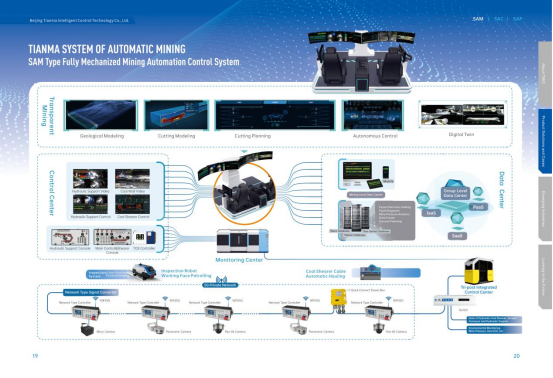
Comprehensive Mining Automation Control System
Beijing Tianma Intelligent Control Technology Co., Ltd.

20 Inch 1600*900 Full HD 60Hz TFT LED Monitor with VGA and DP Interfaces for Desktop Computers-Business Use
Guangzhou Zanying Optoelectronics Technology Co., Ltd.