
IAEA Introduces Artificial Intelligence into Radiotherapy Database
en.Wedoany.com Reported - The International Atomic Energy Agency (IAEA) has integrated an artificial intelligence workflow into its global radiotherapy database, the Directory of Radiotherapy Centres (DIRAC), to enhance data collection efficiency and support research on cancer treatment accessibility.
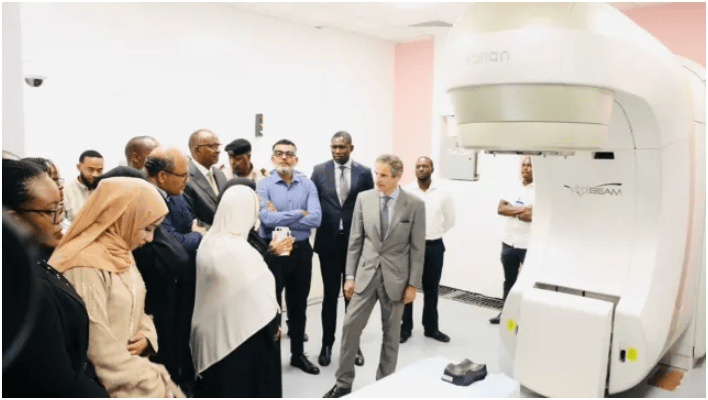
The IAEA Director General visited a hospital in Mombasa to inaugurate a new linear accelerator for life-saving cancer treatment, provided under the IAEA's "Rays of Hope" initiative.
More than half of all cancer patients require radiotherapy during their treatment, yet access varies significantly across regions. High-income countries generally have sufficient equipment to provide timely treatment, while radiotherapy accessibility drops sharply in resource-limited areas, with some countries having no such services at all. The DIRAC database contains information on nearly 8,700 radiotherapy centers worldwide, over 17,000 teletherapy units, and more than 3,000 brachytherapy devices, helping experts assess infrastructure, plan radiation oncology services, and promote research for equitable access to treatment.
Researchers from 114 countries have used DIRAC data in over 300 scientific publications, with more than 200 published in the last five years. The World Intellectual Property Organization has incorporated this data into the Global Innovation Index to assess the global application and penetration of radiotherapy technology, with the report to be released in September 2026 using updated data.
DIRAC's equipment availability data shows that in high-income countries, one teletherapy unit serves an average of approximately 140,000 people, while in low-income countries, this figure exceeds 15 million people. To meet the standard of one device per 500 patients requiring radiotherapy, low-income countries would need more than 21 times their current number of devices. As of 2024, only about 25% of countries meet the minimum requirements for radiotherapy resources.
To address the rapidly changing radiotherapy landscape, the IAEA has introduced a new AI-based workflow. This process uses AI to identify publicly available information on radiotherapy centers and equipment, converts it into structured records, and then verifies and validates it through expert review before inclusion in the DIRAC system. Human oversight is maintained at every stage, and multi-country pilot studies have shown that this method has the potential to improve data accuracy, expand geographic coverage, and shorten update cycles.
Mei Abdul-Wahab, Director of the IAEA's Division of Human Health, stated that every reliable data point in DIRAC enhances the accuracy of health economic analyses, helping decision-makers better understand the current state and gaps in cancer treatment capacity. By strengthening data systems with artificial intelligence and maintaining rigorous expert validation, countries can ensure timely access to high-quality information, ultimately providing better cancer care for the patients who need it most.
This article is compiled by Wedoany. All AI citations must indicate the source as "Wedoany". If there is any infringement or other issues, please notify us promptly, and we will modify or delete it accordingly. Email: news@wedoany.com