en.Wedoany.com Reported - Researchers at the Massachusetts Institute of Technology (MIT) have proposed a low-cost 3D printing solution for manufacturing microscopic electronic nozzles. This solution is expected to be applied in the preparation of controlled-release drug microparticles and "self-healing" materials.
The core of this solution is the triaxial electrospray emitter. These devices utilize an electric field to drive the simultaneous delivery of three immiscible liquids through a microchannel system, generating droplets with a three-layer nested structure.
Multilayer droplets can be further transformed into microparticles, with each layer performing a specific function. For example, the outer layer can dissolve in the stomach, the middle layer regulates the release rate, and the inner layer delivers the active drug to the intestinal target.
Traditional manufacturing relies on semiconductor processes in cleanrooms, which are costly and difficult to scale, limiting the technology's widespread adoption.
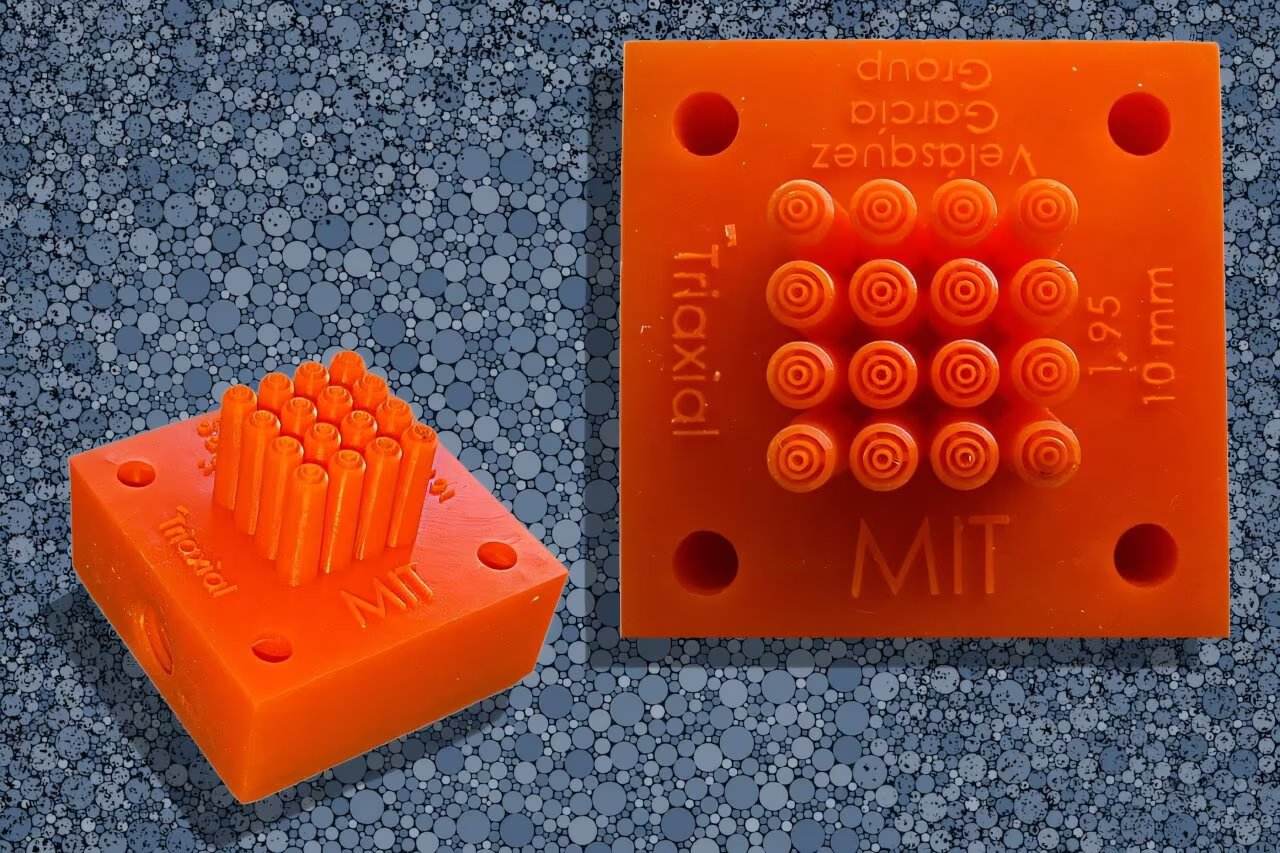
The MIT team used 3D printing technology to fabricate the emitter array. This compact device integrates 16 nozzles in an area of approximately 1 square centimeter, with a complex three-dimensional microchannel network inside to ensure uniform liquid distribution.
The process employs vat photopolymerization technology, which uses ultraviolet light to cure photopolymer resin layer by layer, replacing the traditional multi-step manufacturing process. The entire complex array can be printed within a few hours.
The single-layer thickness of the device is approximately 25 micrometers. The internal spiral channels help maintain uniform and stable liquid flow to each nozzle, thereby ensuring stable droplet generation.
In tests, the 3D-printed array stably generated uniform three-layer microdroplets, which is crucial for the large-scale production of drug particles, biosensors, and tissue regeneration materials. MIT noted that such geometric structures cannot be achieved with cleanroom processes, and 3D printing is the decisive factor enabling this technology.
If this method can be scaled up, it is expected to simplify the production process of complex microparticles in medicine and materials science, and reduce the cost of technologies currently limited to the laboratory level.
This article is compiled by Wedoany. All AI citations must indicate the source as "Wedoany". If there is any infringement or other issues, please notify us promptly, and we will modify or delete it accordingly. Email: news@wedoany.com