en.Wedoany.com Reported - Jirau Hydropower Plant plans to continue operating its reservoir under the current regime during the 2026 dry season, following a related decision by the Brazilian Institute of Environment and Renewable Natural Resources (Ibama); the adoption of a "constant 90-meter water level" operation will depend on the results of ongoing tests and the submission of supplementary studies.
This statement reiterates the position Ibama adopted in 2025, when the plant's operating company made a similar request. The National Water and Basic Sanitation Agency (ANA) and the National Electric System Operator (ONS) have expressed concerns about the flow of the Madeira River (rio Madeira) due to the potential occurrence of an El Niño phenomenon in the second half of 2026, which could persist into early 2027.
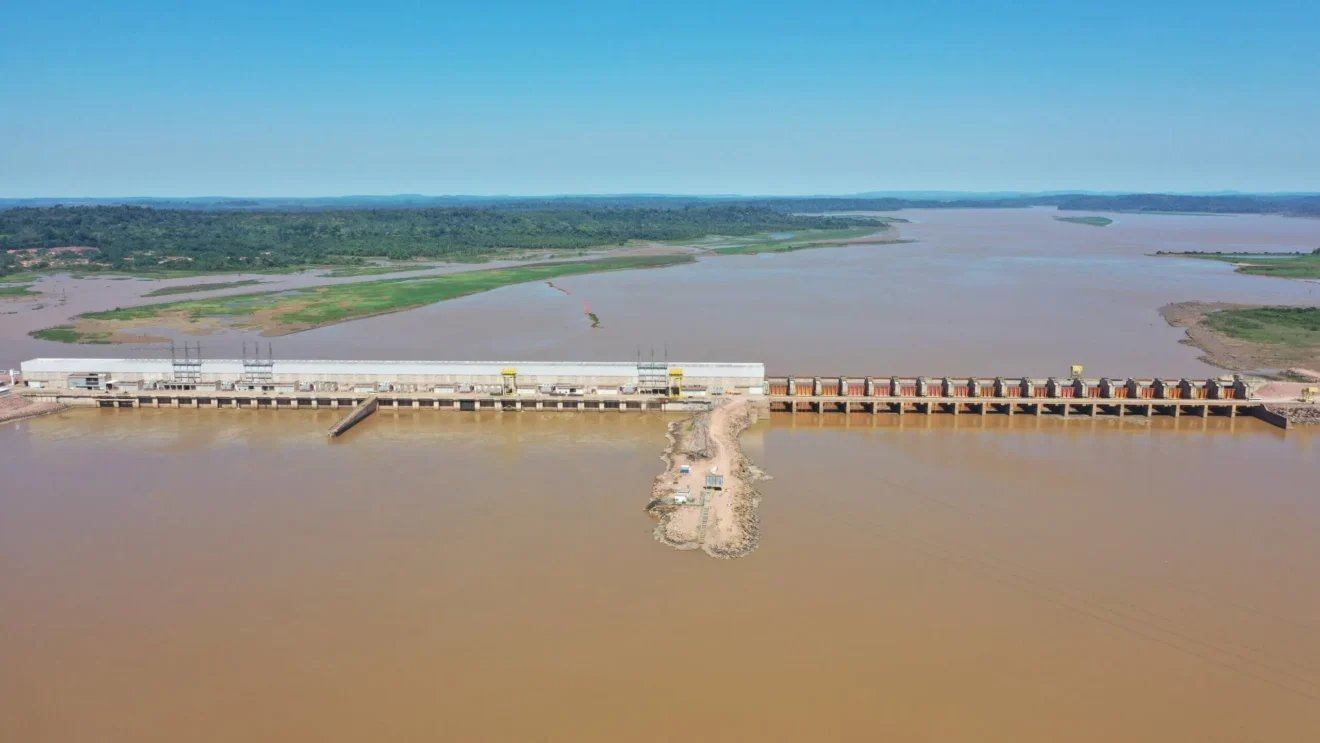
Jirau Hydropower Plant, with an installed capacity of 3,750 megawatts, is located on the Madeira River in the state of Rondônia. In a letter responding to ANA, the company reiterated the environmental agency's position.
ANA has requested that the company provide a detailed operational plan for the coming months. The agency noted that the El Niño phenomenon could lead to reduced rainfall in the Amazon region, making parts of the north drier, thereby increasing the risk of extreme events that could affect water availability and power generation. Although the inflow observed at Jirau is close to the multi-year average for the period, the Madeira River basin has entered a hydrological recession phase. ANA emphasized that operational planning must ensure compliance with water abstraction permit conditions, particularly maintaining a minimum residual flow of 3,240 cubic meters per second downstream of the plant, and meeting the multiple uses of water during the 2026 dry season.
In a letter responding to ANA on June 15, the company stated that expanding the reservoir's flow regulation capacity depends on the future implementation of a "constant 90-meter water level" operation, which is still awaiting environmental permits. The currently effective model stipulates a gradual reduction of the reservoir water level during the dry season until the minimum operating level is reached; at this point, there is no additional storage capacity to regulate inflows that fall below the minimum residual flow stipulated in the water abstraction permit. The company argued that this limitation is not caused by the expanded operation model adopted in recent years, but only the future "constant 90-meter water level" operation could maintain additional storage capacity during the dry season and expand the flow regulation capacity downstream of the dam. The company added that it continuously monitors the hydrological conditions of the Madeira River basin and is attentive to climate scenarios for the second half of 2026, including those related to the El Niño phenomenon.
Given the recent history of water scarcity in the Madeira River basin and the expected El Niño phenomenon in the second half of 2026, ONS has also requested clarifications from Jirau Energia regarding the plant's operations in 2026. The operator noted that the region experienced adverse hydrometeorological conditions in 2023 and 2024, with abnormally low flows, and ANA declared a state of severe water shortage. The simultaneous action of the El Niño phenomenon and anomalous warming of the tropical North Atlantic exacerbated this situation.
Considering the potential recurrence of El Niño in 2026, ONS has requested detailed information from the company regarding the reservoir operation strategy, as well as the results of the experimental operation "expanded 90-meter water level" adopted in 2025 and again declared for 2026. ONS requires the company to submit a technical and environmental assessment of the experimental operation, the results obtained, proof of compliance with the conditions stipulated by Ibama, and a comparison between the power generation under the experimental rules and the potential generation under the plant's basic design rules. The document also questions the necessity of maintaining the experimental operation in 2026. According to the operator, Jirau needs to clarify what issues remain to be resolved to enable the reservoir to operate across the entire range between the maximum and minimum operating levels stipulated in the water abstraction permit. Another issue raised by ONS is the adoption of the 82.50-meter water level as the minimum limit for the experimental operation, while the project's water abstraction permit specifies a minimum operating level of 82.39 meters. In addition to operational questions, the operator emphasized the importance of complying with the conditions stipulated in Water Abstraction Permit No. 2.735/2024, particularly maintaining a minimum residual flow of 3,240 cubic meters per second downstream of the dam. ONS noted that this flow is crucial for ensuring the multiple uses of water, including fuel water transport in the region. The agency requested that Jirau provide an operational outlook for 2026 to ensure that the released flow is equal to or greater than the minimum residual flow stipulated in the project's water abstraction permit.
This article is compiled by Wedoany. All AI citations must indicate the source as "Wedoany". If there is any infringement or other issues, please notify us promptly, and we will modify or delete it accordingly. Email: news@wedoany.com