Iraq exports crude oil and naphtha through Syria as alternative to Strait of Hormuz route
en.Wedoany.com Reported - Iraq is planning to export crude oil and naphtha through Syrian ports to replace the main Gulf shipping route disrupted by the Iran war, according to energy officials and refinery sources in Syria and Iraq.
This move will expand on existing arrangements. Since the de facto closure of the Strait of Hormuz, Iraq has already been exporting fuel oil through the Mediterranean port of Baniyas. The closure of the Strait of Hormuz has severely restricted the Gulf export routes of the second-largest OPEC producer.
Two Iraqi oil officials said that even after the Iran war ends and shipping through the Strait of Hormuz returns to normal, plans to diversify crude oil and fuel export routes, including through Syria, will continue. This is part of a government-approved strategy to reduce Iraq's dependence on a single export corridor.
Saleem al-Rikabi, spokesman for the Iraqi Oil Ministry, told the media: "The Iraqi government and the Oil Ministry attach great importance to diversifying crude oil export routes, especially those through Syrian territory." Rikabi noted that the Oil Ministry, through the state-owned oil marketer SOMO, is continuing "discussions and cooperation" with Syria to expand exports through its western neighbor.
Iraq typically exports about 3.6 million barrels of oil per day. Before the Iran war, about 3.4 million barrels per day flowed through its southern Basra terminal. Mohammed Al-Ahdab, head of the media office at the Syrian Petroleum Company (SPC), said that despite expectations of the strait reopening, operations and unloading continue.
Before the disruption caused by the Iran war, Iraq mainly exported fuel oil from the Gulf port of Khor al-Zubair. After the conflict led to the strait's closure and storage facilities began filling up, Iraq was forced to seek alternative routes. An initial temporary solution began operating in April, with millions of barrels of Iraqi fuel oil trucked through Syria to Baniyas and then re-exported from there.
A Syrian Energy Ministry official said Syria plans to open two additional unloading zones and other facilities in Baniyas within a week to handle Iraqi crude oil and naphtha. Ahdab said Baniyas can now unload an average of 900 tanker trucks per day. Two Iraqi Oil Ministry officials said that once loading facilities are ready, crude oil can begin flowing from Iraq to Syria at a rate of about 50,000 barrels per day. No details were immediately available on planned levels of naphtha exports.
Syrian and Iraqi officials said tanker truck exports are expected to begin in early July, while SOMO will set up an office in Baniyas. In April, SOMO awarded contracts to supply about 650,000 metric tons of fuel oil per month from April to June, transported overland through Syria. Iraq exported a record 18 million tons of fuel oil in 2024, equivalent to about 1.5 million tons per month, and the best available data for 2025 shows export levels close to those at the end of 2024.
SPC Vice President Ahmad Kobbaji told the media in May that Syria's infrastructure is limited, but it is increasing capacity for unloading and re-exporting Iraqi fuel products. Under President Ahmed al-Sharaa, Syria is seeking to reintegrate into the regional and global economy after decades of Assad family rule and nearly 14 years of war that destroyed its economy and left it politically and financially isolated.
Iraqi Oil Ministry officials said Syria earns transit fees from fuel oil shipments, paid through buyers and intermediaries rather than directly by SOMO. The media could not determine Syria's revenue or how fees are collected. LSEG shipping data shows that Iraqi fuel oil transported through Syria has reached destinations across Africa and Europe, with the latest tanker arriving at the port of Alexandria, Egypt, on June 9.
The route to Baniyas is challenging, with roads damaged by years of war. A reporter saw a line of Iraqi tanker trucks stretching more than 30 kilometers on the road to the port. In June, two Iraqi fuel oil tankers collided near Homs, spilling thousands of liters of fuel, while protesters in northeastern Syria blocked Iraqi tanker trucks to protest rising fuel prices and deteriorating living conditions.
A source at the Baniyas facility with direct knowledge of the transshipment operations said Iraqi fuel oil is not processed at the refinery. Instead, tanker trucks unload at a marine platform connected to storage tanks north of the refinery, and the fuel is pumped directly from there to waiting export tankers. Meanwhile, SPC's Kobbaji said in May that Syria is repairing war-damaged pipelines to replace the tanker truck route. A Syrian Energy Ministry official said the Iraq-Syria oil pipeline could carry up to 300,000 barrels of oil per day.
This article is compiled by Wedoany. All AI citations must indicate the source as "Wedoany". If there is any infringement or other issues, please notify us promptly, and we will modify or delete it accordingly. Email: news@wedoany.com
Related Products


YE3 Series Low Voltage High Power Three-Phase Asynchronous Motor
Shandong Lijiu Electrical Machinery Co., Ltd.
G.652.D Wavelength-extended Non-dispersion Shifted Single-mode Optical Fiber
HONGAN GROUP CO., LTD.
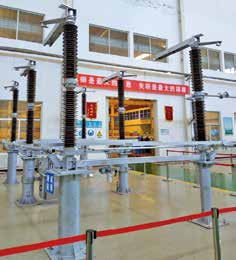
GW4-40.5/72.5/126/145/170/252/363/420 Series Double-column Horizontal Rotary High-voltage AC Disconnect Switch
SHANDONG TAIKAI DISCONNECTORS CO., LTD.


Microcomputer Protection and Substation Automation
Beijing Agent Devote Power Technology Development Co., Ltd.
Industrial and Commercial Point-Type Gas Detector
Jinan Benan Technology Development Co., Ltd.

Off-Grid Fuel Cell Supercharging Station (180kW Configuration)
Shanghai REFIRE Group Limited
Hydrogen production and hydrogenation charging refueling gas integrated energy station
Shenzhen Kohodo Hydrogen Energy Co., Ltd.