en.Wedoany.com Reported - "As the core medium for reactor regulation and control, enriched boric acid has long relied on overseas supply. Now, with the full implementation of domestically produced materials, foreign monopoly has been completely broken, building a self-reliant defense line for the safe and stable operation of the unit!" At the Hualong One unit operation and maintenance seminar, chemical and environmental professionals shared insights on the key reactor consumable enriched boric acid, unfolding a story of breaking the overseas monopoly and achieving independent control of core nuclear chemical materials.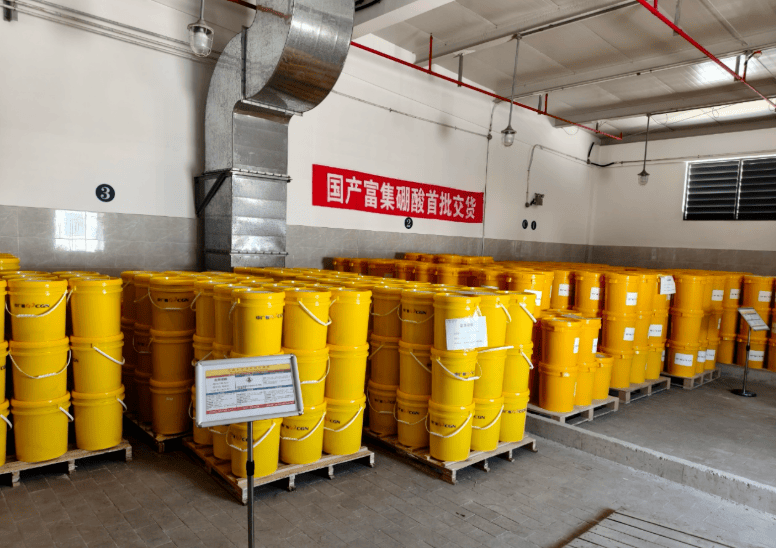
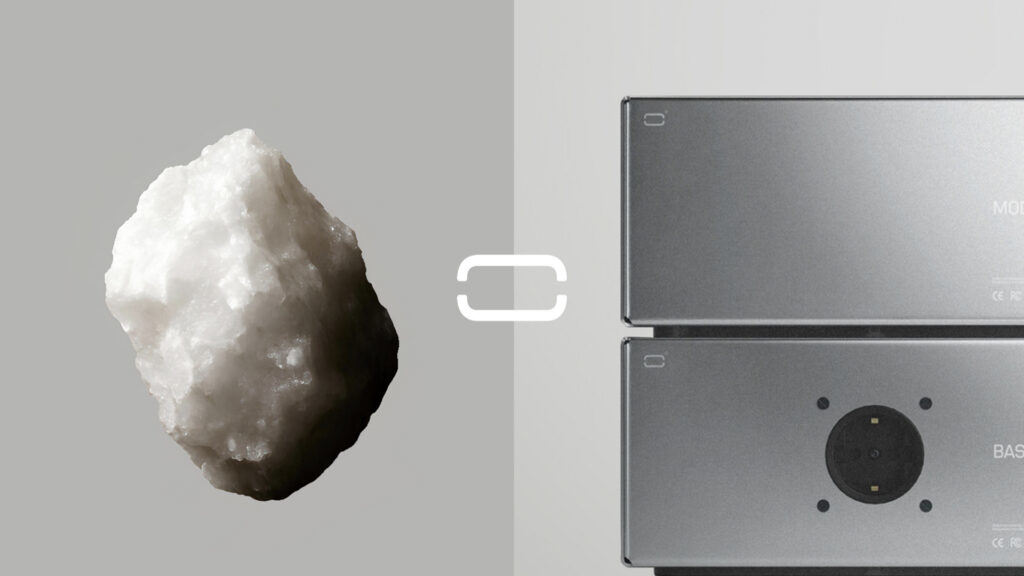
In the safe and stable operation system of the third-generation nuclear power technology Hualong One, enriched boric acid is an indispensable core chemical material, known as the "intelligent brake" of the reactor and the "stabilizer" of the core. Leveraging isotope separation technology, this material increases the abundance of boron-10 from less than 20% in nature to over 95%. With its strong neutron absorption performance, it precisely regulates the chain reaction rate in the core. Compared to ordinary boric acid, it significantly reduces the total amount of reagent added, optimizes the primary circuit water chemistry conditions, inhibits pipeline crystallization, slows equipment corrosion, reduces radioactive source terms and waste volume, and continuously ensures the unit operates within the optimal control range.
Overseas Supply Chain Risks Highlighted, Key Materials Face Supply Challenges
Enriched boric acid is directly related to the commissioning and operational safety of nuclear power units, making it an indispensable critical material for nuclear power project construction. In early 2024, the company specifically coordinated the procurement of enriched boric acid. Market research and analysis revealed significant shortcomings in the industry supply chain: only manufacturers in two countries worldwide have the capacity for large-scale production and supply. One of them has explicitly terminated product supply to the CGN group; the other, constrained by a complex external environment, cannot effectively guarantee supply chain stability. Not only does the procurement cycle extend up to 15 months, but product purchase prices are also continuously rising. The risk of supply constraints for this key material is escalating, making the "bottleneck" problem increasingly prominent.
Although China has seven related production enterprises, the industry generally suffers from insufficient production capacity, with single-factory annual output at only the hundred-kilogram level and product unit prices as high as tens of millions per ton. Production enterprises lack awareness of the stringent usage standards and long-term demand requirements of nuclear power. Without stable orders, their willingness to expand production is extremely low. Additionally, with no prior engineering precedent in China for large-scale application of domestically produced enriched boric acid in nuclear power units, the actual performance and long-term stability of domestic products lack on-site verification, creating numerous obstacles to the path of domestic substitution.
Proactively Building a Supply-Demand Bridge, Opening Up a Full-Chain Domestic Supply System
To resolve the supply dilemma, the company's dedicated procurement team comprehensively surveyed China's full industry chain resources, precisely targeting the enriched boric acid independent research project led by Suzhou Nuclear Power Research Institute. The team proactively communicated long-term demand requirements to production enterprises, enabling them to clearly grasp the industrial market space and strengthen their willingness to expand production and increase efficiency.
The team made multiple on-site visits to production facilities to track production line expansion progress. Based on research and analysis, they formulated a specialized domestic procurement plan, which was successfully reviewed and approved by the company. Leveraging the project's leading advantage, Lufeng Nuclear Power organized centralized procurement across multiple bases within the group, uniformly drafted nuclear-specific technical specifications, coordinated commercial negotiations, and promoted the official listing of domestically produced enriched boric acid on the group's e-commerce platform. This simplified procurement processes for each base and established a new group-wide, large-scale domestic procurement model.
Multi-Dimensional Preemptive Measures to Mitigate Risks, Safeguarding the Bottom Line of Domestic Application Safety
With no precedent for large-scale engineering application in China, the biggest concern in advancing domestic substitution was whether the production capacity and quality of domestic products could match the construction needs of the units. Any failure to meet standards would directly delay critical project milestones.
To comprehensively mitigate various potential risks, the team adopted multiple measures to build a dual guarantee system: On one hand, through theoretical calculations and on-site factory inspections, they fully verified that the expanded production capacity of enterprises could completely cover the full-cycle needs of Units 5 and 6. On the other hand, they delved into production processes and physicochemical properties, took the lead in improving comprehensive product testing and evaluation standards, and compared data from multiple batches of laboratory tests, confirming that the core indicators of domestic products are superior to imported counterparts.
Simultaneously, they innovatively established a flexible procurement guarantee mechanism, signing dual-framework procurement contracts for both "imported and domestic" products. This enabled on-demand delivery and dynamic inventory control, balancing the implementation of domestic substitution with emergency contingency measures for the project, comprehensively avoiding risks such as supply interruptions and schedule delays.
Domestic Substitution Efforts Yield Results, Building China's First Fully Domestic Application Demonstration Unit
After full-chain efforts, all domestically produced enriched boric acid required for Lufeng Nuclear Power Unit 5 has been delivered, making this unit China's first Hualong One unit to use domestically produced enriched boric acid throughout its entire process. Domestic substitution has completely eliminated the risk of supply delays caused by overseas geopolitical factors, significantly shortened procurement cycles, reduced procurement costs, and notably improved the economic efficiency of the base's full lifecycle operation. This provides a replicable and scalable practical model for promoting the independence of key consumables across the group's bases.
In the next step, the company's Chemical and Environmental Protection Department will continue to strengthen quality supervision responsibilities, track the entire process of adding domestically produced enriched boric acid into the reactor, conduct routine indicator monitoring, performance tracking, and engineering verification, and continuously improve the on-site application evaluation system for domestic chemical agents. By maintaining strict control, they will safeguard the nuclear safety lifeline. Leveraging the self-reliance capability for key materials, they will continue to solidify the foundation for the safe, efficient, and independently controllable high-quality development of the dual third-generation nuclear power base.
This article is compiled by Wedoany. All AI citations must indicate the source as "Wedoany". If there is any infringement or other issues, please notify us promptly, and we will modify or delete it accordingly. Email: news@wedoany.com