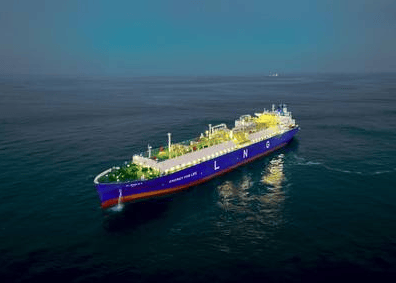
en.Wedoany.com Reported - The International Organization for Standardization (ISO) has recently officially released the world's first international standard specifically for measuring the Boil-Off Rate (BOR) of liquefied natural gas (LNG) cargo containment systems, ISO 21154:2026 "Ships and marine technology — Measurement method for boil-off rate (BOR) of LNG cargo containment systems". Led by China, this international standard incorporates the expertise of experts from countries including the United States, South Korea, Japan, Norway, and Singapore, marking another significant contribution by China to the high-tech ship LNG sector, following the international standard for ultra-low temperature valves.
The Boil-Off Rate (BOR) is a core indicator for measuring the thermal insulation performance and operational efficiency of LNG cargo containment systems, directly impacting vessel operating costs, cargo transport losses, and greenhouse gas emission levels. For a long time, the lack of a unified global testing standard has led to incomparable results, triggering trade disputes and warranty controversies, severely hindering the high-quality development of the LNG industry chain and the efficient integration of global energy transportation.
With the accelerated transformation of the global energy structure and the continuous growth in global demand for clean energy, the number of LNG vessels under construction has increased significantly. Establishing a unified, scientific, and authoritative international standard for BOR testing has become an urgent need for the global maritime community. This international standard systematically specifies six core elements of the BOR testing process for LNG cargo containment systems: test principles, test conditions, test equipment, test procedures, data acquisition and processing, and test reports. Notably, the test procedures specify data measured during three phases: loading, voyage, and unloading conditions. Considering the importance of wind speed and voyage distance to the stable state of LNG liquid cargo, the standard specifies boundary conditions for wind speed and voyage distance for test data under voyage conditions, stipulates the minimum data volume for short voyage scenarios, ensures data validity, enhances the standard's applicability, and is widely applicable to cargo containment systems of LNG carriers, LNG floating storage and regasification units, and LNG bunkering vessels. It can also serve as a reference for BOR testing of fuel containment systems in LNG-fueled ships. The technical content of this standard comprehensively covers current mainstream cargo containment systems, offering broad applicability and foresight.
The release of this international standard fully reflects the positive interaction between standards, scientific research, and technology commercialization within China's shipbuilding industry in the LNG industry chain. It also demonstrates China's capability and commitment to deeply participating in global maritime governance and improving the international standards system.
This article is compiled by Wedoany. All AI citations must indicate the source as "Wedoany". If there is any infringement or other issues, please notify us promptly, and we will modify or delete it accordingly. Email: news@wedoany.com