Spain's Qilimanjaro Releases SDK with CUDA-Q Integration
en.Wedoany.com Reported - Barcelona-based quantum developer Qilimanjaro Quantum Tech has released QiliSDK 0.2.0, an open-source Python framework designed to unify the programming paradigms between digital gate programming and analog Hamiltonian time evolution. Most existing quantum software development kits typically support only a single computing paradigm, either compiling standard quantum circuit logic or managing continuous analog energy scheduling. QiliSDK 0.2.0 builds a backend-agnostic unified API, allowing researchers to write a single high-level codebase and switch execution between local CPUs, accelerated GPUs, or real digital and analog quantum processing units (QPUs) by modifying a single line of configuration code.

The framework is divided into three operational layers: Primitives, Functionals, and Backends. The Primitives layer provides a foundational toolkit, including pre-built variational ansatz blocks for digital circuits and continuous-time evolution scheduling modules for analog systems. These modules feed into a core quantum tensor type—a native C++ module called QTensor, used for handling high-speed state preparation, observables, and partial traces. The Functionals layer normalizes different routines, such as variational loops or simulated annealing runs, through a standardized backend.execute(functional) method. This unified interface directly interacts with the Backends layer, mapping computational tasks onto classical simulators like QuTiP, NVIDIA graphics processors, or Qilimanjaro's cloud-linked and local physical quantum computers.
To support large-scale quantum simulations, Qilimanjaro has directly integrated NVIDIA CUDA-Q into the framework via the CudaBackend class. This upgrade leverages the parallel processing power of graphics cards to track quantum states that grow exponentially with the number of qubits, where standard CPU memory limits are quickly exhausted beyond 25 qubits. The CUDA-Q wrapper automatically configures multi-GPU pooling execution and handles advanced multi-node tensor network contractions. For simulation operations, the backend converts time-dependent scheduling into optimized operators without requiring researchers to write low-level CUDA code, while pushing the practical frontier of state-vector simulation on single-node classical supercomputers to 30 qubits and beyond.
Version 0.2.0 introduces a unified noise modeling engine that can be defined once and applied uniformly across CPU simulators and GPU backends. This system handles state noise, control perturbations, and readout asymmetries using Kraus and Lindblad mathematical representations, ensuring compatibility with digital or analog hardware configurations. The software also introduces specialized primitives, including quantum reservoirs and dedicated input layers, to streamline quantum reservoir computing on near-term analog hardware. Software updates also include native import and export connectors for OpenQASM 3 and Microsoft's Quantum Intermediate Representation (QIR), as well as automatic normalization of optimization terms using the Rosenberg penalty function.
This CUDA-Q integration coincides with the expansion of European hybrid supercomputing infrastructure, with multiple facilities deploying NVIDIA accelerated platforms to host hybrid quantum-classical workloads. Qilimanjaro has installed three local quantum computers at the Barcelona Supercomputing Center (BSC) under the EuroHPC Joint Undertaking framework, with researchers using the updated SDK to drive high-fidelity simulations on commercial hardware. The software allows high-performance computing centers to combine classical GPU clusters with physical simulation chips, advancing Europe's sovereign industrial intelligence and clean energy research frameworks. Full framework features and release history are available in the QiliSDK 0.2.0 announcement and release notes; technical integration workflows and performance benchmarks can be found in the Qilimanjaro CUDA-Q blog post and its media release portal; related infrastructure background information is available in the NVIDIA supercomputing brief.
This article is compiled by Wedoany. All AI citations must indicate the source as "Wedoany". If there is any infringement or other issues, please notify us promptly, and we will modify or delete it accordingly. Email: news@wedoany.com
Related Products




Automatic Aiming Laser Remote Obstacle Removal Robot
Pinggao Group Weihai High-Voltage Apparatus Co., Ltd.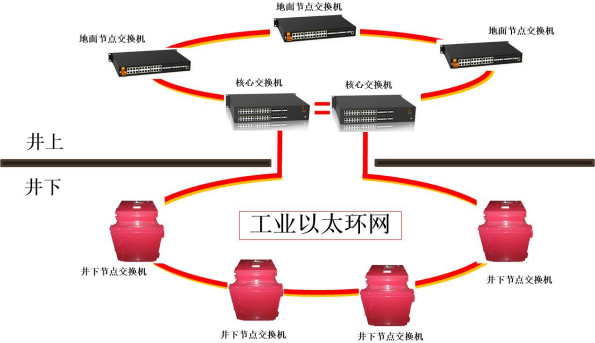
Mine Explosion-proof and Intrinsically Safe Industrial Ethernet Ring Network (10 Gigabit/Gigabit)
Chongqing Mas Sci&Tech Co., Ltd.
TWP16 P-Band Tropospheric Wind Profile Radar
China Huayun Meteorological Technology Group Co., Ltd.



20 Inch 1600*900 Full HD 60Hz TFT LED Monitor with VGA and DP Interfaces for Desktop Computers-Business Use
Guangzhou Zanying Optoelectronics Technology Co., Ltd.