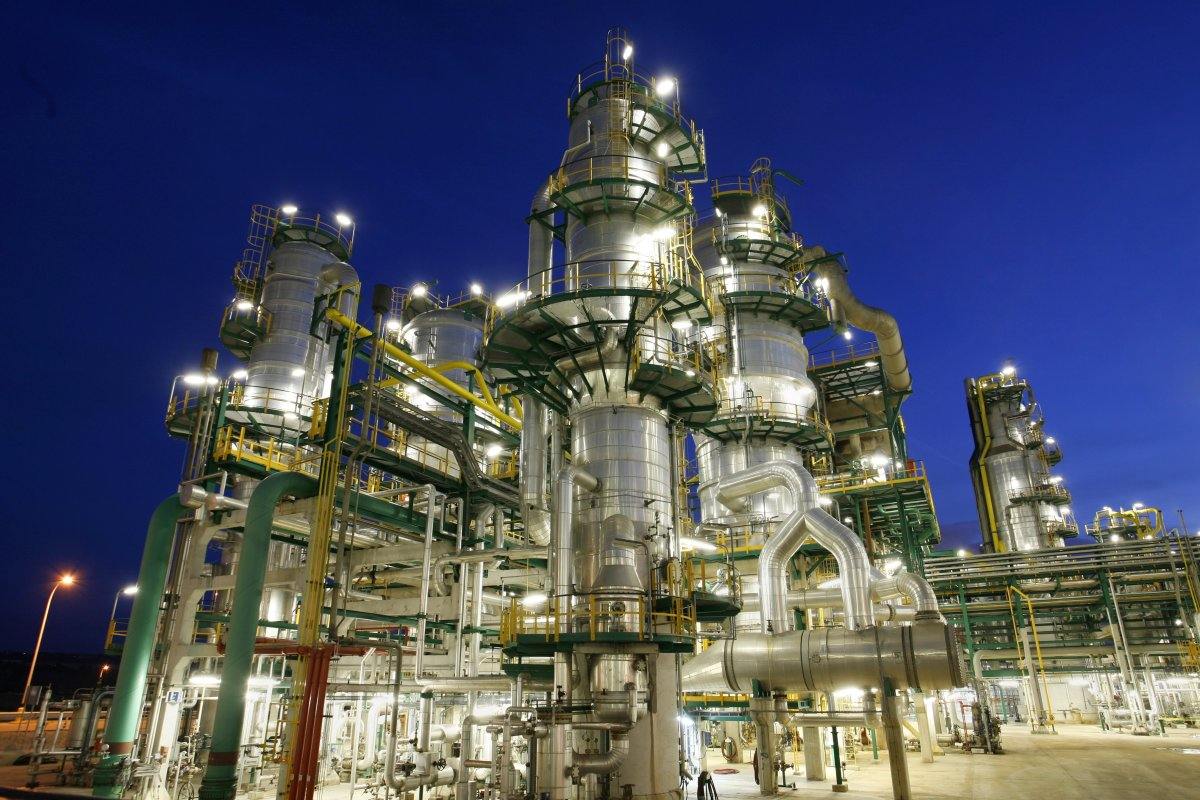
Flow and Stress Considerations in Petrochemical Fitting Selection
en.Wedoany.com Reported - Pipe fittings do more than change direction or connect different diameters. Every elbow, tee, reducer, branch outlet, and cap redistributes velocity, pressure, temperature, and structural stress. Selecting a fitting only by nominal size and pressure class can overlook erosion, vibration, liquid accumulation, gas pockets, and fatigue.
Elbows are among the most common Petrochemical Pipeline Fittings. When fluid changes direction, velocity and pressure are redistributed across the intrados and extrados of the bend. Streams containing catalyst particles, solids, droplets, or corrosion products may produce localized erosion at predictable impact zones.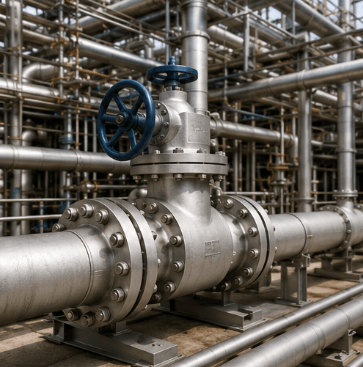
Long-radius elbows generally provide a smoother change in direction, but they require more installation space. Short-radius elbows offer a compact layout while potentially increasing local turbulence and pressure loss. The engineering decision should balance plot space, hydraulic performance, erosion risk, piping flexibility, and accessibility for inspection.
Tees create more complex conditions because they divide or combine flow. The branch intersection may be exposed to uneven velocity, pulsation, temperature differences, and externally imposed piping loads. In cyclic or high-temperature service, branch reinforcement, weld geometry, local stress concentration, and system-level stress analysis become particularly important.
Reducers connect pipe sections of different diameters and must be installed with attention to phase behavior. Near pump suction lines, the choice between concentric and eccentric reducers can affect gas accumulation, liquid retention, and inlet flow stability. In horizontal piping, the orientation of an eccentric reducer should reflect whether the service requires venting, draining, or avoidance of vapor pockets.
Caps and dead legs also deserve careful review. Their low-flow geometry can encourage sediment deposition, water condensation, and corrosion-product accumulation. In intermittent systems, shutdown corrosion within a stagnant branch may become more severe than corrosion during normal operation.
Fitting selection should also be coordinated with piping flexibility analysis. Large-diameter, high-temperature, or long piping systems generate thermal movement that is redistributed through elbows and branch connections. An elbow may improve flexibility in one direction while attracting additional bending moment in another. Fittings near equipment nozzles require particular attention because excessive loads can affect pumps, compressors, exchangers, and vessels.
Recognized dimensional standards provide an essential basis for interchangeability and fabrication control, but they do not replace process and mechanical engineering. A standard fitting can still be unsuitable if its geometry, orientation, or location conflicts with actual flow and stress conditions.
Reliable selection therefore requires cooperation among process, materials, piping, stress, and equipment engineers. Nominal dimensions are only the starting point; long-term performance depends on how fluid behavior, structural loads, installation direction, and maintenance access interact in service.
This article is compiled by Wedoany. All AI citations must indicate the source as "Wedoany". If there is any infringement or other issues, please notify us promptly, and we will modify or delete it accordingly. Email: news@wedoany.com
Related Products


Bi-directional Metal Hard Seal Ball Valve
Henan Quanshun Flow Control Science & Technology Co., Ltd.
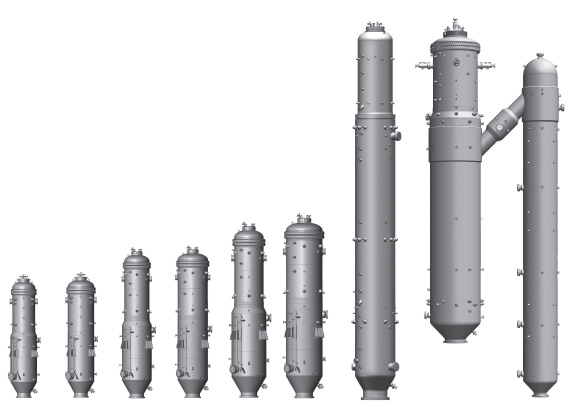
Gasification Furnace Series: Freely Combinable Aerospace Furnace
CHANGZHENG ENGLINEERING CO., LTD.
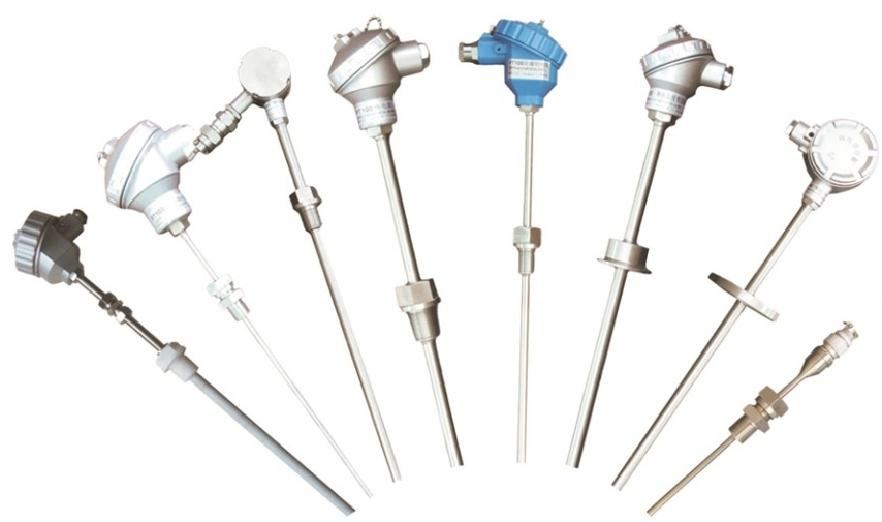

Steel Pipes for Refining and Coal Chemical Industries
YANGZHOU LONTRIN ENERGY EQUIPMENT CO.,LTD.