UNSW Team in Australia Develops 12.6% Efficient CZTS Solar Cell
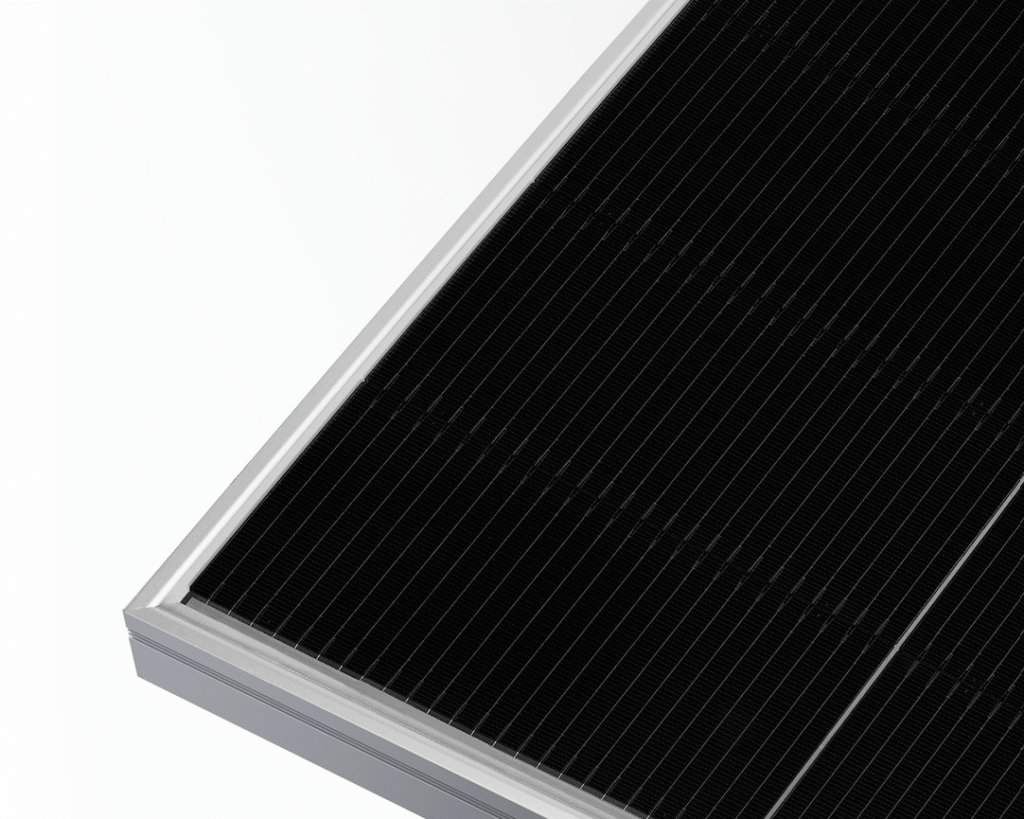
en.Wedoany.com Reported - A research team at the University of New South Wales (UNSW) has fabricated a wide-bandgap copper-zinc-tin-sulfide (CZTS) solar cell using a defect-regulation strategy, achieving a power conversion efficiency of 12.6% and an open-circuit voltage of 852.8 mV. The strategy reduces open-circuit voltage loss in CZTS cells by stabilizing copper in the precursor and limiting its outward diffusion.
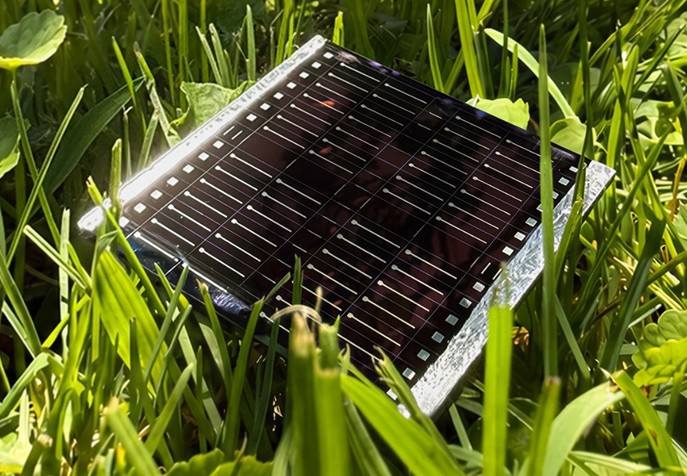
CZTS photovoltaic technology is based on elements abundant in the Earth's crust, but has historically suffered from significant voltage deficits. The researchers noted that voltage is a direct indicator of internal energy loss in solar cells, with harmful defects reducing voltage, and that defect control determines final efficiency and the amount of energy converted from sunlight. Raising the open-circuit voltage of CZTS beyond current levels is critical to unlocking its full potential.
Previous studies have shown that a copper-poor (Cu-poor) and zinc-rich (Zn-rich) chemical environment can promote the formation of beneficial defects in CZTS while suppressing defects that cause carrier recombination. However, the formation of Cu-rich and Zn-poor regions within the CZTS film can alter the local chemical environment, promoting unfavorable defects and secondary phases. To control this process, the research team sought to strengthen the Cu–S bonds in the precursor to stabilize copper and limit its outward diffusion.
In the initial approach, the researchers replaced metallic copper with cuprous sulfide (Cu₂S) during co-sputtering. Raman spectroscopy and X-ray photoelectron spectroscopy (XPS) measurements indicated that the modified precursor exhibited stronger Cu–S bonds, higher structural order, and lower cation disorder. However, using Cu₂S throughout the entire deposition process increased tin (Sn) loss during sulfurization, leading to defects and pinholes in the absorber layer, making it unsuitable for solar cell fabrication. The research team subsequently used metallic copper during the initial stage of precursor deposition and switched to Cu₂S in the final minutes to stabilize copper near the surface and limit tin loss during subsequent sulfurization.
The optimized process significantly reduced copper outward diffusion, produced a more uniform elemental distribution, and helped maintain a Cu-poor, Zn-rich local environment during the early stages of CZTS crystallization—when the defect structure of the absorber layer is formed. Low-temperature cathodoluminescence measurements showed that, compared with reference samples, the optimized absorber layer exhibited lower non-radiative recombination and fewer deep localized defect states, with a stronger contribution from shallow defect transitions, indicating improved defect quality.
The CZTS solar cell fabricated using this defect-engineering approach achieved a power conversion efficiency of 12.6%, an open-circuit voltage of 852.8 mV, a short-circuit current density of 21.0 mA/cm², and a fill factor of 70.1%. The certified efficiency was 12.36%, with an open-circuit voltage of 846.7 mV measured over an aperture area of 0.2021 cm². The device maintained stable performance after 231 days of storage in a nitrogen-filled desiccator.
The researchers stated that this work demonstrates an open-circuit voltage equivalent to 65.3% of the Shockley–Queisser (SQ) limit, whereas wide-bandgap CZTS devices typically achieve open-circuit voltages of around 60% of the corresponding SQ limit. UNSW researcher Xiaojing Hao noted that this defect-control strategy offers reference value for the design and optimization of other compound semiconductors, and that its design principles are not limited to CZTS materials. It is applicable to the development of candidate top-cell materials for tandem solar cells—where design must begin at the mixed-precursor stage and maintain uniform distribution. The precursors may vary depending on the semiconductor, but the design principles remain the same.
The research findings were published in Nature Energy under the title "Early-stage local chemistry regulation enabling open-circuit voltage of 847 mV in wide-bandgap Cu2ZnSnS4 solar cells."