China's Industrial Automation Components Market Grows Over 8% Annually, Full-Series Guide Shaft Direct Supply and Fast Delivery Become Trends
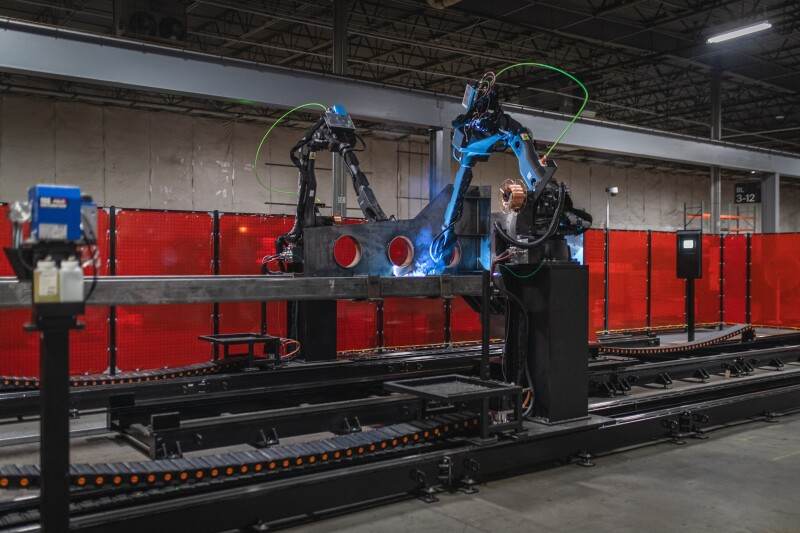
en.Wedoany.com Reported - With the acceleration of global smart manufacturing and industrial automation, the scale of China's industrial automation components market continues to expand, with an average annual growth rate exceeding 8%. The demand for high-precision linear motion components is particularly prominent. As a core foundational part of industrial automation equipment, guide shafts cover downstream fields such as 3C electronics, new energy lithium batteries, and high-end machine tools. Customers' requirements for precision, adaptability, and delivery speed are constantly increasing, and the industry is undergoing profound changes.
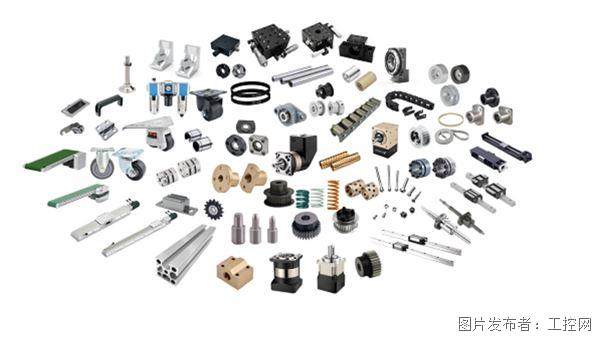
The current industry mainly presents three major trends. First, to adapt to different working conditions, guide shaft products are evolving towards full-series and multi-specification directions. High-speed and high-precision equipment requires materials with high hardness and rigidity, corrosive environments demand strong anti-corrosion performance, basic low-to-medium load scenarios need cost-effective solutions, and diverse installation requirements have also given rise to different guide shaft forms. Single categories or a few specifications can no longer meet market demands. Suppliers with a complete product system can help customers achieve one-stop procurement and reduce supply chain management costs.
Second, the manufacturer direct supply model is gradually becoming mainstream. Under the traditional multi-level distribution model, the procurement chain is long, costs are high, and there are issues with quality control and information transparency, making it difficult to quickly respond to customer customization needs. As manufacturing enterprises face increasing pressure to reduce costs and improve efficiency, more customers are turning to direct procurement from manufacturers. This model helps lower procurement costs and allows manufacturers to directly control product quality and quickly respond to customization needs, promoting a flatter supply chain.
Third, rapid delivery capability has become one of the core competitive advantages for suppliers. The product iteration cycle in the manufacturing industry is shortening, project timelines are compressed, and equipment manufacturers have higher requirements for component delivery speed. Traditional supply models often lead to project delays due to insufficient raw material inventory and long customization processing cycles. By maintaining raw material inventory and optimizing production processes to enable processing upon order receipt, suppliers can shorten delivery cycles, helping customers reduce equipment assembly and debugging time.
In the new market environment, guide shaft supply enterprises need to build three core capabilities: full-series product coverage capability, covering multiple precision levels, materials, and forms; manufacturer direct supply capability to provide cost-effective products and ensure stable quality; and rapid delivery capability, utilizing stocked inventory and flexible production to quickly respond to customer needs. At the same time, customer requirements for one-stop service and comprehensive after-sales support are also increasing.
Facing industry trends, some leading enterprises have explored paths suitable for development. Hefa Industrial Transmission Technology (Guangdong) Co., Ltd. (iHF) is one such representative. Hefa focuses on the R&D, production, sales, and digital online platform services of industrial automation equipment components. Leveraging nearly 30 years of experience in transmission parts manufacturing, it has established a "self-produced direct sales + digital platform" business model. Its core business covers 152 major categories of standard parts, with a cumulative SKU of 960,000, and guide shafts are one of its key products. Previously, a 3C inspection equipment manufacturer faced issues with insufficient guide shaft precision and long delivery cycles. Hefa recommended guide shafts with appropriate precision grades and materials based on the equipment's working conditions, provided customized processing services, eliminated intermediate markups through self-produced direct sales, and ensured fast delivery by relying on raw material inventory. This helped the customer improve equipment inspection precision, shorten new product R&D cycles, and reduce procurement costs. Currently, Hefa ensures stable supply through three production bases, a large-scale production center, and a warehousing center, with 16 service outlets nationwide providing real-time response and one-on-one service.
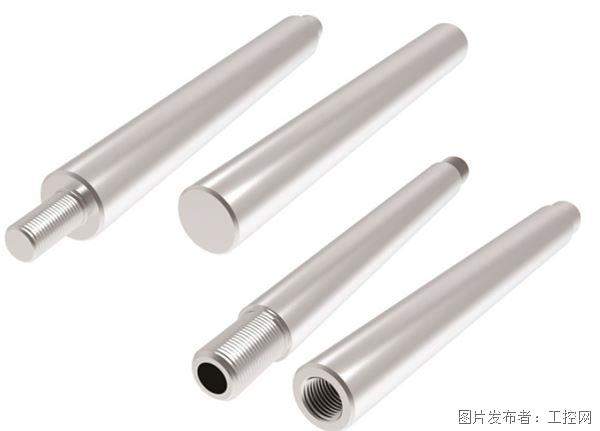
Hefa guide shafts have three core characteristics. First, the product covers the full series and all specifications, flexibly adapting to various scenario needs. Hefa guide shafts include two tolerance grades: ordinary grade f8 and precision grade g6, covering multiple types such as straight rod type, internal and external thread type, and stepped shaft type. They offer three material options: SUJ2, SUS440C, and S45C, and support various processing methods including flat surface, V-groove, and threading. Second, the self-produced direct sales model offers both cost and delivery advantages. Hefa has three production bases and maintains full-specification raw material inventory for diameters from 3mm to 50mm. Standard products are processed upon order receipt, and factory direct sales eliminate intermediate links, reducing procurement costs by 40% to 60% compared to imported brands. Third, accumulated process technology ensures reliable quality. Hefa uses high-frequency induction hardening surface strengthening technology, with an effective hardened layer depth exceeding 1.0mm and outer diameter roundness controlled within 0.004mm. Combined with automatic chrome plating anti-corrosion treatment and a tolerance intelligent detection system, product precision meets industrial transmission component standards. As a high-tech enterprise and a specialized and new enterprise, Hefa has over 400 technical personnel and three research centers, providing professional selection guidance and customized solution support.
In the coming years, the guide shaft industry is expected to develop along three major trends: full-series adaptation to all working conditions, manufacturer direct supply to reduce costs, and rapid delivery to support fast project progress. With the continuous advancement of industrial automation, market demand for guide shafts, as a core foundational component, will maintain growth, and the industry's development space is expected to further expand. Supply enterprises need to follow these trends and actively build full-series supply capabilities, direct sales systems, and rapid delivery services. Downstream manufacturing enterprises choosing suppliers with these capabilities can help reduce costs, shorten project cycles, and enhance market competitiveness.
This article is compiled by Wedoany. All AI citations must indicate the source as "Wedoany". If there is any infringement or other issues, please notify us promptly, and we will modify or delete it accordingly. Email: news@wedoany.com
Related Products


LBH4000 Batch Environmental Protection Asphalt Mixing Plant | Asphalt Batching Plant | Asphalt Mixing Plant
Jilin Province Road Construction Machinery Co., Ltd.


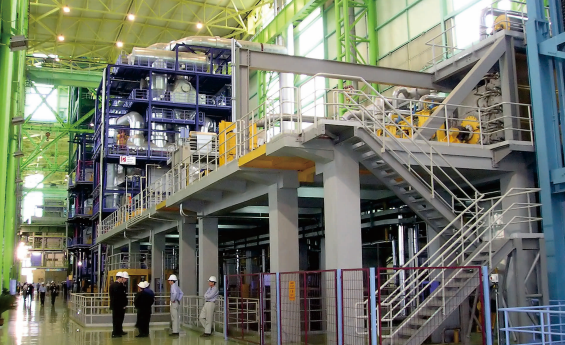
Strip Coating and Plating Production Line Equipment
MCC-SFRE HEAVY INDUSTRY EQUIPMENT CO., LTD.

CAP1400 main feedwater flow nozzle flowmeter.
Jiangsu Hongda Instrument Technology Co., LTD.

Pneumatic high-pressure wear-resistant ball valve
Zhejiang Deca Control Valve Meter Co., Ltd.